

The Indian Hedgehog - PTHrP System in Bone Development
PTHrP
j \
\
PTHrP-R
HYPERTROPHY
I
I
I?
I
I
195
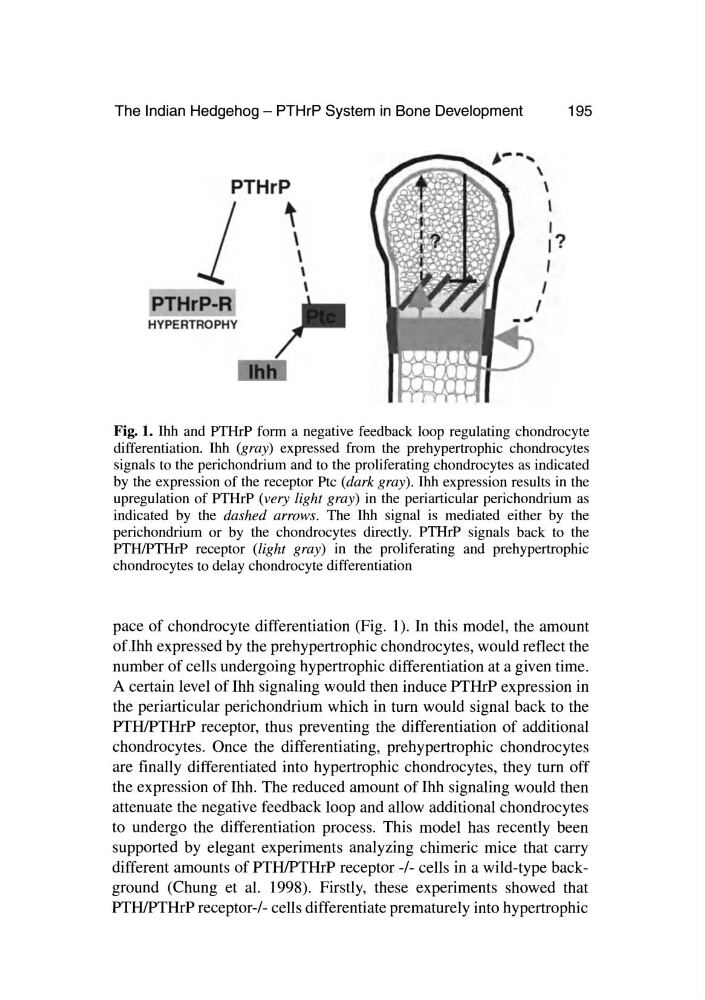
Fig. 1. Ihh and PTHrP form a negative feedback loop regulating chondrocyte
differentiation. Ihh (gray) expressed from the prehypertrophic chondrocytes
signals to the perichondrium and to the proliferating chondrocytes as indicated
by the expression of the receptor Ptc (dark gray). Ihh expression results in the
upregulation of PTHrP (very light gray) in the periarticular perichondrium as
indicated by the dashed arrows. The Ihh signal is mediated either by the
perichondrium or by the chondrocytes directly. PTHrP signals back to the
PTHlPTHrP receptor (light gray) in the proliferating and prehypertrophic
chondrocytes to delay chondrocyte differentiation
pace of chondrocyte differentiation (Fig. 1). In this model, the amount
ofIhh expressed by the prehypertrophic chondrocytes, would reflect the
number of cells undergoing hypertrophic differentiation at a given time.
A certain level of Ihh signaling would then induce PTHrP expression in
the periarticular perichondrium which in tum would signal back to the
PTHlPTHrP receptor, thus preventing the differentiation of additional
chondrocytes. Once the differentiating, prehypertrophic chondrocytes
are finally differentiated into hypertrophic chondrocytes, they tum off
the expression of Ihh. The reduced amount of Ihh signaling would then
attenuate the negative feedback loop and allow additional chondrocytes
to undergo the differentiation process. This model has recently been
supported by elegant experiments analyzing chimeric mice that carry
different amounts of PTHlPTHrP receptor -1- cells in a wild-type background (Chung et al. 1998). Firstly, these experiments showed that
PTH/PTHrP receptor-I- cells differentiate prematurely into hypertrophic
PTHrP
j \
\
PTHrP-R
HYPERTROPHY
I
I
I?
I
I
195
Fig. 1. Ihh and PTHrP form a negative feedback loop regulating chondrocyte
differentiation. Ihh (gray) expressed from the prehypertrophic chondrocytes
signals to the perichondrium and to the proliferating chondrocytes as indicated
by the expression of the receptor Ptc (dark gray). Ihh expression results in the
upregulation of PTHrP (very light gray) in the periarticular perichondrium as
indicated by the dashed arrows. The Ihh signal is mediated either by the
perichondrium or by the chondrocytes directly. PTHrP signals back to the
PTHlPTHrP receptor (light gray) in the proliferating and prehypertrophic
chondrocytes to delay chondrocyte differentiation
pace of chondrocyte differentiation (Fig. 1). In this model, the amount
ofIhh expressed by the prehypertrophic chondrocytes, would reflect the
number of cells undergoing hypertrophic differentiation at a given time.
A certain level of Ihh signaling would then induce PTHrP expression in
the periarticular perichondrium which in tum would signal back to the
PTHlPTHrP receptor, thus preventing the differentiation of additional
chondrocytes. Once the differentiating, prehypertrophic chondrocytes
are finally differentiated into hypertrophic chondrocytes, they tum off
the expression of Ihh. The reduced amount of Ihh signaling would then
attenuate the negative feedback loop and allow additional chondrocytes
to undergo the differentiation process. This model has recently been
supported by elegant experiments analyzing chimeric mice that carry
different amounts of PTHlPTHrP receptor -1- cells in a wild-type background (Chung et al. 1998). Firstly, these experiments showed that
PTH/PTHrP receptor-I- cells differentiate prematurely into hypertrophic