

272
R.G. Ackman
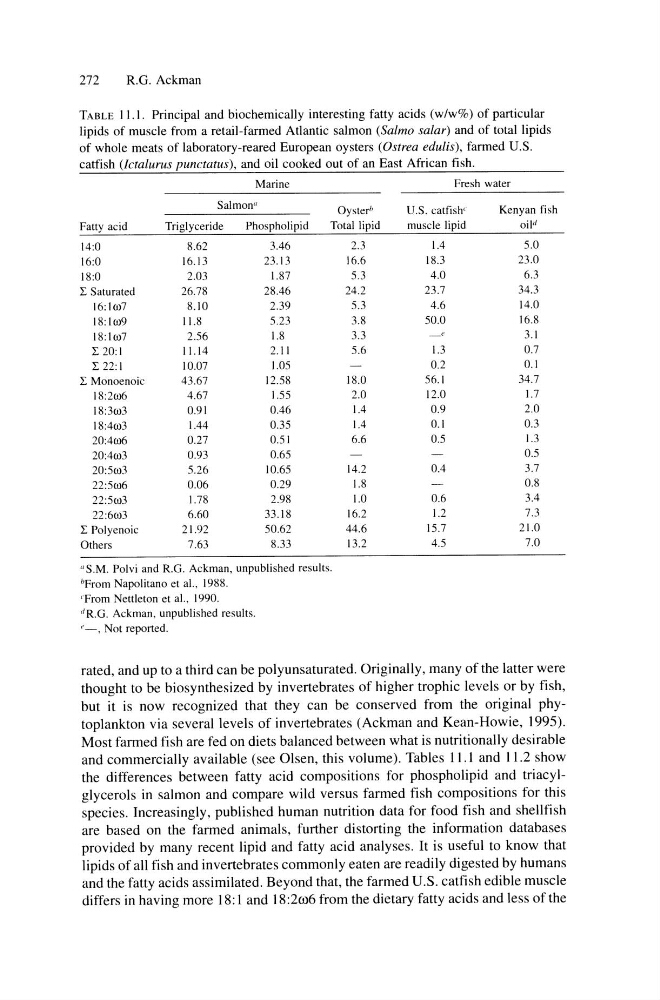
TABLE 11.1. Principal and biochemically interesting fatty acids (w/w%) of particular
lipids of muscle from a retail-farmed Atlantic salmon (Salmo salar) and of total lipids
of whole meats of laboratory-reared European oysters (Ostrea edulis), farmed U.S.
catfish (lctalurus punctatus), and oil cooked out of an East African fish.
Marine
Fresh water
Salmon"
Oyster"
U.S. catfish'
Kenyan fish
Fatty acid
Triglyceride
Phospholipid
Total lipid
muscle lipid
oil d
14:0
8.62
3.46
2.3
1.4
5.0
16:0
16.13
23.13
16.6
18.3
23.0
18:0
2.03
un
5.3
4.0
6.3
I Saturated
26.78
28.46
24.2
23.7
34.3
16:lw7
8.10
2.39
5.3
4.6
14.0
18:1w9
11.8
5.23
3.8
50.0
16.8
18:lw7
2.56
1.8
3.3
,
3.1
I20:1
11.14
2.11
5.6
1.3
0.7
I22:1
10.07
1.05
0.2
0.1
I Monoenoic
43.67
12.58
18.0
56.1
34.7
18:2w6
4.67
1.55
2.0
12.0
1.7
18:3w3
0.91
0.46
1.4
0.9
2.0
18:4w3
1.44
0.35
1.4
0.1
0.3
20:4w6
0.27
0.51
6.6
0.5
1.3
20:4w3
0.93
0.65
0.5
20:5w3
5.26
10.65
14.2
0.4
3.7
22:5w6
0.06
0.29
1.8
0.8
22:5w3
1.78
2.98
1.0
0.6
3.4
22:6w3
6.60
33.18
16.2
1.2
7.3
I Polyenoic
21.92
50.62
44.6
15.7
21.0
Others
7.63
8.33
13.2
4.5
7.0
"S.M. Polvi and R.G. Ackman, unpublished results.
hFrom Napolitano et aI., 1988.
'From Nettleton et aI., 1990.
dR.G. Ackman, unpublished results.
"-. Not reported.
rated, and up to a third can be polyunsaturated. Originally, many of the latter were
thought to be biosynthesized by invertebrates of higher trophic levels or by fish,
but it is now recognized that they can be conserved from the original phytoplankton via several levels of invertebrates (Ackman and Kean-Howie, 1995).
Most farmed fish are fed on diets balanced between what is nutritionally desirable
and commercially available (see Olsen, this volume). Tables 11.1 and 1l.2 show
the differences between fatty acid compositions for phospholipid and triacylglycerols in salmon and compare wild versus farmed fish compositions for this
species. Increasingly, published human nutrition data for food fish and shellfish
are based on the farmed animals, further distorting the information databases
provided by many recent lipid and fatty acid analyses. It is useful to know that
lipids of all fish and invertebrates commonly eaten are readily digested by humans
and the fatty acids assimilated. Beyond that, the farmed U.S. catfish edible muscle
differs in having more 18: 1 and 18:2{J)6 from the dietary fatty acids and less of the
R.G. Ackman
TABLE 11.1. Principal and biochemically interesting fatty acids (w/w%) of particular
lipids of muscle from a retail-farmed Atlantic salmon (Salmo salar) and of total lipids
of whole meats of laboratory-reared European oysters (Ostrea edulis), farmed U.S.
catfish (lctalurus punctatus), and oil cooked out of an East African fish.
Marine
Fresh water
Salmon"
Oyster"
U.S. catfish'
Kenyan fish
Fatty acid
Triglyceride
Phospholipid
Total lipid
muscle lipid
oil d
14:0
8.62
3.46
2.3
1.4
5.0
16:0
16.13
23.13
16.6
18.3
23.0
18:0
2.03
un
5.3
4.0
6.3
I Saturated
26.78
28.46
24.2
23.7
34.3
16:lw7
8.10
2.39
5.3
4.6
14.0
18:1w9
11.8
5.23
3.8
50.0
16.8
18:lw7
2.56
1.8
3.3
,
3.1
I20:1
11.14
2.11
5.6
1.3
0.7
I22:1
10.07
1.05
0.2
0.1
I Monoenoic
43.67
12.58
18.0
56.1
34.7
18:2w6
4.67
1.55
2.0
12.0
1.7
18:3w3
0.91
0.46
1.4
0.9
2.0
18:4w3
1.44
0.35
1.4
0.1
0.3
20:4w6
0.27
0.51
6.6
0.5
1.3
20:4w3
0.93
0.65
0.5
20:5w3
5.26
10.65
14.2
0.4
3.7
22:5w6
0.06
0.29
1.8
0.8
22:5w3
1.78
2.98
1.0
0.6
3.4
22:6w3
6.60
33.18
16.2
1.2
7.3
I Polyenoic
21.92
50.62
44.6
15.7
21.0
Others
7.63
8.33
13.2
4.5
7.0
"S.M. Polvi and R.G. Ackman, unpublished results.
hFrom Napolitano et aI., 1988.
'From Nettleton et aI., 1990.
dR.G. Ackman, unpublished results.
"-. Not reported.
rated, and up to a third can be polyunsaturated. Originally, many of the latter were
thought to be biosynthesized by invertebrates of higher trophic levels or by fish,
but it is now recognized that they can be conserved from the original phytoplankton via several levels of invertebrates (Ackman and Kean-Howie, 1995).
Most farmed fish are fed on diets balanced between what is nutritionally desirable
and commercially available (see Olsen, this volume). Tables 11.1 and 1l.2 show
the differences between fatty acid compositions for phospholipid and triacylglycerols in salmon and compare wild versus farmed fish compositions for this
species. Increasingly, published human nutrition data for food fish and shellfish
are based on the farmed animals, further distorting the information databases
provided by many recent lipid and fatty acid analyses. It is useful to know that
lipids of all fish and invertebrates commonly eaten are readily digested by humans
and the fatty acids assimilated. Beyond that, the farmed U.S. catfish edible muscle
differs in having more 18: 1 and 18:2{J)6 from the dietary fatty acids and less of the