

7. Role of Lipids in Fish Populations
145
abilities are increased (Blaxter and Hempel, 1963). According to Brown and
Taylor (1992), female spawning fish face two major trade-offs when allocating
available energy for reproductive products. Available energy must be allocated
not only between egg size and number but among carbohydrate, protein, and lipid
components within the individual eggs. Life history theory suggests that natural
selection favors females allocating reproductive energy in a manner maximizing
fitness return per unit of ovarian resource invested (Fleming and Gross, 1990;
Sargent et aI., 1987). Total egg number, therefore, should vary in response to
selection pressures on egg size, egg composition, and total investment in egg
production (Fleming and Gross, 1990).
Summary and Future Initiatives. Lipids as energy reserves in fish are instrumental in dictating reproductive success and ultimately year-class strength and the
Egg Quality
,
Care
Larval Condition
+
Recruitment Success
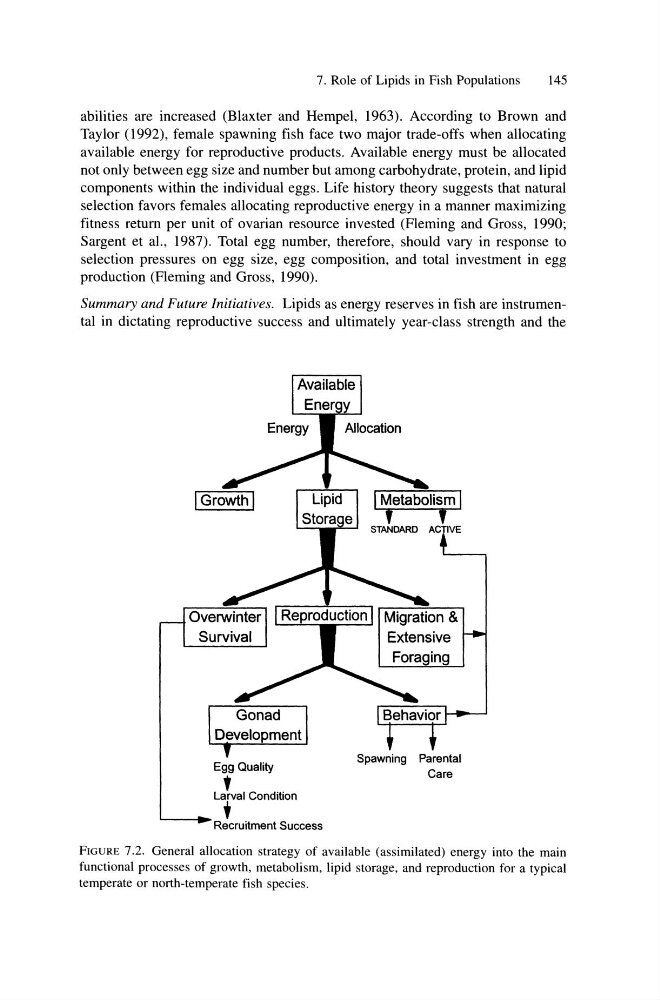
FIGURE 7.2. General allocation strategy of available (assimilated) energy into the main
functional processes of growth, metabolism, lipid storage, and reproduction for a typical
temperate or north-temperate fish species.
145
abilities are increased (Blaxter and Hempel, 1963). According to Brown and
Taylor (1992), female spawning fish face two major trade-offs when allocating
available energy for reproductive products. Available energy must be allocated
not only between egg size and number but among carbohydrate, protein, and lipid
components within the individual eggs. Life history theory suggests that natural
selection favors females allocating reproductive energy in a manner maximizing
fitness return per unit of ovarian resource invested (Fleming and Gross, 1990;
Sargent et aI., 1987). Total egg number, therefore, should vary in response to
selection pressures on egg size, egg composition, and total investment in egg
production (Fleming and Gross, 1990).
Summary and Future Initiatives. Lipids as energy reserves in fish are instrumental in dictating reproductive success and ultimately year-class strength and the
Egg Quality
,
Care
Larval Condition
+
Recruitment Success
FIGURE 7.2. General allocation strategy of available (assimilated) energy into the main
functional processes of growth, metabolism, lipid storage, and reproduction for a typical
temperate or north-temperate fish species.