

116
J.E Cavaletto and W.S. Gardner
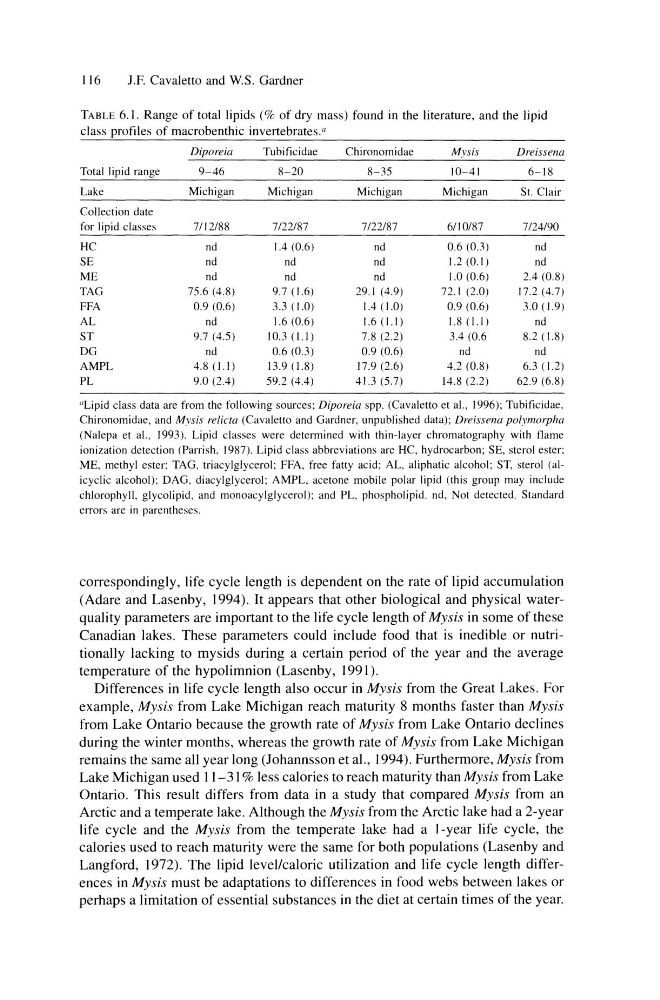
TABLE 6.1. Range of total lipids (% of dry mass) found in the literature, and the lipid
class profiles of macrobenthic invertebrates. a
Diporeia
Tubificidae
Chironomidae
Mysis
Dreissena
Total lipid range
9-46
8-20
8-35
10-41
6-18
Lake
Michigan
Michigan
Michigan
Michigan
SI. Clair
Collection date
for lipid classes
7112/88
7/22/87
7122/87
6/10/87
7/24/90
HC
nd
1.4 (0.6)
nd
0.6 (0.3)
nd
SE
nd
nd
nd
1.2 (0.1)
nd
ME
nd
nd
nd
1.0 (0.6)
2.4 (0.8)
TAG
75.6 (4.8)
9.7 (1.6)
29.1 (4.9)
72.1 (2.0)
17.2 (4.7)
FFA
0.9 (0.6)
3.3 (1.0)
1.4 (1.0)
0.9 (0.6)
3.0 (1.9)
AL
nd
1.6 (0.6)
1.6 (I.l)
1.80.1)
nd
ST
9.7 (4.5)
10.3 (1.I)
7.8 (2.2)
3.4 (0.6
8.2 (1.8)
DG
nd
0.6 (0.3)
0.9 (0.6)
nd
nd
AMPL
4.8 (1.1)
13.9 (l.8)
17.9 (2.6)
4.2 (0.8)
6.3 (1.2)
PL
9.0 (2.4)
59.2 (4.4)
41.3 (5.7)
14.8 (2.2)
62.9 (6.8)
aLipid class data are from the following sources; Diporeia spp. (Cavaletto et aI., 1996); Tubificidae,
Chironomidae, and Mysis relieta (Cavaletto and Gardner, unpublished data); Dreissena polymorpha
(Nalepa et aI., 1993). Lipid classes were determined with thin-layer chromatography with flame
ionization detection (Parrish, 1987). Lipid class abbreviations are HC, hydrocarbon; SE, sterol ester;
ME, methyl ester; TAG, triacylglycerol; FFA, free fatty acid; AL, aliphatic alcohol; ST, sterol (alicyclic alcohol); DAG, diacylglycerol; AMPL, acetone mobile polar lipid (this group may include
chlorophyll, glycolipid, and monoacylglycerol); and PL, phospholipid. nd, Not detected. Standard
errors are in parentheses.
correspondingly, life cycle length is dependent on the rate of lipid accumulation
(Adare and Lasenby, 1994). It appears that other biological and physical waterquality parameters are important to the life cycle length of Mysis in some of these
Canadian lakes. These parameters could include food that is inedible or nutritionally lacking to mysids during a certain period of the year and the average
temperature of the hypolimnion (Lasenby, 1991).
Differences in life cycle length also occur in Mysis from the Great Lakes. For
example, Mysis from Lake Michigan reach maturity 8 months faster than Mysis
from Lake Ontario because the growth rate of Mysis from Lake Ontario declines
during the winter months, whereas the growth rate of Mysis from Lake Michigan
remains the same all year long (Johanns son et aI., 1994). Furthermore, Mysis from
Lake Michigan used 11-31 % less calories to reach maturity than Mysis from Lake
Ontario. This result differs from data in a study that compared Mysis from an
Arctic and a temperate lake. Although the Mysis from the Arctic lake had a 2-year
life cycle and the Mysis from the temperate lake had a I-year life cycle, the
calories used to reach maturity were the same for both populations (Lasenby and
Langford, 1972). The lipid level/caloric utilization and life cycle length differences in Mysis must be adaptations to differences in food webs between lakes or
perhaps a limitation of essential substances in the diet at certain times of the year.
J.E Cavaletto and W.S. Gardner
TABLE 6.1. Range of total lipids (% of dry mass) found in the literature, and the lipid
class profiles of macrobenthic invertebrates. a
Diporeia
Tubificidae
Chironomidae
Mysis
Dreissena
Total lipid range
9-46
8-20
8-35
10-41
6-18
Lake
Michigan
Michigan
Michigan
Michigan
SI. Clair
Collection date
for lipid classes
7112/88
7/22/87
7122/87
6/10/87
7/24/90
HC
nd
1.4 (0.6)
nd
0.6 (0.3)
nd
SE
nd
nd
nd
1.2 (0.1)
nd
ME
nd
nd
nd
1.0 (0.6)
2.4 (0.8)
TAG
75.6 (4.8)
9.7 (1.6)
29.1 (4.9)
72.1 (2.0)
17.2 (4.7)
FFA
0.9 (0.6)
3.3 (1.0)
1.4 (1.0)
0.9 (0.6)
3.0 (1.9)
AL
nd
1.6 (0.6)
1.6 (I.l)
1.80.1)
nd
ST
9.7 (4.5)
10.3 (1.I)
7.8 (2.2)
3.4 (0.6
8.2 (1.8)
DG
nd
0.6 (0.3)
0.9 (0.6)
nd
nd
AMPL
4.8 (1.1)
13.9 (l.8)
17.9 (2.6)
4.2 (0.8)
6.3 (1.2)
PL
9.0 (2.4)
59.2 (4.4)
41.3 (5.7)
14.8 (2.2)
62.9 (6.8)
aLipid class data are from the following sources; Diporeia spp. (Cavaletto et aI., 1996); Tubificidae,
Chironomidae, and Mysis relieta (Cavaletto and Gardner, unpublished data); Dreissena polymorpha
(Nalepa et aI., 1993). Lipid classes were determined with thin-layer chromatography with flame
ionization detection (Parrish, 1987). Lipid class abbreviations are HC, hydrocarbon; SE, sterol ester;
ME, methyl ester; TAG, triacylglycerol; FFA, free fatty acid; AL, aliphatic alcohol; ST, sterol (alicyclic alcohol); DAG, diacylglycerol; AMPL, acetone mobile polar lipid (this group may include
chlorophyll, glycolipid, and monoacylglycerol); and PL, phospholipid. nd, Not detected. Standard
errors are in parentheses.
correspondingly, life cycle length is dependent on the rate of lipid accumulation
(Adare and Lasenby, 1994). It appears that other biological and physical waterquality parameters are important to the life cycle length of Mysis in some of these
Canadian lakes. These parameters could include food that is inedible or nutritionally lacking to mysids during a certain period of the year and the average
temperature of the hypolimnion (Lasenby, 1991).
Differences in life cycle length also occur in Mysis from the Great Lakes. For
example, Mysis from Lake Michigan reach maturity 8 months faster than Mysis
from Lake Ontario because the growth rate of Mysis from Lake Ontario declines
during the winter months, whereas the growth rate of Mysis from Lake Michigan
remains the same all year long (Johanns son et aI., 1994). Furthermore, Mysis from
Lake Michigan used 11-31 % less calories to reach maturity than Mysis from Lake
Ontario. This result differs from data in a study that compared Mysis from an
Arctic and a temperate lake. Although the Mysis from the Arctic lake had a 2-year
life cycle and the Mysis from the temperate lake had a I-year life cycle, the
calories used to reach maturity were the same for both populations (Lasenby and
Langford, 1972). The lipid level/caloric utilization and life cycle length differences in Mysis must be adaptations to differences in food webs between lakes or
perhaps a limitation of essential substances in the diet at certain times of the year.