

104
C.E. Goulden et al.
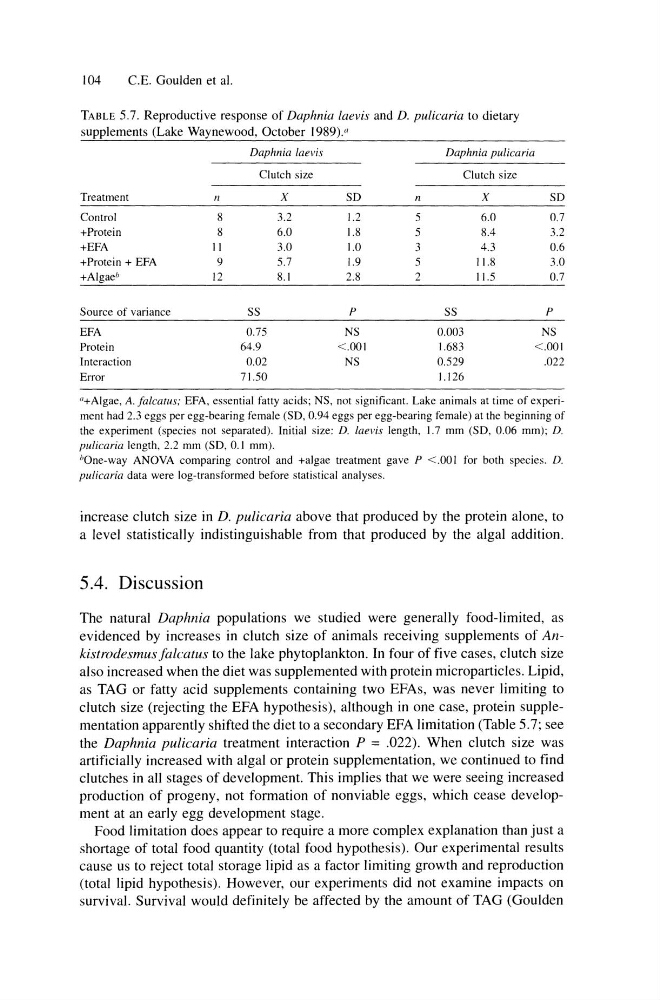
TABLE 5.7. Reproductive response of Daphnia laevis and D. pulicaria to dietary
supplements (Lake Waynewood, October 1989).a
Daphnia laevis
Daphnia pulicaria
Clutch size
Clutch size
Treatment
n
X
SD
n
X
Control
8
3.2
1.2
5
6.0
+Protein
8
6.0
1.8
5
8.4
+EFA
II
3.0
1.0
3
4.3
+Protein + EFA
9
5.7
1.9
5
11.8
+Algae h
12
8.1
2.8
2
11.5
Source of variance
SS
P
SS
EFA
0.75
NS
0.003
Protein
64.9
<.001
1.683
Interaction
0.02
NS
0.529
Error
71.50
1.126
SD
0.7
3.2
0.6
3.0
0.7
P
NS
<.001
.022
"+Algae, A. falcatus; EFA, essential fatty acids; NS, not significant. Lake animals at time of experiment had 2.3 eggs per egg-bearing female (SD, 0.94 eggs per egg-bearing female) at the beginning of
the experiment (species not separated). Initial size: D. laevis length, 1.7 mm (SD, 0.06 mm); D.
pulicaria length, 2.2 mm (SD, 0.1 mm).
hOne-way ANOVA comparing control and +algae treatment gave P <.001 for both species. D.
pulicaria data were log-transformed before statistical analyses.
increase clutch size in D. pulicaria above that produced by the protein alone, to
a level statisticaIIy indistinguishable from that produced by the algal addition.
5.4. Discussion
The natural Daphnia populations we studied were generally food-limited, as
evidenced by increases in clutch size of animals receiving supplements of Ankistrodesmus falcatus to the lake phytoplankton. In four of five cases, clutch size
also increased when the diet was supplemented with protein microparticles. Lipid,
as TAG or fatty acid supplements containing two EFAs, was never limiting to
clutch size (rejecting the EFA hypothesis), although in one case, protein supplementation apparently shifted the diet to a secondary EFA limitation (Table 5.7; see
the Daphnia pulicaria treatment interaction P = .022). When clutch size was
artificially increased with algal or protein supplementation, we continued to find
clutches in all stages of development. This implies that we were seeing increased
production of progeny, not formation of nonviable eggs, which cease development at an early egg development stage.
Food limitation does appear to require a more complex explanation than just a
shortage of total food quantity (total food hypothesis). Our experimental results
cause us to reject total storage lipid as a factor limiting growth and reproduction
(total lipid hypothesis). However, our experiments did not examine impacts on
survival. Survival would definitely be affected by the amount of TAG (Goulden
C.E. Goulden et al.
TABLE 5.7. Reproductive response of Daphnia laevis and D. pulicaria to dietary
supplements (Lake Waynewood, October 1989).a
Daphnia laevis
Daphnia pulicaria
Clutch size
Clutch size
Treatment
n
X
SD
n
X
Control
8
3.2
1.2
5
6.0
+Protein
8
6.0
1.8
5
8.4
+EFA
II
3.0
1.0
3
4.3
+Protein + EFA
9
5.7
1.9
5
11.8
+Algae h
12
8.1
2.8
2
11.5
Source of variance
SS
P
SS
EFA
0.75
NS
0.003
Protein
64.9
<.001
1.683
Interaction
0.02
NS
0.529
Error
71.50
1.126
SD
0.7
3.2
0.6
3.0
0.7
P
NS
<.001
.022
"+Algae, A. falcatus; EFA, essential fatty acids; NS, not significant. Lake animals at time of experiment had 2.3 eggs per egg-bearing female (SD, 0.94 eggs per egg-bearing female) at the beginning of
the experiment (species not separated). Initial size: D. laevis length, 1.7 mm (SD, 0.06 mm); D.
pulicaria length, 2.2 mm (SD, 0.1 mm).
hOne-way ANOVA comparing control and +algae treatment gave P <.001 for both species. D.
pulicaria data were log-transformed before statistical analyses.
increase clutch size in D. pulicaria above that produced by the protein alone, to
a level statisticaIIy indistinguishable from that produced by the algal addition.
5.4. Discussion
The natural Daphnia populations we studied were generally food-limited, as
evidenced by increases in clutch size of animals receiving supplements of Ankistrodesmus falcatus to the lake phytoplankton. In four of five cases, clutch size
also increased when the diet was supplemented with protein microparticles. Lipid,
as TAG or fatty acid supplements containing two EFAs, was never limiting to
clutch size (rejecting the EFA hypothesis), although in one case, protein supplementation apparently shifted the diet to a secondary EFA limitation (Table 5.7; see
the Daphnia pulicaria treatment interaction P = .022). When clutch size was
artificially increased with algal or protein supplementation, we continued to find
clutches in all stages of development. This implies that we were seeing increased
production of progeny, not formation of nonviable eggs, which cease development at an early egg development stage.
Food limitation does appear to require a more complex explanation than just a
shortage of total food quantity (total food hypothesis). Our experimental results
cause us to reject total storage lipid as a factor limiting growth and reproduction
(total lipid hypothesis). However, our experiments did not examine impacts on
survival. Survival would definitely be affected by the amount of TAG (Goulden