

281
problem of selectivity (Kinchington et al. 1995). There are many viral diseases that
we continue to fight relentlessly, yet they prove to be infectious and fatal. While
some can be curtailed by the use of antiviral drugs, some are developing resistance
to these drugs over a period of time. Plant-derived compounds like ellagitannins
have potent antiviral activity, and they inhibit even highly resistant strains of the
herpes simplex virus. Such plant-derived antiviral agents are to be commercialized
at low costs (Mishra et al. 2013).
Many plants have been reported to contain antiviral components such as terpenoids, polyphenols, coumarins, proteins, alkaloids, tannins and biflavonoids, which
can inhibit viral life cycle at different stages (Chinsembu and Hedimbi 2009). The
(+) -calanolide A, isolated from Calophyllum lanigerum, is a non-nucleoside inhibitor of HIV-1 reverse transcriptase, and it acts through a complex mechanism which
involves possible binding at two sites (Kashman et al. 1992; Chinsembu and
Hedimbi 2009). This natural compound had shown positive results in in vitro and
animal studies. PA-334B, which is a khellactone coumarin (Kothari 2007), and
PA-457, a derivative of betulinic acid (Li et al. 2003), are also plant-derived antiviral
compounds that have been under clinical trials. Anti-HSV-2 activity has been shown
by extracts from Rhus javanica (Nakano et al. 1998), which contains moronic acid,
a simple triterpenoid keto acid, and it has been effective against wild-type HSV
(both type 1 and type 2) oral infection in mice (Kurokawa et al. 1999).
The plant-based antiviral compounds would show only minimum side effects in
the long run and may also be used in combination with other known effective antiviral molecules and drugs to cure vicious infections such as HIV, which has a tendency to undergo rapid mutation to develop into drug-resistant forms. Table 11.2
shows the details of some of the plant-derived antiviral compounds.
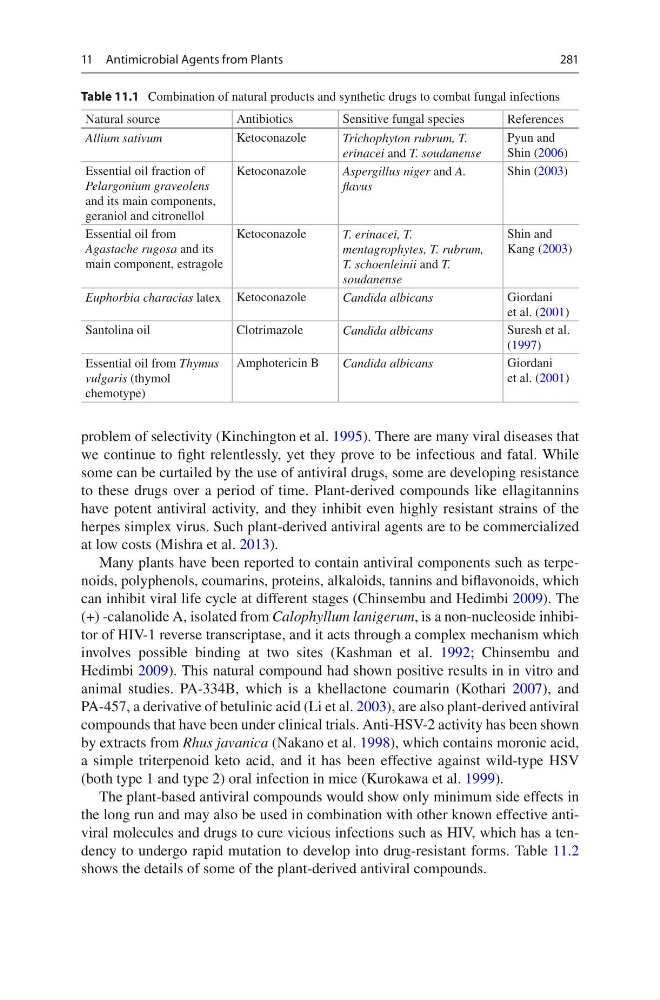
Table 11.1 Combination of natural products and synthetic drugs to combat fungal infections
Natural source
Antibiotics
Sensitive fungal species
References
Allium sativum
Ketoconazole
Trichophyton rubrum, T.
erinacei and T. soudanense
Pyun and
Shin (2006)
Essential oil fraction of
Pelargonium graveolens
and its main components,
geraniol and citronellol
Ketoconazole
Aspergillus niger and A.
flavus
Shin (2003)
Essential oil from
Agastache rugosa and its
main component, estragole
Ketoconazole
T. erinacei, T.
mentagrophytes, T. rubrum,
T. schoenleinii and T.
soudanense
Shin and
Kang (2003)
Euphorbia characias latex Ketoconazole
Candida albicans
Giordani
et al. (2001)
Santolina oil
Clotrimazole
Candida albicans
Suresh et al.
(1997)
Essential oil from Thymus
vulgaris (thymol
chemotype)
Amphotericin B
Candida albicans
Giordani
et al. (2001)
11 Antimicrobial Agents from Plants
problem of selectivity (Kinchington et al. 1995). There are many viral diseases that
we continue to fight relentlessly, yet they prove to be infectious and fatal. While
some can be curtailed by the use of antiviral drugs, some are developing resistance
to these drugs over a period of time. Plant-derived compounds like ellagitannins
have potent antiviral activity, and they inhibit even highly resistant strains of the
herpes simplex virus. Such plant-derived antiviral agents are to be commercialized
at low costs (Mishra et al. 2013).
Many plants have been reported to contain antiviral components such as terpenoids, polyphenols, coumarins, proteins, alkaloids, tannins and biflavonoids, which
can inhibit viral life cycle at different stages (Chinsembu and Hedimbi 2009). The
(+) -calanolide A, isolated from Calophyllum lanigerum, is a non-nucleoside inhibitor of HIV-1 reverse transcriptase, and it acts through a complex mechanism which
involves possible binding at two sites (Kashman et al. 1992; Chinsembu and
Hedimbi 2009). This natural compound had shown positive results in in vitro and
animal studies. PA-334B, which is a khellactone coumarin (Kothari 2007), and
PA-457, a derivative of betulinic acid (Li et al. 2003), are also plant-derived antiviral
compounds that have been under clinical trials. Anti-HSV-2 activity has been shown
by extracts from Rhus javanica (Nakano et al. 1998), which contains moronic acid,
a simple triterpenoid keto acid, and it has been effective against wild-type HSV
(both type 1 and type 2) oral infection in mice (Kurokawa et al. 1999).
The plant-based antiviral compounds would show only minimum side effects in
the long run and may also be used in combination with other known effective antiviral molecules and drugs to cure vicious infections such as HIV, which has a tendency to undergo rapid mutation to develop into drug-resistant forms. Table 11.2
shows the details of some of the plant-derived antiviral compounds.
Table 11.1 Combination of natural products and synthetic drugs to combat fungal infections
Natural source
Antibiotics
Sensitive fungal species
References
Allium sativum
Ketoconazole
Trichophyton rubrum, T.
erinacei and T. soudanense
Pyun and
Shin (2006)
Essential oil fraction of
Pelargonium graveolens
and its main components,
geraniol and citronellol
Ketoconazole
Aspergillus niger and A.
flavus
Shin (2003)
Essential oil from
Agastache rugosa and its
main component, estragole
Ketoconazole
T. erinacei, T.
mentagrophytes, T. rubrum,
T. schoenleinii and T.
soudanense
Shin and
Kang (2003)
Euphorbia characias latex Ketoconazole
Candida albicans
Giordani
et al. (2001)
Santolina oil
Clotrimazole
Candida albicans
Suresh et al.
(1997)
Essential oil from Thymus
vulgaris (thymol
chemotype)
Amphotericin B
Candida albicans
Giordani
et al. (2001)
11 Antimicrobial Agents from Plants