

273
11.2.1 Alkaloids
Alkaloids are generally heterocyclic nitrogen compounds, and amino acids are the
most common precursors of alkaloids. They are often colourless in nature, optically
active and most are crystalline and a few like nicotine exist in liquid form at room
temperature. Morphine isolated from Papaver somniferum was the first medically
useful alkaloid. Antimicrobial properties were shown by many of the diterpene
alkaloids from plants belonging to Ranunculaceae group (Atta-ur-Rahman and
Choudhary 1999). Berberine is an important alkaloid with a wide range of activity
against bacteria, fungi, viruses, trypanosomes and plasmodia (Kim et al. 2002;
Freiburghaus et al. 1996; Omulokoli et al. 1997). It is effective against different
microbes which target RNA polymerase, topoisomerase IV, gyrase as well as nucleic
acid (Yi et al. 2007). The aromatic alkaloids like berberine and harmane possess
DNA intercalating activity also (Phillipson and O’Neill 1987). Berberine also targets FtsZ protein, which is involved in the bacterial cell division machinery and
perturbs cytokinesis (Domadia et al. 2008; Boberek et al. 2010).
Carpaine is a major antimicrobial alkaloid obtained from the leaves and seeds of
Carica papaya L. In addition to carpaine, C. papaya contains many other biologically important compounds of which the alkaloid is a significant group (Giordani
et al. 1991). It was found that sanguinarine, a benzophenanthridine alkaloid from
Sanquinaria canadensis, induced filamentation in Gram-positive as well as Gramnegative bacteria and inhibited bacterial cell division. It also perturbed the cytokinetic Z-ring formation in Escherichia coli (Beuria et al. 2005). Developments of
drug leads based on plant-derived alkaloids are scientifically relevant and attract the
attention of more and more researchers and entrepreneurs. Countries like India
where the diversity of living things is huge should focus more on in-depth studies
for the sustainable utilization of medicinal herbs by way of identifying and characterizing novel antimicrobial agents.
HO
O
H
HO
O
O O
OH
H
N
CH3
O
O
O
O
O
HO
N
+
CH3
CH3
HO
OH
OH
OH
HO
HO
HO
O
O
HO
OH
N
O
HO
OCH 3
CH 3
CH 3
H 3 C
O
O
O
O
N
H
O
O
O
O
H
H
H
OH
H
CH3
CH3
H3C
O
Morphine
Berberine
Eugenol
Artimisinin
Totarol
Sanguinarine
Capsaicin
Hypericin
Resveratrol
Warfarin
+
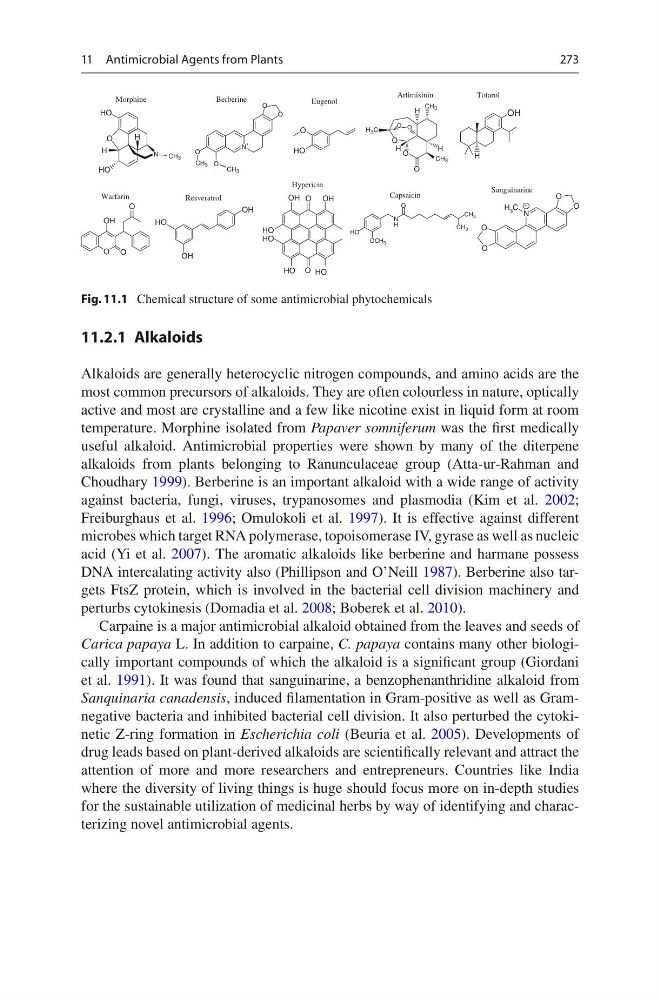
Fig. 11.1 Chemical structure of some antimicrobial phytochemicals
11 Antimicrobial Agents from Plants
11.2.1 Alkaloids
Alkaloids are generally heterocyclic nitrogen compounds, and amino acids are the
most common precursors of alkaloids. They are often colourless in nature, optically
active and most are crystalline and a few like nicotine exist in liquid form at room
temperature. Morphine isolated from Papaver somniferum was the first medically
useful alkaloid. Antimicrobial properties were shown by many of the diterpene
alkaloids from plants belonging to Ranunculaceae group (Atta-ur-Rahman and
Choudhary 1999). Berberine is an important alkaloid with a wide range of activity
against bacteria, fungi, viruses, trypanosomes and plasmodia (Kim et al. 2002;
Freiburghaus et al. 1996; Omulokoli et al. 1997). It is effective against different
microbes which target RNA polymerase, topoisomerase IV, gyrase as well as nucleic
acid (Yi et al. 2007). The aromatic alkaloids like berberine and harmane possess
DNA intercalating activity also (Phillipson and O’Neill 1987). Berberine also targets FtsZ protein, which is involved in the bacterial cell division machinery and
perturbs cytokinesis (Domadia et al. 2008; Boberek et al. 2010).
Carpaine is a major antimicrobial alkaloid obtained from the leaves and seeds of
Carica papaya L. In addition to carpaine, C. papaya contains many other biologically important compounds of which the alkaloid is a significant group (Giordani
et al. 1991). It was found that sanguinarine, a benzophenanthridine alkaloid from
Sanquinaria canadensis, induced filamentation in Gram-positive as well as Gramnegative bacteria and inhibited bacterial cell division. It also perturbed the cytokinetic Z-ring formation in Escherichia coli (Beuria et al. 2005). Developments of
drug leads based on plant-derived alkaloids are scientifically relevant and attract the
attention of more and more researchers and entrepreneurs. Countries like India
where the diversity of living things is huge should focus more on in-depth studies
for the sustainable utilization of medicinal herbs by way of identifying and characterizing novel antimicrobial agents.
HO
O
H
HO
O
O O
OH
H
N
CH3
O
O
O
O
O
HO
N
+
CH3
CH3
HO
OH
OH
OH
HO
HO
HO
O
O
HO
OH
N
O
HO
OCH 3
CH 3
CH 3
H 3 C
O
O
O
O
N
H
O
O
O
O
H
H
H
OH
H
CH3
CH3
H3C
O
Morphine
Berberine
Eugenol
Artimisinin
Totarol
Sanguinarine
Capsaicin
Hypericin
Resveratrol
Warfarin
+
Fig. 11.1 Chemical structure of some antimicrobial phytochemicals
11 Antimicrobial Agents from Plants