

255
10.7.4 Histamine Inhibitors in Immune Disorders
Histamine blockers mostly fall into the class of histamine receptor antagonists. H1
antagonists prevent binding of histamine to H1 receptors and help to ameliorate
inflammatory and immune reactions associated with allergy and associated complications. Histamine plays a critical function in type I hypersensitive allergic reaction.
The allergen interacts with IgE antibody and gets crosslinked with the cells expressing IgE receptors, such as mast cells, basophils, and triggers a series of complex
reactions, eventually leading to cell degranulation and the release of histamine and
other inflammatory chemical mediators. The released histamine interacts with
respective cells expressing histamine receptors and imparts a variety of biological
responses implicated in inflammation and immune regulation. The role of histamines and their receptors in the development of different chronic disease conditions
has been previously described. Agents blocking histamine activity (antihistamines)
are considered as likely therapeutic solution against a number of manifestations.
Antihistamines that target H1 receptor antagonists are used in the treatment of allergic hay fever and rhinitis. Many herbal molecules and antioxidants are shown to
possess antihistaminic action. Vitamin C and quercetin can decrease the production
of histamine. Fennel, cardamom, ginger, and mangosteen extract have been proved
as potential antihistamines. Histamine, acting on H1 receptors, produces a variety of
effects, including pruritus, vasodilation, hypotension, flushing, bronchoconstriction, etc. Antihistamines that antagonize H2 receptors inhibit histamine- induced
stomach acid secretion and are thus clinically exploited for treating peptic ulcer. H3
antagonists are in clinical trials against complications pertaining to obesity and central nervous system disorders (memory, learning deficits, and epilepsy). H4 receptor
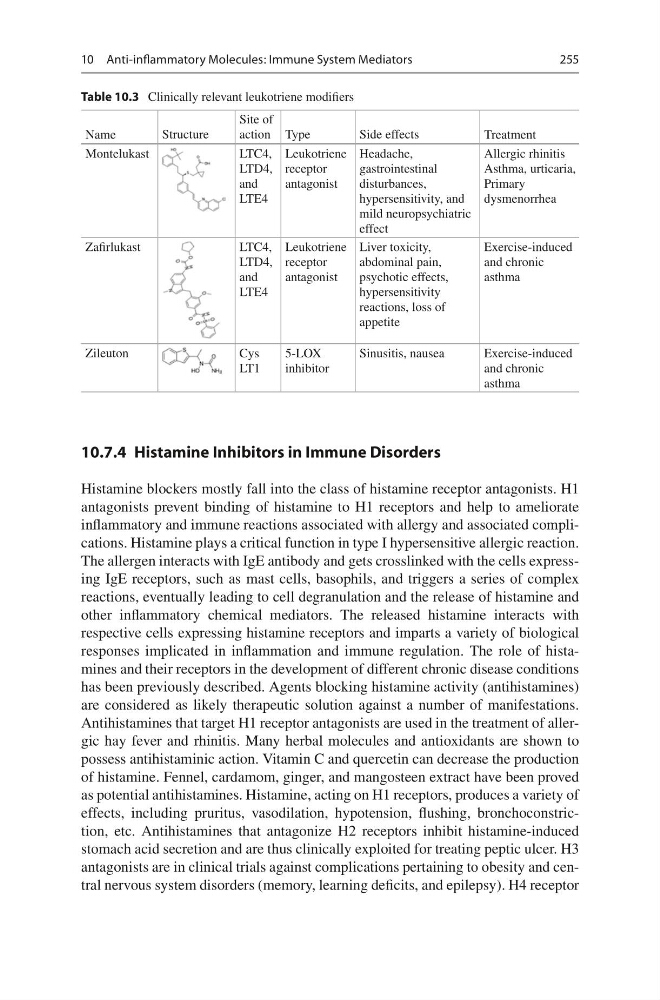
Table 10.3 Clinically relevant leukotriene modifiers
Name
Structure
Site of
action Type
Side effects
Treatment
Montelukast
LTC4,
LTD4,
and
LTE4
Leukotriene
receptor
antagonist
Headache,
gastrointestinal
disturbances,
hypersensitivity, and
mild neuropsychiatric
effect
Allergic rhinitis
Asthma, urticaria,
Primary
dysmenorrhea
Zafirlukast
LTC4,
LTD4,
and
LTE4
Leukotriene
receptor
antagonist
Liver toxicity,
abdominal pain,
psychotic effects,
hypersensitivity
reactions, loss of
appetite
Exercise-induced
and chronic
asthma
Zileuton
Cys
LT1
5-LOX
inhibitor
Sinusitis, nausea
Exercise-induced
and chronic
asthma
10 Anti-inflammatory Molecules: Immune System Mediators
10.7.4 Histamine Inhibitors in Immune Disorders
Histamine blockers mostly fall into the class of histamine receptor antagonists. H1
antagonists prevent binding of histamine to H1 receptors and help to ameliorate
inflammatory and immune reactions associated with allergy and associated complications. Histamine plays a critical function in type I hypersensitive allergic reaction.
The allergen interacts with IgE antibody and gets crosslinked with the cells expressing IgE receptors, such as mast cells, basophils, and triggers a series of complex
reactions, eventually leading to cell degranulation and the release of histamine and
other inflammatory chemical mediators. The released histamine interacts with
respective cells expressing histamine receptors and imparts a variety of biological
responses implicated in inflammation and immune regulation. The role of histamines and their receptors in the development of different chronic disease conditions
has been previously described. Agents blocking histamine activity (antihistamines)
are considered as likely therapeutic solution against a number of manifestations.
Antihistamines that target H1 receptor antagonists are used in the treatment of allergic hay fever and rhinitis. Many herbal molecules and antioxidants are shown to
possess antihistaminic action. Vitamin C and quercetin can decrease the production
of histamine. Fennel, cardamom, ginger, and mangosteen extract have been proved
as potential antihistamines. Histamine, acting on H1 receptors, produces a variety of
effects, including pruritus, vasodilation, hypotension, flushing, bronchoconstriction, etc. Antihistamines that antagonize H2 receptors inhibit histamine- induced
stomach acid secretion and are thus clinically exploited for treating peptic ulcer. H3
antagonists are in clinical trials against complications pertaining to obesity and central nervous system disorders (memory, learning deficits, and epilepsy). H4 receptor
Table 10.3 Clinically relevant leukotriene modifiers
Name
Structure
Site of
action Type
Side effects
Treatment
Montelukast
LTC4,
LTD4,
and
LTE4
Leukotriene
receptor
antagonist
Headache,
gastrointestinal
disturbances,
hypersensitivity, and
mild neuropsychiatric
effect
Allergic rhinitis
Asthma, urticaria,
Primary
dysmenorrhea
Zafirlukast
LTC4,
LTD4,
and
LTE4
Leukotriene
receptor
antagonist
Liver toxicity,
abdominal pain,
psychotic effects,
hypersensitivity
reactions, loss of
appetite
Exercise-induced
and chronic
asthma
Zileuton
Cys
LT1
5-LOX
inhibitor
Sinusitis, nausea
Exercise-induced
and chronic
asthma
10 Anti-inflammatory Molecules: Immune System Mediators