

251
impact on the function/production of various cellular components of the immune
system. Therefore, therapeutically significant response can be achieved by a careful
selection of inflammatory targets with positive immune regulatory action. Thus,
anti-inflammatory strategies have been developed as an attractive therapeutic rationale toward the treatment of many immune disorders with inflammatory background
with the hope to ameliorate the hyperimmune response underlying these disease
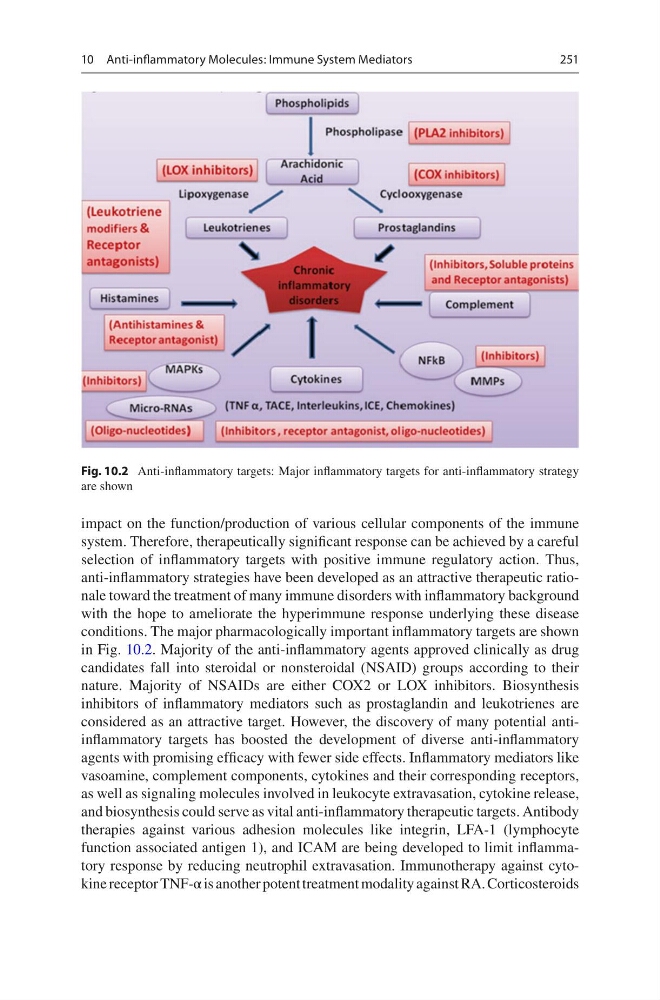
conditions. The major pharmacologically important inflammatory targets are shown
in Fig. 10.2. Majority of the anti-inflammatory agents approved clinically as drug
candidates fall into steroidal or nonsteroidal (NSAID) groups according to their
nature. Majority of NSAIDs are either COX2 or LOX inhibitors. Biosynthesis
inhibitors of inflammatory mediators such as prostaglandin and leukotrienes are
considered as an attractive target. However, the discovery of many potential antiinflammatory targets has boosted the development of diverse anti-inflammatory
agents with promising efficacy with fewer side effects. Inflammatory mediators like
vasoamine, complement components, cytokines and their corresponding receptors,
as well as signaling molecules involved in leukocyte extravasation, cytokine release,
and biosynthesis could serve as vital anti-inflammatory therapeutic targets. Antibody
therapies against various adhesion molecules like integrin, LFA-1 (lymphocyte
function associated antigen 1), and ICAM are being developed to limit inflammatory response by reducing neutrophil extravasation. Immunotherapy against cytokine receptor TNF-α is another potent treatment modality against RA. Corticosteroids
Fig. 10.2 Anti-inflammatory targets: Major inflammatory targets for anti-inflammatory strategy
are shown
10 Anti-inflammatory Molecules: Immune System Mediators
impact on the function/production of various cellular components of the immune
system. Therefore, therapeutically significant response can be achieved by a careful
selection of inflammatory targets with positive immune regulatory action. Thus,
anti-inflammatory strategies have been developed as an attractive therapeutic rationale toward the treatment of many immune disorders with inflammatory background
with the hope to ameliorate the hyperimmune response underlying these disease
conditions. The major pharmacologically important inflammatory targets are shown
in Fig. 10.2. Majority of the anti-inflammatory agents approved clinically as drug
candidates fall into steroidal or nonsteroidal (NSAID) groups according to their
nature. Majority of NSAIDs are either COX2 or LOX inhibitors. Biosynthesis
inhibitors of inflammatory mediators such as prostaglandin and leukotrienes are
considered as an attractive target. However, the discovery of many potential antiinflammatory targets has boosted the development of diverse anti-inflammatory
agents with promising efficacy with fewer side effects. Inflammatory mediators like
vasoamine, complement components, cytokines and their corresponding receptors,
as well as signaling molecules involved in leukocyte extravasation, cytokine release,
and biosynthesis could serve as vital anti-inflammatory therapeutic targets. Antibody
therapies against various adhesion molecules like integrin, LFA-1 (lymphocyte
function associated antigen 1), and ICAM are being developed to limit inflammatory response by reducing neutrophil extravasation. Immunotherapy against cytokine receptor TNF-α is another potent treatment modality against RA. Corticosteroids
Fig. 10.2 Anti-inflammatory targets: Major inflammatory targets for anti-inflammatory strategy
are shown
10 Anti-inflammatory Molecules: Immune System Mediators