

179
other related cellular proteins. The reaction involves the shift of farnesyl isoprenoid
group from farnesylpyrophosphate to the terminal cysteine present on the carboxyl
end of destined proteins. This transfer of the franesyl isoprenoid group is important
for activating the functional properties and cellular localization of the target proteins (Cox and Der 1997). The fully active and functional Ras protein transfers
mitogenic signals from various cellular locations to the nucleus. Mutation in the Ras
oncogene will lead to permanent activation of Ras proteins thereby leading to
uncontrolled proliferation and growth, eventually leading to cancer. Ras oncogene
is found to be in a mutated status in almost 20% of cancers. So blocking the process
of Ras activation by FTase with FTase inhibitors like manumycin A is a promising
treatment option in cancer therapy. Manumycin A has been found to have varying
effects on the cell cycle based on the origin of cancer cells. Cell cycle arrest at G2/M
phase was observed in case of treatment of the compound to hepatocellular carcinoma cells (HepG2) and breast cancer cells (MDAMB-231 and MCF7) (Zhou et al.
2003; Haddadin 2010). Whereas in case of colon adenocarcinoma cells (HT-29),
cell cycle arrest was observed in the S phase of cell cycle (Sačková et al. 2011). The
compound can trigger cancer cells to undergo apoptosis. The agent blocks Ras
farnesylation of p21, thus inducing apoptosis in a time as well as concentrationdependant manner (Wang and Macaulay 1999). In HepG2 cells, the treatment leads
to activation of caspases which in turn leads to cleavage of poly (ADP-ribose)
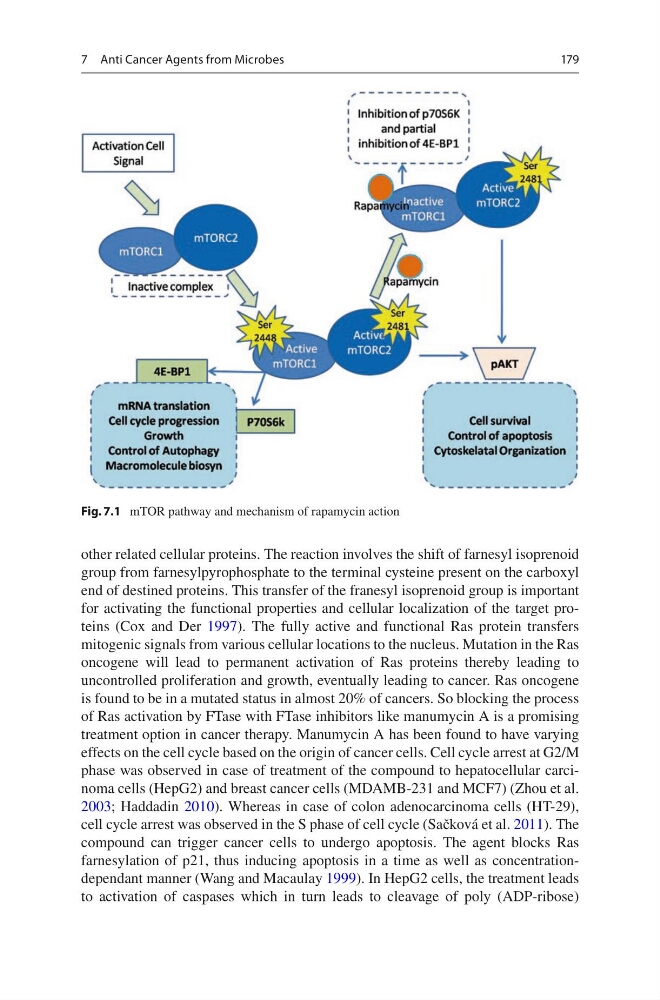
Fig. 7.1 mTOR pathway and mechanism of rapamycin action
7 Anti Cancer Agents from Microbes
other related cellular proteins. The reaction involves the shift of farnesyl isoprenoid
group from farnesylpyrophosphate to the terminal cysteine present on the carboxyl
end of destined proteins. This transfer of the franesyl isoprenoid group is important
for activating the functional properties and cellular localization of the target proteins (Cox and Der 1997). The fully active and functional Ras protein transfers
mitogenic signals from various cellular locations to the nucleus. Mutation in the Ras
oncogene will lead to permanent activation of Ras proteins thereby leading to
uncontrolled proliferation and growth, eventually leading to cancer. Ras oncogene
is found to be in a mutated status in almost 20% of cancers. So blocking the process
of Ras activation by FTase with FTase inhibitors like manumycin A is a promising
treatment option in cancer therapy. Manumycin A has been found to have varying
effects on the cell cycle based on the origin of cancer cells. Cell cycle arrest at G2/M
phase was observed in case of treatment of the compound to hepatocellular carcinoma cells (HepG2) and breast cancer cells (MDAMB-231 and MCF7) (Zhou et al.
2003; Haddadin 2010). Whereas in case of colon adenocarcinoma cells (HT-29),
cell cycle arrest was observed in the S phase of cell cycle (Sačková et al. 2011). The
compound can trigger cancer cells to undergo apoptosis. The agent blocks Ras
farnesylation of p21, thus inducing apoptosis in a time as well as concentrationdependant manner (Wang and Macaulay 1999). In HepG2 cells, the treatment leads
to activation of caspases which in turn leads to cleavage of poly (ADP-ribose)
Fig. 7.1 mTOR pathway and mechanism of rapamycin action
7 Anti Cancer Agents from Microbes