

154
safety aspects. Enzymes from hazardous microorganisms and from slow growing or
limited plant or animal tissue may be cloned into safe high-production microorganisms. Eventually, enzymes may be improved to suit various industrial processes.
6.3.1 Objectives and Principles
The principal objective of enzyme engineering is in the production of an enzyme
that is more beneficial for industrial and/or other applications. The various characteristics of an enzyme that may be altered to accomplish this objective are to improve
kinetic properties, to eliminate allosteric regulation, to enhance substrate and reaction specificity, to increase thermostability, to make it suitable for use in organic
solvents, to increase or decrease optimal temperature and pH, to enhance stability
towards oxidizing agents and heavy metals, to be resistant to proteolytic degradation, and to fuse two or more enzymes to create bi- and poly-functional enzymes.
Stability to heavy metals can be improved by replacing Cys and Met residues, and
by removing surface carboxyl groups. Similarly, stability to oxidizing agents can be
increased by replacing easily oxidizable residues, e.g., Cys, Trp, Met, by sterically
similar but non-oxidizable amino acids, e.g., Ser, Phe, Glu, respectively. Increased
stability at non-physiological temperatures, pH, etc., can be achieved by introduction of disulphide bridges in the enzyme molecule and by increasing the number of
salt bridges or that of internal hydrogen bonds.
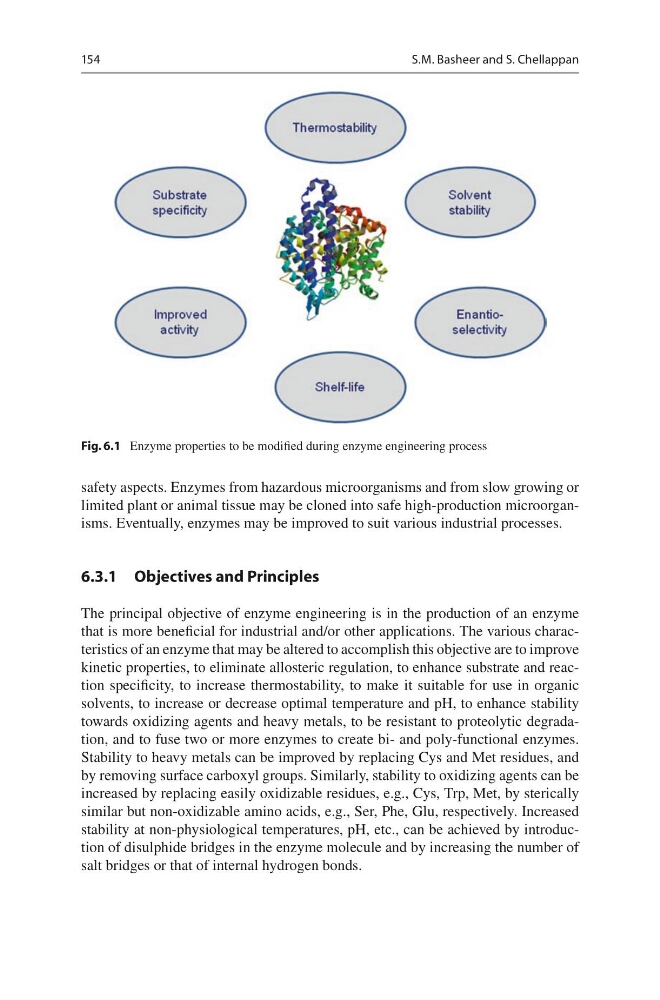
Fig. 6.1 Enzyme properties to be modified during enzyme engineering process
S.M. Basheer and S. Chellappan
safety aspects. Enzymes from hazardous microorganisms and from slow growing or
limited plant or animal tissue may be cloned into safe high-production microorganisms. Eventually, enzymes may be improved to suit various industrial processes.
6.3.1 Objectives and Principles
The principal objective of enzyme engineering is in the production of an enzyme
that is more beneficial for industrial and/or other applications. The various characteristics of an enzyme that may be altered to accomplish this objective are to improve
kinetic properties, to eliminate allosteric regulation, to enhance substrate and reaction specificity, to increase thermostability, to make it suitable for use in organic
solvents, to increase or decrease optimal temperature and pH, to enhance stability
towards oxidizing agents and heavy metals, to be resistant to proteolytic degradation, and to fuse two or more enzymes to create bi- and poly-functional enzymes.
Stability to heavy metals can be improved by replacing Cys and Met residues, and
by removing surface carboxyl groups. Similarly, stability to oxidizing agents can be
increased by replacing easily oxidizable residues, e.g., Cys, Trp, Met, by sterically
similar but non-oxidizable amino acids, e.g., Ser, Phe, Glu, respectively. Increased
stability at non-physiological temperatures, pH, etc., can be achieved by introduction of disulphide bridges in the enzyme molecule and by increasing the number of
salt bridges or that of internal hydrogen bonds.
Fig. 6.1 Enzyme properties to be modified during enzyme engineering process
S.M. Basheer and S. Chellappan