

102
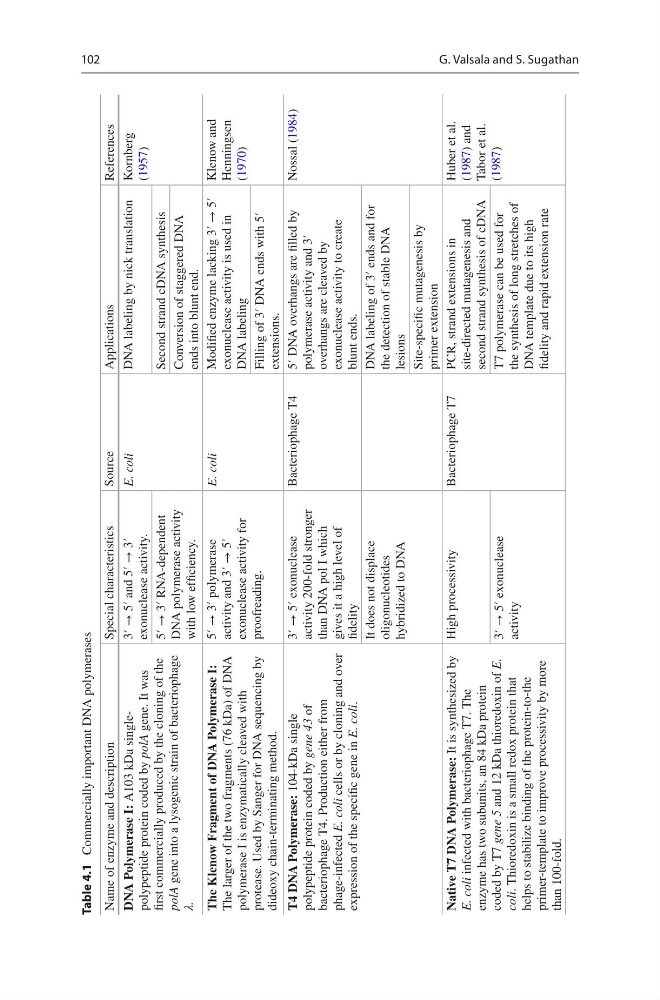
Table 4.1 Commercially important DNA polymerases
Name of enzyme and description
Special characteristics
Source
Applications
References
DNA Polymerase I: A103 kDa singlepolypeptide protein coded by polA
gene. It was
first commercially produced by the cloning of the
polA
gene into a lysogenic strain of bacteriophage
λ.
3′
→ 5′ and 5′
→ 3′
exonuclease activity.
E. coli
DNA labeling by nick translation Kornberg
(1957)
5′
→ 3′ RNA-dependent
DNA polymerase activity
with low efficiency.
Second strand cDNA synthesis
Conversion of staggered DNA
ends into blunt end.
The Klenow Fragment of DNA Polymerase I:
The larger of the two fragments (76 kDa) of DNA
polymerase I is enzymatically cleaved with
protease. Used by Sanger for DNA sequencing by
dideoxy chain-terminating method.
5′
→ 3′ polymerase
activity and 3′
→ 5′
exonuclease activity for
proofreading.
E. coli
Modified enzyme lacking 3′
→ 5′
exonuclease activity is used in
DNA labeling
Klenow and
Henningsen
(1970)
Filling of 3′ DNA ends with 5′
extensions.
T4 DNA Polymerase: 104-kDa single
polypeptide protein coded by gene 43
of
bacteriophage T4. Production either from
phage-infected E. coli
cells or by cloning and over
expression of the specific gene in E. coli.
3′
→ 5′ exonuclease
activity 200-fold stronger
than DNA pol I which
gives it a high level of
fidelity
Bacteriophage T4
5′ DNA overhangs are filled by
polymerase activity and 3′
overhangs are cleaved by
exonuclease activity to create
blunt ends.
Nossal (1984)
It does not displace
oligonucleotides
hybridized to DNA
DNA labeling of 3′ ends and for
the detection of stable DNA
lesions
Site-specific mutagenesis by
primer extension
Native T7 DNA Polymerase: It is synthesized by
E. coli
infected with bacteriophage T7. The
enzyme has two subunits, an 84 kDa protein
coded by T7 gene 5
and 12 kDa thioredoxin of E.
coli.
Thioredoxin is a small redox protein that
helps to stabilize binding of the protein-to-the
primer-template to improve processivity by more
than 100-fold.
High processivity
Bacteriophage T7
PCR, strand extensions in
site-directed mutagenesis and
second strand synthesis of cDNA
Huber et al.
(1987) and
Tabor et al.
(1987)
3′
→ 5′ exonuclease
activity
T7 polymerase can be used for
the synthesis of long stretches of
DNA template due to its high
fidelity and rapid extension rate
G. Valsala and S. Sugathan
Table 4.1 Commercially important DNA polymerases
Name of enzyme and description
Special characteristics
Source
Applications
References
DNA Polymerase I: A103 kDa singlepolypeptide protein coded by polA
gene. It was
first commercially produced by the cloning of the
polA
gene into a lysogenic strain of bacteriophage
λ.
3′
→ 5′ and 5′
→ 3′
exonuclease activity.
E. coli
DNA labeling by nick translation Kornberg
(1957)
5′
→ 3′ RNA-dependent
DNA polymerase activity
with low efficiency.
Second strand cDNA synthesis
Conversion of staggered DNA
ends into blunt end.
The Klenow Fragment of DNA Polymerase I:
The larger of the two fragments (76 kDa) of DNA
polymerase I is enzymatically cleaved with
protease. Used by Sanger for DNA sequencing by
dideoxy chain-terminating method.
5′
→ 3′ polymerase
activity and 3′
→ 5′
exonuclease activity for
proofreading.
E. coli
Modified enzyme lacking 3′
→ 5′
exonuclease activity is used in
DNA labeling
Klenow and
Henningsen
(1970)
Filling of 3′ DNA ends with 5′
extensions.
T4 DNA Polymerase: 104-kDa single
polypeptide protein coded by gene 43
of
bacteriophage T4. Production either from
phage-infected E. coli
cells or by cloning and over
expression of the specific gene in E. coli.
3′
→ 5′ exonuclease
activity 200-fold stronger
than DNA pol I which
gives it a high level of
fidelity
Bacteriophage T4
5′ DNA overhangs are filled by
polymerase activity and 3′
overhangs are cleaved by
exonuclease activity to create
blunt ends.
Nossal (1984)
It does not displace
oligonucleotides
hybridized to DNA
DNA labeling of 3′ ends and for
the detection of stable DNA
lesions
Site-specific mutagenesis by
primer extension
Native T7 DNA Polymerase: It is synthesized by
E. coli
infected with bacteriophage T7. The
enzyme has two subunits, an 84 kDa protein
coded by T7 gene 5
and 12 kDa thioredoxin of E.
coli.
Thioredoxin is a small redox protein that
helps to stabilize binding of the protein-to-the
primer-template to improve processivity by more
than 100-fold.
High processivity
Bacteriophage T7
PCR, strand extensions in
site-directed mutagenesis and
second strand synthesis of cDNA
Huber et al.
(1987) and
Tabor et al.
(1987)
3′
→ 5′ exonuclease
activity
T7 polymerase can be used for
the synthesis of long stretches of
DNA template due to its high
fidelity and rapid extension rate
G. Valsala and S. Sugathan