

88
OH
D.C. Hill et al.
HO2C
O
HO~~~/COCH3
I
I1
II
I
O
CO2H
HOAJ~/JI~O~OH
COCH3 LOgO H
2
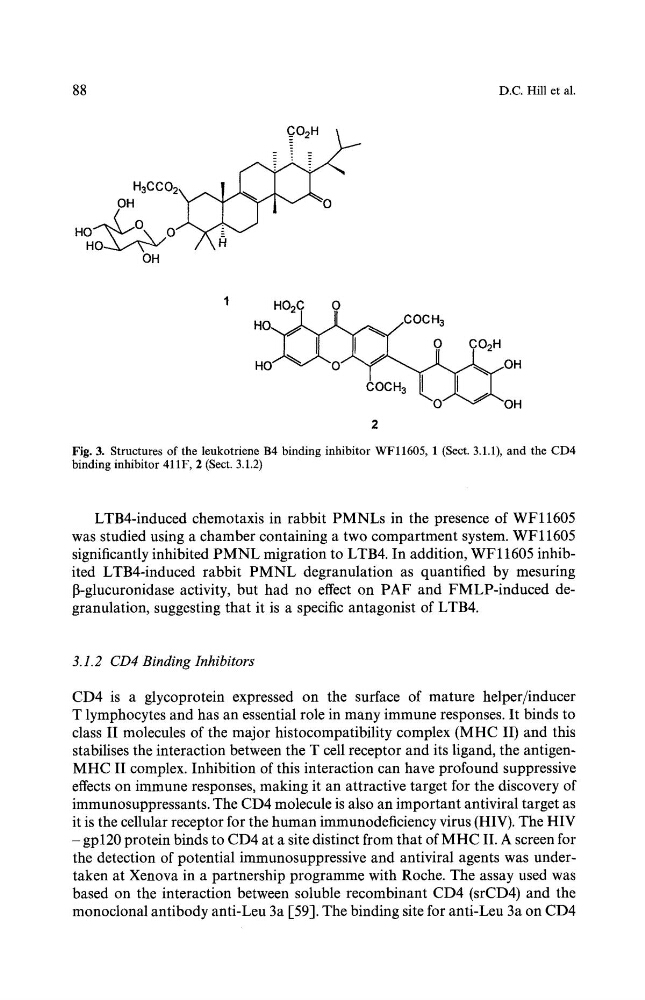
Fig. 3. Structures of the leukotriene B4 binding inhibitor WFl1605, 1 (Sect. 3.1.1), and the CD4
binding inhibitor 41 IF, 2 (Sect. 3.1.2)
LTB4-induced chemotaxis in rabbit PMNLs in the presence of WFl1605
was studied using a chamber containing a two compartment system. WFl1605
significantly inhibited PMNL migration to LTB4. In addition, WF 11605 inhibited LTB4-induced rabbit PMNL degranulation as quantified by mesuring
13-glucuronidase activity, but had no effect on PAF and FMLP-induced degranulation, suggesting that it is a specific antagonist of LTB4.
3.1.2 CD4 Binding Inhibitors
CD4 is a glycoprotein expressed on the surface of mature helper/inducer
T lymphocytes and has an essential role in many immune responses. It binds to
class II molecules of the major histocompatibility complex (MHC II) and this
stabilises the interaction between the T cell receptor and its ligand, the antigenMHC II complex. Inhibition of this interaction can have profound suppressive
effects on immune responses, making it an attractive target for the discovery of
immunosuppressants. The CD4 molecule is also an important antiviral target as
it is the cellular receptor for the human immunodeficiency virus (HIV). The HIV
- gpl20 protein binds to CD4 at a site distinct from that of MHC II. A screen for
the detection of potential immunosuppressive and antiviral agents was undertaken at Xenova in a partnership programme with Roche. The assay used was
based on the interaction between soluble recombinant CD4 (srCD4) and the
monoclonal antibody anti-Leu 3a [59]. The binding site for anti-Leu 3a on CD4
OH
D.C. Hill et al.
HO2C
O
HO~~~/COCH3
I
I1
II
I
O
CO2H
HOAJ~/JI~O~OH
COCH3 LOgO H
2
Fig. 3. Structures of the leukotriene B4 binding inhibitor WFl1605, 1 (Sect. 3.1.1), and the CD4
binding inhibitor 41 IF, 2 (Sect. 3.1.2)
LTB4-induced chemotaxis in rabbit PMNLs in the presence of WFl1605
was studied using a chamber containing a two compartment system. WFl1605
significantly inhibited PMNL migration to LTB4. In addition, WF 11605 inhibited LTB4-induced rabbit PMNL degranulation as quantified by mesuring
13-glucuronidase activity, but had no effect on PAF and FMLP-induced degranulation, suggesting that it is a specific antagonist of LTB4.
3.1.2 CD4 Binding Inhibitors
CD4 is a glycoprotein expressed on the surface of mature helper/inducer
T lymphocytes and has an essential role in many immune responses. It binds to
class II molecules of the major histocompatibility complex (MHC II) and this
stabilises the interaction between the T cell receptor and its ligand, the antigenMHC II complex. Inhibition of this interaction can have profound suppressive
effects on immune responses, making it an attractive target for the discovery of
immunosuppressants. The CD4 molecule is also an important antiviral target as
it is the cellular receptor for the human immunodeficiency virus (HIV). The HIV
- gpl20 protein binds to CD4 at a site distinct from that of MHC II. A screen for
the detection of potential immunosuppressive and antiviral agents was undertaken at Xenova in a partnership programme with Roche. The assay used was
based on the interaction between soluble recombinant CD4 (srCD4) and the
monoclonal antibody anti-Leu 3a [59]. The binding site for anti-Leu 3a on CD4