

Novel Screen Methodologies for Identification of New Microbial Metabolites
85
02N
.~.NOH
CONH 2
O~
0
OH
o
OH
0
H3CO 0 OH 0
OH 0
N~HO "OH
O~C02H
o
3
4
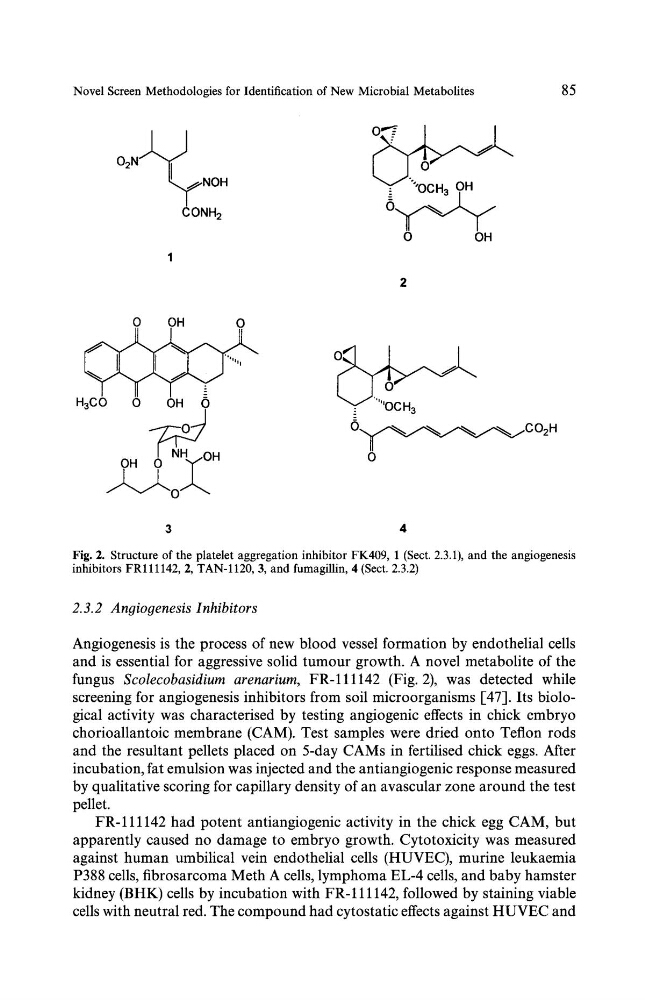
Fig. 2. Structure of the platelet aggregation inhibitor FK409, 1 (Sect. 2.3.1), and the angiogenesis
inhibitors FRl11142, 2, TAN-1120, 3, and fumagillin, 4 (Sect. 2.3.2)
2.3.2 Angiogenesis Inhibitors
Angiogenesis is the process of new blood vessel formation by endothelial cells
and is essential for aggressive solid tumour growth. A novel metabolite of the
fungus Scolecobasidium arenarium, FR-111142 (Fig. 2), was detected while
screening for angiogenesis inhibitors from soil microorganisms 1-47]. Its biological activity was characterised by testing angiogenic effects in chick embryo
chorioallantoic membrane (CAM). Test samples were dried onto Teflon rods
and the resultant pellets placed on 5-day CAMs in fertilised chick eggs. After
incubation, fat emulsion was injected and the antiangiogenic response measured
by qualitative scoring for capillary density of an avascular zone around the test
pellet.
FR-111142 had potent antiangiogenic activity in the chick egg CAM, but
apparently caused no damage to embryo growth. Cytotoxicity was measured
against human umbilical vein endothelial cells (HUVEC), murine leukaemia
P388 cells, fibrosarcoma Meth A cells, lymphoma EL-4 cells, and baby hamster
kidney (BHK) cells by incubation with FR-111142, followed by staining viable
cells with neutral red. The compound had cytostatic effects against HUVEC and
85
02N
.~.NOH
CONH 2
O~
0
OH
o
OH
0
H3CO 0 OH 0
OH 0
N~HO "OH
O~C02H
o
3
4
Fig. 2. Structure of the platelet aggregation inhibitor FK409, 1 (Sect. 2.3.1), and the angiogenesis
inhibitors FRl11142, 2, TAN-1120, 3, and fumagillin, 4 (Sect. 2.3.2)
2.3.2 Angiogenesis Inhibitors
Angiogenesis is the process of new blood vessel formation by endothelial cells
and is essential for aggressive solid tumour growth. A novel metabolite of the
fungus Scolecobasidium arenarium, FR-111142 (Fig. 2), was detected while
screening for angiogenesis inhibitors from soil microorganisms 1-47]. Its biological activity was characterised by testing angiogenic effects in chick embryo
chorioallantoic membrane (CAM). Test samples were dried onto Teflon rods
and the resultant pellets placed on 5-day CAMs in fertilised chick eggs. After
incubation, fat emulsion was injected and the antiangiogenic response measured
by qualitative scoring for capillary density of an avascular zone around the test
pellet.
FR-111142 had potent antiangiogenic activity in the chick egg CAM, but
apparently caused no damage to embryo growth. Cytotoxicity was measured
against human umbilical vein endothelial cells (HUVEC), murine leukaemia
P388 cells, fibrosarcoma Meth A cells, lymphoma EL-4 cells, and baby hamster
kidney (BHK) cells by incubation with FR-111142, followed by staining viable
cells with neutral red. The compound had cytostatic effects against HUVEC and