

Apoptosis and Cell Culture Technology
245
transfected with bcl-2 can grow in agitated suspension culture without prior
adaptation, suggesting that the bcl-2 gene protects the cells from death by
apoptosis induced by hydrodynamic forces [98]. This work also demonstrated
that the suppression of apoptosis by bcl-2 following growth arrest allowed the
maintenance of cells in a growth arrested state for much longer than would
otherwise be possible. Moreover, the ability ofbcl-2 to enhance growth in serum
free media suggests that the anti-apoptotic effect may be important in the design
of simpler and more effective serum/protein free media.
The expectation of increasing survival and consequent increase in culture
productivity through transfection with anti-apoptotic genes has stimulated
a rush of cell manipulation programmes which have prevention of apoptosis as
their primary goal. Amongst other properties, overexpressed anti-apoptotic
genes in industrially important cell lines such as hybridoma, myeloma and CHO
has been generally shown to increase culture productivity and to enhance
survival in nutrient-depleted media (e.g. [99] and our unpublished data)
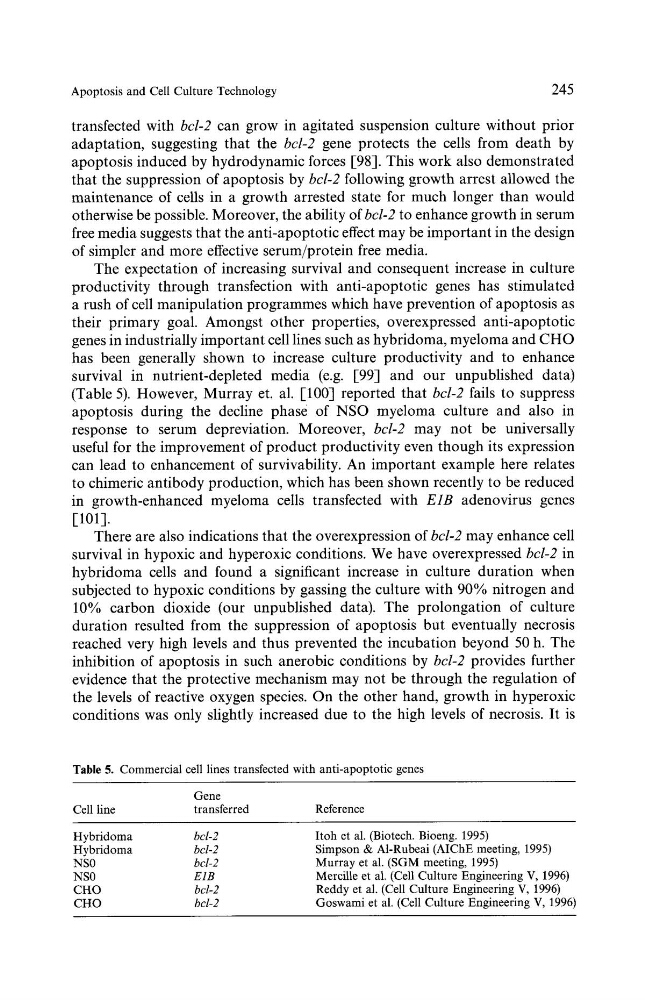
(Table 5). However, Murray et. al. [100] reported that bcl-2 fails to suppress
apoptosis during the decline phase of NSO myeloma culture and also in
response to serum depreviation. Moreover, bcl-2 may not be universally
useful for the improvement of product productivity even though its expression
can lead to enhancement of survivability. An important example here relates
to chimeric antibody production, which has been shown recently to be reduced
in growth-enhanced myeloma cells transfected with E1B adenovirus genes
[101].
There are also indications that the overexpression of bcl-2 may enhance cell
survival in hypoxic and hyperoxic conditions. We have overexpressed bcl-2 in
hybridoma cells and found a significant increase in culture duration when
subjected to hypoxic conditions by gassing the culture with 90% nitrogen and
10% carbon dioxide (our unpublished data). The prolongation of culture
duration resulted from the suppression of apoptosis but eventually necrosis
reached very high levels and thus prevented the incubation beyond 50 h. The
inhibition of apoptosis in such anerobic conditions by bcI-2 provides further
evidence that the protective mechanism may not be through the regulation of
the levels of reactive oxygen species. On the other hand, growth in hyperoxic
conditions was only slightly increased due to the high levels of necrosis. It is
Table 5. Commercial cell lines transfected with anti-apoptotic genes
Gene
Cell line
transferred
Reference
Hybridoma
bcl-2
Hybridoma
bcl-2
NS0
bcl-2
NS0
E1B
CHO
bcl-2
CHO
bcl-2
Itoh et al. (Biotech. Bioeng. 1995)
Simpson & A1-Rubeai (AIChE meeting, 1995)
Murray et al. (SGM meeting, 1995)
Mercille eta|. (Cell Culture Engineering V, 1996)
Reddy et al. (Cell Culture Engineering V, 1996)
Goswami et al. (Cell Culture Engineering V, 1996)
245
transfected with bcl-2 can grow in agitated suspension culture without prior
adaptation, suggesting that the bcl-2 gene protects the cells from death by
apoptosis induced by hydrodynamic forces [98]. This work also demonstrated
that the suppression of apoptosis by bcl-2 following growth arrest allowed the
maintenance of cells in a growth arrested state for much longer than would
otherwise be possible. Moreover, the ability ofbcl-2 to enhance growth in serum
free media suggests that the anti-apoptotic effect may be important in the design
of simpler and more effective serum/protein free media.
The expectation of increasing survival and consequent increase in culture
productivity through transfection with anti-apoptotic genes has stimulated
a rush of cell manipulation programmes which have prevention of apoptosis as
their primary goal. Amongst other properties, overexpressed anti-apoptotic
genes in industrially important cell lines such as hybridoma, myeloma and CHO
has been generally shown to increase culture productivity and to enhance
survival in nutrient-depleted media (e.g. [99] and our unpublished data)
(Table 5). However, Murray et. al. [100] reported that bcl-2 fails to suppress
apoptosis during the decline phase of NSO myeloma culture and also in
response to serum depreviation. Moreover, bcl-2 may not be universally
useful for the improvement of product productivity even though its expression
can lead to enhancement of survivability. An important example here relates
to chimeric antibody production, which has been shown recently to be reduced
in growth-enhanced myeloma cells transfected with E1B adenovirus genes
[101].
There are also indications that the overexpression of bcl-2 may enhance cell
survival in hypoxic and hyperoxic conditions. We have overexpressed bcl-2 in
hybridoma cells and found a significant increase in culture duration when
subjected to hypoxic conditions by gassing the culture with 90% nitrogen and
10% carbon dioxide (our unpublished data). The prolongation of culture
duration resulted from the suppression of apoptosis but eventually necrosis
reached very high levels and thus prevented the incubation beyond 50 h. The
inhibition of apoptosis in such anerobic conditions by bcI-2 provides further
evidence that the protective mechanism may not be through the regulation of
the levels of reactive oxygen species. On the other hand, growth in hyperoxic
conditions was only slightly increased due to the high levels of necrosis. It is
Table 5. Commercial cell lines transfected with anti-apoptotic genes
Gene
Cell line
transferred
Reference
Hybridoma
bcl-2
Hybridoma
bcl-2
NS0
bcl-2
NS0
E1B
CHO
bcl-2
CHO
bcl-2
Itoh et al. (Biotech. Bioeng. 1995)
Simpson & A1-Rubeai (AIChE meeting, 1995)
Murray et al. (SGM meeting, 1995)
Mercille eta|. (Cell Culture Engineering V, 1996)
Reddy et al. (Cell Culture Engineering V, 1996)
Goswami et al. (Cell Culture Engineering V, 1996)