

Apoptosis and Cell Culture Technology
243
Viral infection
Glucocotticoid
Fas-L
T cell r~c'ptor
/ Ionizing radiation
~~as I[ /// Toxins
l I W'~"~
g ' ........ ~," '
9
/
J
X..77
I~
genes
"~ .
Crm A ....
P"
I I a~.v,~on of pot-- 0cE-~ke) I ~
,-[ Activation ofnucleases[
.L. /
~
_:
I
|
Growth f~or
deprivation
Survival factors
Ca ++
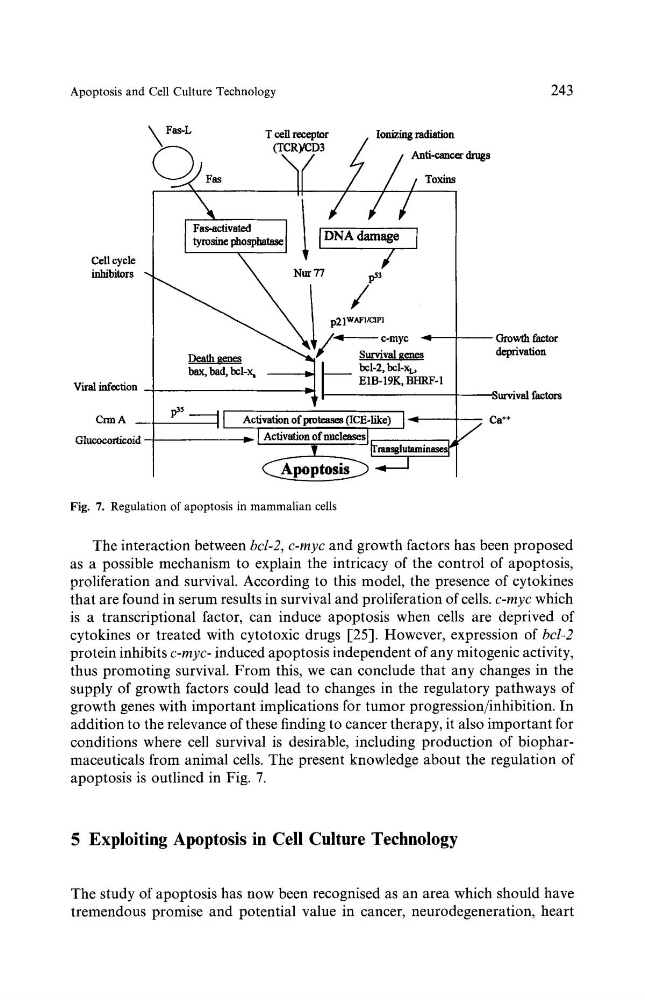
Fig. 7. Regulation of apoptosis in mammalian cells
The interaction between bcl-2, c-myc and growth factors has been proposed
as a possible mechanism to explain the intricacy of the control of apoptosis,
proliferation and survival. According to this model, the presence of cytokines
that are found in serum results in survival and proliferation of cells, c-myc which
is a transcriptional factor, can induce apoptosis when cells are deprived of
cytokines or treated with cytotoxic drugs [25]. However, expression of bcl-2
protein inhibits c-myc- induced apoptosis independent of any mitogenic activity,
thus promoting survival. From this, we can conclude that any changes in the
supply of growth factors could lead to changes in the regulatory pathways of
growth genes with important implications for tumor progression/inhibition. In
addition to the relevance of these finding to cancer therapy, it also important for
conditions where cell survival is desirable, including production of biopharmaceuticals from animal cells. The present knowledge about the regulation of
apoptosis is outlined in Fig. 7.
5 Exploiting Apoptosis in Cell Culture Technology
The study of apoptosis has now been recognised as an area which should have
tremendous promise and potential value in cancer, neurodegeneration, heart
243
Viral infection
Glucocotticoid
Fas-L
T cell r~c'ptor
/ Ionizing radiation
~~as I[ /// Toxins
l I W'~"~
g ' ........ ~," '
9
/
J
X..77
I~
genes
"~ .
Crm A ....
P"
I I a~.v,~on of pot-- 0cE-~ke) I ~
,-[ Activation ofnucleases[
.L. /
~
_:
I
|
Growth f~or
deprivation
Survival factors
Ca ++
Fig. 7. Regulation of apoptosis in mammalian cells
The interaction between bcl-2, c-myc and growth factors has been proposed
as a possible mechanism to explain the intricacy of the control of apoptosis,
proliferation and survival. According to this model, the presence of cytokines
that are found in serum results in survival and proliferation of cells, c-myc which
is a transcriptional factor, can induce apoptosis when cells are deprived of
cytokines or treated with cytotoxic drugs [25]. However, expression of bcl-2
protein inhibits c-myc- induced apoptosis independent of any mitogenic activity,
thus promoting survival. From this, we can conclude that any changes in the
supply of growth factors could lead to changes in the regulatory pathways of
growth genes with important implications for tumor progression/inhibition. In
addition to the relevance of these finding to cancer therapy, it also important for
conditions where cell survival is desirable, including production of biopharmaceuticals from animal cells. The present knowledge about the regulation of
apoptosis is outlined in Fig. 7.
5 Exploiting Apoptosis in Cell Culture Technology
The study of apoptosis has now been recognised as an area which should have
tremendous promise and potential value in cancer, neurodegeneration, heart