

Since the most powerful way to summarize our quantitative understanding is
through the construction of mathematical models, the sections which follow
will, in addition to giving a qualitative description, present key features of
mathematical models which have been proposed to describe these microscale
and macroscale phenomena. Furthermore, once constructed, such models can
be used to explore system behavior, including making predictions about
80
D.A. Mitchell et al.
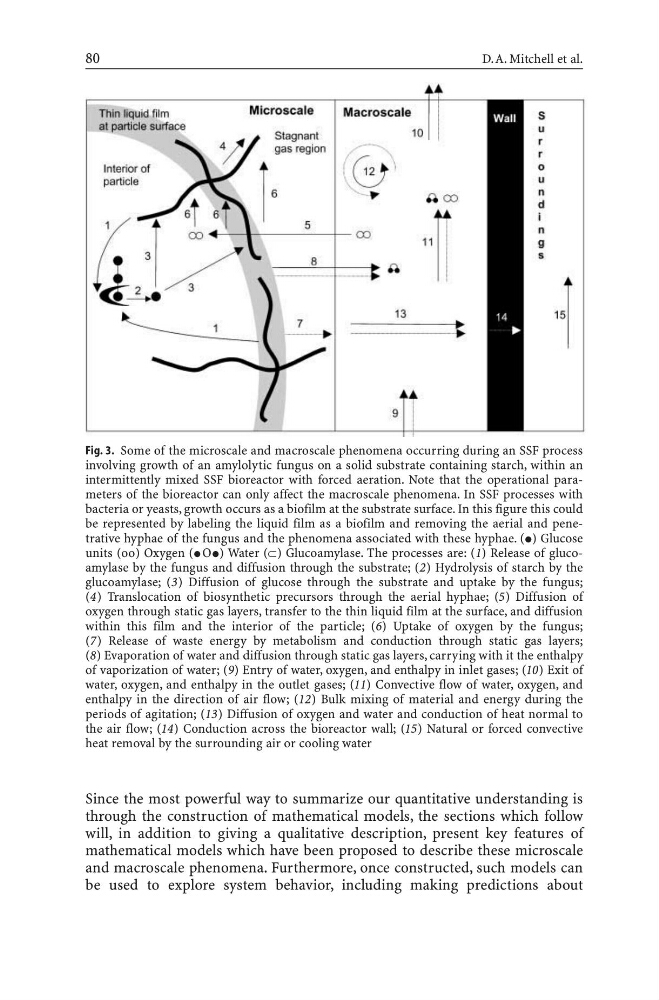
Fig. 3. Some of the microscale and macroscale phenomena occurring during an SSF process
involving growth of an amylolytic fungus on a solid substrate containing starch, within an
intermittently mixed SSF bioreactor with forced aeration. Note that the operational parameters of the bioreactor can only affect the macroscale phenomena. In SSF processes with
bacteria or yeasts, growth occurs as a biofilm at the substrate surface. In this figure this could
be represented by labeling the liquid film as a biofilm and removing the aerial and penetrative hyphae of the fungus and the phenomena associated with these hyphae. (¼) Glucose
units (oo) Oxygen (¼O¼) Water (Ã) Glucoamylase. The processes are: (1) Release of glucoamylase by the fungus and diffusion through the substrate; (2) Hydrolysis of starch by the
glucoamylase; (3) Diffusion of glucose through the substrate and uptake by the fungus;
(4) Translocation of biosynthetic precursors through the aerial hyphae; (5) Diffusion of
oxygen through static gas layers, transfer to the thin liquid film at the surface, and diffusion
within this film and the interior of the particle; (6) Uptake of oxygen by the fungus;
(7) Release of waste energy by metabolism and conduction through static gas layers;
(8) Evaporation of water and diffusion through static gas layers, carrying with it the enthalpy
of vaporization of water; (9) Entry of water, oxygen, and enthalpy in inlet gases; (10) Exit of
water, oxygen, and enthalpy in the outlet gases; (11) Convective flow of water, oxygen, and
enthalpy in the direction of air flow; (12) Bulk mixing of material and energy during the
periods of agitation; (13) Diffusion of oxygen and water and conduction of heat normal to
the air flow; (14) Conduction across the bioreactor wall; (15) Natural or forced convective
heat removal by the surrounding air or cooling water
through the construction of mathematical models, the sections which follow
will, in addition to giving a qualitative description, present key features of
mathematical models which have been proposed to describe these microscale
and macroscale phenomena. Furthermore, once constructed, such models can
be used to explore system behavior, including making predictions about
80
D.A. Mitchell et al.
Fig. 3. Some of the microscale and macroscale phenomena occurring during an SSF process
involving growth of an amylolytic fungus on a solid substrate containing starch, within an
intermittently mixed SSF bioreactor with forced aeration. Note that the operational parameters of the bioreactor can only affect the macroscale phenomena. In SSF processes with
bacteria or yeasts, growth occurs as a biofilm at the substrate surface. In this figure this could
be represented by labeling the liquid film as a biofilm and removing the aerial and penetrative hyphae of the fungus and the phenomena associated with these hyphae. (¼) Glucose
units (oo) Oxygen (¼O¼) Water (Ã) Glucoamylase. The processes are: (1) Release of glucoamylase by the fungus and diffusion through the substrate; (2) Hydrolysis of starch by the
glucoamylase; (3) Diffusion of glucose through the substrate and uptake by the fungus;
(4) Translocation of biosynthetic precursors through the aerial hyphae; (5) Diffusion of
oxygen through static gas layers, transfer to the thin liquid film at the surface, and diffusion
within this film and the interior of the particle; (6) Uptake of oxygen by the fungus;
(7) Release of waste energy by metabolism and conduction through static gas layers;
(8) Evaporation of water and diffusion through static gas layers, carrying with it the enthalpy
of vaporization of water; (9) Entry of water, oxygen, and enthalpy in inlet gases; (10) Exit of
water, oxygen, and enthalpy in the outlet gases; (11) Convective flow of water, oxygen, and
enthalpy in the direction of air flow; (12) Bulk mixing of material and energy during the
periods of agitation; (13) Diffusion of oxygen and water and conduction of heat normal to
the air flow; (14) Conduction across the bioreactor wall; (15) Natural or forced convective
heat removal by the surrounding air or cooling water