

Biochemical Engineering Aspects of Solid State Bioprocessing
67
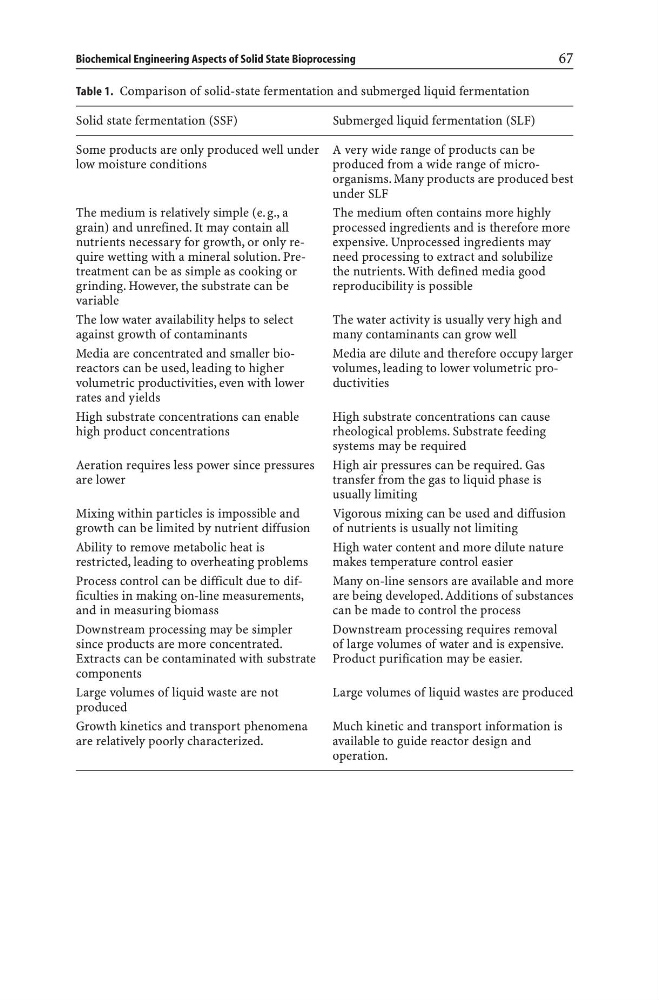
Table 1. Comparison of solid-state fermentation and submerged liquid fermentation
Solid state fermentation (SSF)
Submerged liquid fermentation (SLF)
Some products are only produced well under A very wide range of products can be
low moisture conditions
produced from a wide range of microorganisms. Many products are produced best
under SLF
The medium is relatively simple (e.g., a
The medium often contains more highly
grain) and unrefined. It may contain all
processed ingredients and is therefore more
nutrients necessary for growth, or only reexpensive. Unprocessed ingredients may
quire wetting with a mineral solution. Preneed processing to extract and solubilize
treatment can be as simple as cooking or
the nutrients. With defined media good
grinding. However, the substrate can be
reproducibility is possible
variable
The low water availability helps to select
The water activity is usually very high and
against growth of contaminants
many contaminants can grow well
Media are concentrated and smaller bioMedia are dilute and therefore occupy larger
reactors can be used, leading to higher
volumes, leading to lower volumetric provolumetric productivities, even with lower
ductivities
rates and yields
High substrate concentrations can enable
High substrate concentrations can cause
high product concentrations
rheological problems. Substrate feeding
systems may be required
Aeration requires less power since pressures High air pressures can be required. Gas
are lower
transfer from the gas to liquid phase is
usually limiting
Mixing within particles is impossible and
Vigorous mixing can be used and diffusion
growth can be limited by nutrient diffusion
of nutrients is usually not limiting
Ability to remove metabolic heat is
High water content and more dilute nature
restricted, leading to overheating problems
makes temperature control easier
Process control can be difficult due to difMany on-line sensors are available and more
ficulties in making on-line measurements,
are being developed. Additions of substances
and in measuring biomass
can be made to control the process
Downstream processing may be simpler
Downstream processing requires removal
since products are more concentrated.
of large volumes of water and is expensive.
Extracts can be contaminated with substrate Product purification may be easier.
components
Large volumes of liquid waste are not
Large volumes of liquid wastes are produced
produced
Growth kinetics and transport phenomena
Much kinetic and transport information is
are relatively poorly characterized.
available to guide reactor design and
operation.
67
Table 1. Comparison of solid-state fermentation and submerged liquid fermentation
Solid state fermentation (SSF)
Submerged liquid fermentation (SLF)
Some products are only produced well under A very wide range of products can be
low moisture conditions
produced from a wide range of microorganisms. Many products are produced best
under SLF
The medium is relatively simple (e.g., a
The medium often contains more highly
grain) and unrefined. It may contain all
processed ingredients and is therefore more
nutrients necessary for growth, or only reexpensive. Unprocessed ingredients may
quire wetting with a mineral solution. Preneed processing to extract and solubilize
treatment can be as simple as cooking or
the nutrients. With defined media good
grinding. However, the substrate can be
reproducibility is possible
variable
The low water availability helps to select
The water activity is usually very high and
against growth of contaminants
many contaminants can grow well
Media are concentrated and smaller bioMedia are dilute and therefore occupy larger
reactors can be used, leading to higher
volumes, leading to lower volumetric provolumetric productivities, even with lower
ductivities
rates and yields
High substrate concentrations can enable
High substrate concentrations can cause
high product concentrations
rheological problems. Substrate feeding
systems may be required
Aeration requires less power since pressures High air pressures can be required. Gas
are lower
transfer from the gas to liquid phase is
usually limiting
Mixing within particles is impossible and
Vigorous mixing can be used and diffusion
growth can be limited by nutrient diffusion
of nutrients is usually not limiting
Ability to remove metabolic heat is
High water content and more dilute nature
restricted, leading to overheating problems
makes temperature control easier
Process control can be difficult due to difMany on-line sensors are available and more
ficulties in making on-line measurements,
are being developed. Additions of substances
and in measuring biomass
can be made to control the process
Downstream processing may be simpler
Downstream processing requires removal
since products are more concentrated.
of large volumes of water and is expensive.
Extracts can be contaminated with substrate Product purification may be easier.
components
Large volumes of liquid waste are not
Large volumes of liquid wastes are produced
produced
Growth kinetics and transport phenomena
Much kinetic and transport information is
are relatively poorly characterized.
available to guide reactor design and
operation.