

CyaB [146, 196–198]. Since it was shown that the 150 N-terminal amino acids of
the lactococcin G and pediocin PA-1.0 ABC transporters were capable of
cleaving the corresponding precursor bacteriocins at the correct consensus
processing site, its role for class II leader peptide processing was accepted [132,
146]. Replacement of the cysteine residue on position 13 with an alanine residue
resulted in a complete loss of proteolytic activity, demonstrating that this
residue is part of the active site 146]. It was therefore concluded that the new
class of proteolytic ABC transporters belonged to the cysteine proteases [146].
The absence of this proteolytic domain in ABC transporters of class Al
lantibiotics is complemented by an individually encoded subtilisin-like protease in these operons, and thus processing and translocation of the class IA I
lantibiotics depends on the action of two divergent proteins [88, 101, 122, 190].
As mentioned before, NisB, NisC and their homologues are likely to interact
with class IA I leader peptides, whereas an interaction between the large
proteins of the CylM family and the class IA II leader peptides was proposed
[40]. Leader peptides of the class IA II lantibiotics such as lactococcin DR [118],
salivaricin A, streptococcin A-FF22 [199] and cytolysin [122] do not contain the
-F-N-L-D-V- box typical for class IA I lantibiotics [40]. Unexpectedly, these class
IA II leader peptides showed considerable similarities with leaders of the class II
non-lantibiotic bacteriocins [21, 40, 146]. Furthermore, they also contained a
proteolytic processing site, identical or comparable to the double-glycine
cleavage site of class II non-lantibiotic peptides [21, 40, 146]. It is therefore likely
that the processing and secretion mechanism of the class IA II lantibiotics more
Antimicrobial Peptides of Lactic Acid Bacteria: Mode of Action, Genetics and Biosynthesis
43
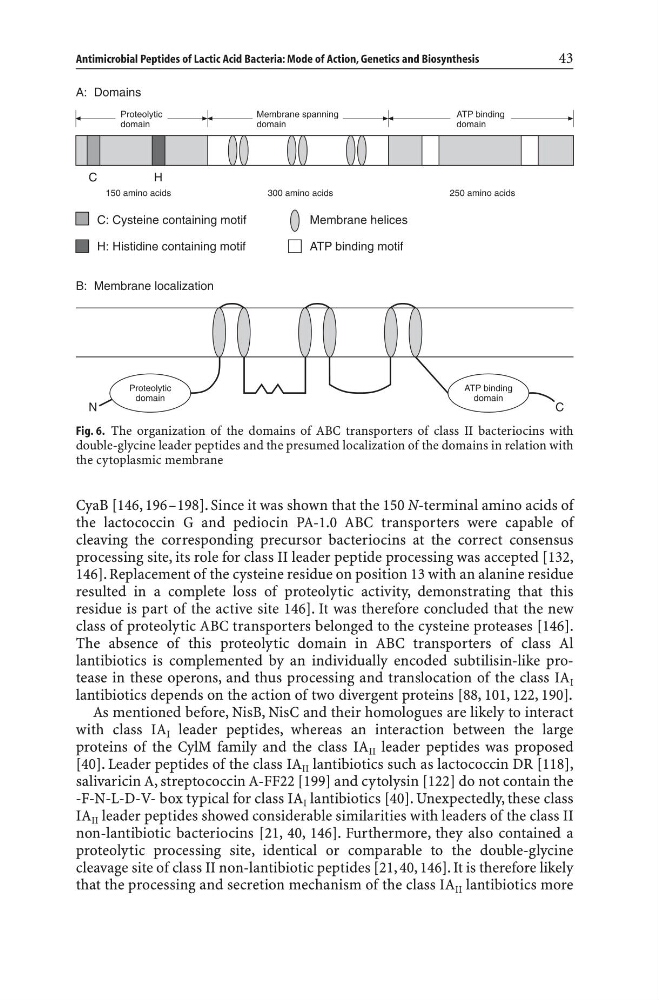
Fig. 6. The organization of the domains of ABC transporters of class II bacteriocins with
double-glycine leader peptides and the presumed localization of the domains in relation with
the cytoplasmic membrane
the lactococcin G and pediocin PA-1.0 ABC transporters were capable of
cleaving the corresponding precursor bacteriocins at the correct consensus
processing site, its role for class II leader peptide processing was accepted [132,
146]. Replacement of the cysteine residue on position 13 with an alanine residue
resulted in a complete loss of proteolytic activity, demonstrating that this
residue is part of the active site 146]. It was therefore concluded that the new
class of proteolytic ABC transporters belonged to the cysteine proteases [146].
The absence of this proteolytic domain in ABC transporters of class Al
lantibiotics is complemented by an individually encoded subtilisin-like protease in these operons, and thus processing and translocation of the class IA I
lantibiotics depends on the action of two divergent proteins [88, 101, 122, 190].
As mentioned before, NisB, NisC and their homologues are likely to interact
with class IA I leader peptides, whereas an interaction between the large
proteins of the CylM family and the class IA II leader peptides was proposed
[40]. Leader peptides of the class IA II lantibiotics such as lactococcin DR [118],
salivaricin A, streptococcin A-FF22 [199] and cytolysin [122] do not contain the
-F-N-L-D-V- box typical for class IA I lantibiotics [40]. Unexpectedly, these class
IA II leader peptides showed considerable similarities with leaders of the class II
non-lantibiotic bacteriocins [21, 40, 146]. Furthermore, they also contained a
proteolytic processing site, identical or comparable to the double-glycine
cleavage site of class II non-lantibiotic peptides [21, 40, 146]. It is therefore likely
that the processing and secretion mechanism of the class IA II lantibiotics more
Antimicrobial Peptides of Lactic Acid Bacteria: Mode of Action, Genetics and Biosynthesis
43
Fig. 6. The organization of the domains of ABC transporters of class II bacteriocins with
double-glycine leader peptides and the presumed localization of the domains in relation with
the cytoplasmic membrane