

autophosphorylation and might be the signal-transducing domain with kinase
activity [107]. The region between the membrane anchors is hydrophilic and
may correspond to the extracellular sensor domain [107]. NisR is a 229-residue
protein of the cytoplasm. The N-terminus, which forms the part with highest
similarity among regulatory proteins contains a very conserved Asp-53 residue
where phosphorylation takes place [182, 183]. The exact role of NisK in NisR
phosphorylation must still be determined, since inactivation of NisK did not
affect nisin production in a plasmid-based complementation system [101].
Mature nisin acts as an inducer of both the nisABTCIKR and nisFEG operon
[115]. Extracellular administered nisin complements for the nisZB anti-sense
and the nisT knock-out mutation, and results in the restoration of transcription
of both nisin operons [115]. Nisin induction also resulted in a higher amount of
NisI gene and an increased level of immunity [115]. The requirement of the
structural nisA gene for full immunity of the nisin producer had also been
recognized by Kuipers et al. [92]. In contradiction to the class II non-lantibiotic
inducible bacteriocins, nisin serves a dual function of being a bacteriocin and
an induction factor involved in autoregulation [92].
In conclusion, the large similarity among the different systems suggests that
a two-component signal transduction mechanism, including a histidine protein
kinase and a regulatory protein is a common feature in the regulation of
bacteriocin production. The external stimuli triggering the induction or
autoinduction system which induces bacteriocin production remain to be
elucidated.
5.2
Post-Translational Modifications
The lantibiotics differ extensively from the class II bacteriocins in that they
contain post-translationally modified amino acids, as for example dehydrated
amino acids and lanthionine residues, forming intramolecular thioether
bridges [39, 184]. The chemical modification reactions leading to the typical
lanthionines were first proposed by Ingram [185] and are assumed to be catalyzed by specific enzymes encoded in the lantibiotic gene cluster. In the
lantibiotic lactocin S, d-alanine residues were discovered, probably by conversion of dehydrated serine residues via a dehydrogenation reaction [82]. In some
40
E. Sablon et al.
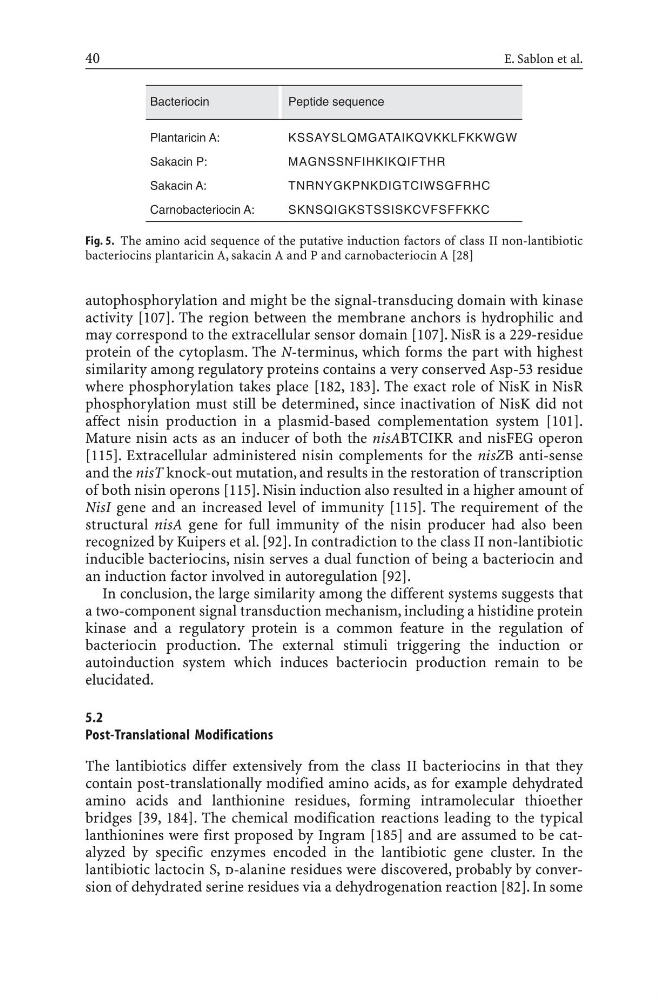
Fig. 5. The amino acid sequence of the putative induction factors of class II non-lantibiotic
bacteriocins plantaricin A, sakacin A and P and carnobacteriocin A [28]
activity [107]. The region between the membrane anchors is hydrophilic and
may correspond to the extracellular sensor domain [107]. NisR is a 229-residue
protein of the cytoplasm. The N-terminus, which forms the part with highest
similarity among regulatory proteins contains a very conserved Asp-53 residue
where phosphorylation takes place [182, 183]. The exact role of NisK in NisR
phosphorylation must still be determined, since inactivation of NisK did not
affect nisin production in a plasmid-based complementation system [101].
Mature nisin acts as an inducer of both the nisABTCIKR and nisFEG operon
[115]. Extracellular administered nisin complements for the nisZB anti-sense
and the nisT knock-out mutation, and results in the restoration of transcription
of both nisin operons [115]. Nisin induction also resulted in a higher amount of
NisI gene and an increased level of immunity [115]. The requirement of the
structural nisA gene for full immunity of the nisin producer had also been
recognized by Kuipers et al. [92]. In contradiction to the class II non-lantibiotic
inducible bacteriocins, nisin serves a dual function of being a bacteriocin and
an induction factor involved in autoregulation [92].
In conclusion, the large similarity among the different systems suggests that
a two-component signal transduction mechanism, including a histidine protein
kinase and a regulatory protein is a common feature in the regulation of
bacteriocin production. The external stimuli triggering the induction or
autoinduction system which induces bacteriocin production remain to be
elucidated.
5.2
Post-Translational Modifications
The lantibiotics differ extensively from the class II bacteriocins in that they
contain post-translationally modified amino acids, as for example dehydrated
amino acids and lanthionine residues, forming intramolecular thioether
bridges [39, 184]. The chemical modification reactions leading to the typical
lanthionines were first proposed by Ingram [185] and are assumed to be catalyzed by specific enzymes encoded in the lantibiotic gene cluster. In the
lantibiotic lactocin S, d-alanine residues were discovered, probably by conversion of dehydrated serine residues via a dehydrogenation reaction [82]. In some
40
E. Sablon et al.
Fig. 5. The amino acid sequence of the putative induction factors of class II non-lantibiotic
bacteriocins plantaricin A, sakacin A and P and carnobacteriocin A [28]