

optimization of inoculation, sterilization, mixing, aeration, and temperature
and humidity control during the production of pectinolytic enzymes by
Aspergillus niger [26].
If stirred aerated beds are intermittently stirred then during the static
periods they will behave like packed beds. Relatively little attention has been
given to the mixing phenomena, with only one experimental study, done in a
28-l bioreactor constructed from a commercial solids mixer. The mixer consisted of a lengthwise Z-blade lying within a horizontal trough with a U cross
section and was modified for use as a bioreactor by the drilling of four aeration
holes along the bottom of the trough, through which air could be blown [160].
Mixing studies, done by observing the distribution of dye within the bioreactor
during mixing, showed that mixing quality was directly proportional to the
number of revolutions rather than being a function of the mixing speed itself.
Ashley et al. [161] modified a model for heat transfer in a packed bed to
describe the performance of an intermittently stirred bed by assuming an
instantaneous redistribution of biomass and energy within the bed at regular
intervals. The model was used to explore whether mixing could decrease the
maximum temperature achieved within the bed in comparison with static
packed bed operation, in which the maximum temperature occurs at the outlet
air end of the bed at the time of peak heat production. Interestingly, using
Biochemical Engineering Aspects of Solid State Bioprocessing
115
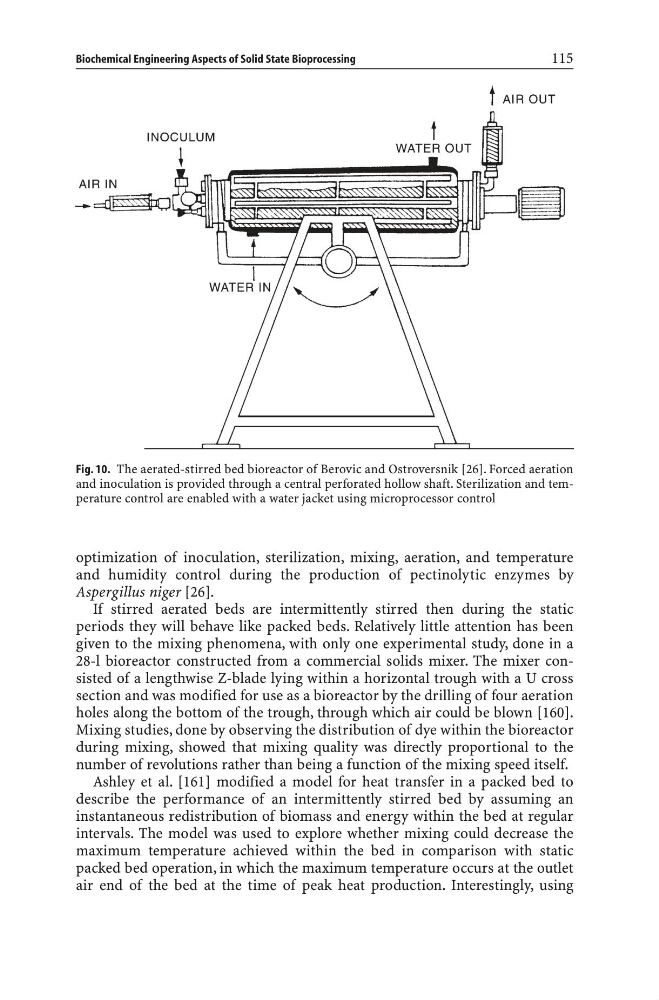
Fig. 10. The aerated-stirred bed bioreactor of Berovic and Ostroversnik [26]. Forced aeration
and inoculation is provided through a central perforated hollow shaft. Sterilization and temperature control are enabled with a water jacket using microprocessor control
and humidity control during the production of pectinolytic enzymes by
Aspergillus niger [26].
If stirred aerated beds are intermittently stirred then during the static
periods they will behave like packed beds. Relatively little attention has been
given to the mixing phenomena, with only one experimental study, done in a
28-l bioreactor constructed from a commercial solids mixer. The mixer consisted of a lengthwise Z-blade lying within a horizontal trough with a U cross
section and was modified for use as a bioreactor by the drilling of four aeration
holes along the bottom of the trough, through which air could be blown [160].
Mixing studies, done by observing the distribution of dye within the bioreactor
during mixing, showed that mixing quality was directly proportional to the
number of revolutions rather than being a function of the mixing speed itself.
Ashley et al. [161] modified a model for heat transfer in a packed bed to
describe the performance of an intermittently stirred bed by assuming an
instantaneous redistribution of biomass and energy within the bed at regular
intervals. The model was used to explore whether mixing could decrease the
maximum temperature achieved within the bed in comparison with static
packed bed operation, in which the maximum temperature occurs at the outlet
air end of the bed at the time of peak heat production. Interestingly, using
Biochemical Engineering Aspects of Solid State Bioprocessing
115
Fig. 10. The aerated-stirred bed bioreactor of Berovic and Ostroversnik [26]. Forced aeration
and inoculation is provided through a central perforated hollow shaft. Sterilization and temperature control are enabled with a water jacket using microprocessor control