

fluidize easily and therefore this bioreactor can only be used in those cases
where the substrate has good fluidization behavior. There may be a mixer at the
bottom to break up any substrate aggregates which form. Provision must be
made for bed expansion upon fluidization and for the disengagement of
particles from the gas stream. The disengagement space typically has a larger
diameter than the lower region of the bed. A water sprayer can be incorporated,
activated by the measurement of electric capacitance by a probe inserted at the
bottom of the fluidized bed [154].
Reasonably large fluidized bed bioreactors have been built. Matsuno et al.
[154] describe how a 16-l bioreactor was used for the production of proteases
and amylases by Aspergillus sojae on wheat bran powder. The reactor had a
height of 2 m, with a diameter of 20 cm in the lower region and 28 cm in the
disengagement region. Higher productivities of these enzymes were obtained
than for tray SSFs or submerged liquid fermentation. On the basis of these
results, Kikkoman Corporation constructed an air solid-fluidized bed of 8000 l
working volume in 1975 [154]. Bed diameter was 1.5 m in the lower region and
2 m in the upper disengagement region, with a bed height of 8 m. This bioreactor was used with 833 kg of wheat bran at 40% moisture content.
Productivity was claimed to be the same as that obtained on a small scale.
Unfortunately, little data is available regarding its performance.
More recently a pilot scale gas-solid fluidized bed, with a diameter of 55 cm,
has been used for ethanol production. In this bioreactor a glucose solution is
sprayed onto a fluidized bed of compressed pellets of Saccharomyces cerevisiae
Biochemical Engineering Aspects of Solid State Bioprocessing
113
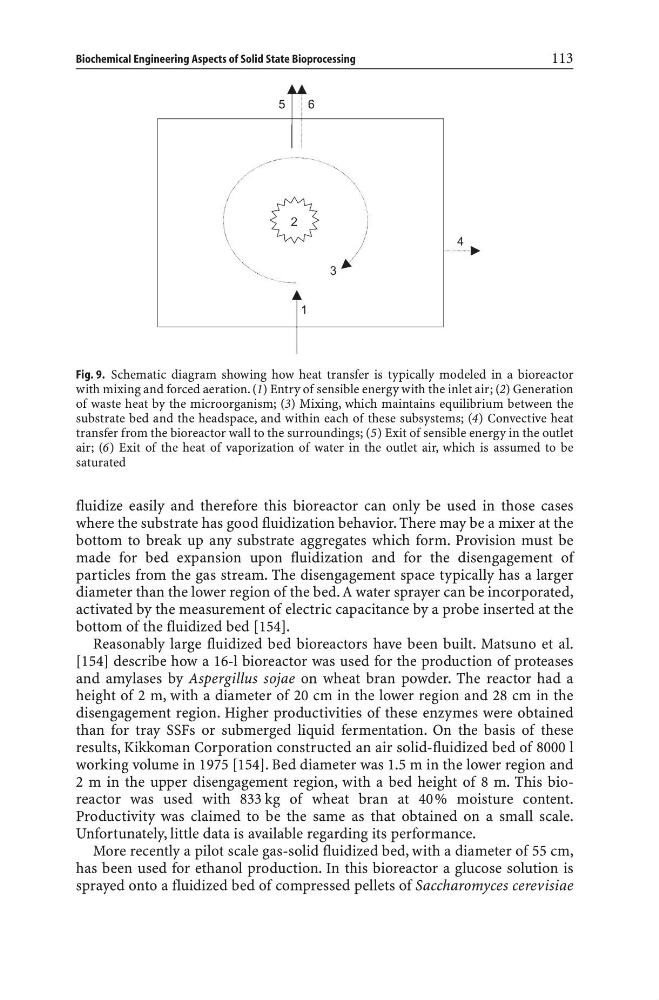
Fig. 9. Schematic diagram showing how heat transfer is typically modeled in a bioreactor
with mixing and forced aeration. (1) Entry of sensible energy with the inlet air; (2) Generation
of waste heat by the microorganism; (3) Mixing, which maintains equilibrium between the
substrate bed and the headspace, and within each of these subsystems; (4) Convective heat
transfer from the bioreactor wall to the surroundings; (5) Exit of sensible energy in the outlet
air; (6) Exit of the heat of vaporization of water in the outlet air, which is assumed to be
saturated
where the substrate has good fluidization behavior. There may be a mixer at the
bottom to break up any substrate aggregates which form. Provision must be
made for bed expansion upon fluidization and for the disengagement of
particles from the gas stream. The disengagement space typically has a larger
diameter than the lower region of the bed. A water sprayer can be incorporated,
activated by the measurement of electric capacitance by a probe inserted at the
bottom of the fluidized bed [154].
Reasonably large fluidized bed bioreactors have been built. Matsuno et al.
[154] describe how a 16-l bioreactor was used for the production of proteases
and amylases by Aspergillus sojae on wheat bran powder. The reactor had a
height of 2 m, with a diameter of 20 cm in the lower region and 28 cm in the
disengagement region. Higher productivities of these enzymes were obtained
than for tray SSFs or submerged liquid fermentation. On the basis of these
results, Kikkoman Corporation constructed an air solid-fluidized bed of 8000 l
working volume in 1975 [154]. Bed diameter was 1.5 m in the lower region and
2 m in the upper disengagement region, with a bed height of 8 m. This bioreactor was used with 833 kg of wheat bran at 40% moisture content.
Productivity was claimed to be the same as that obtained on a small scale.
Unfortunately, little data is available regarding its performance.
More recently a pilot scale gas-solid fluidized bed, with a diameter of 55 cm,
has been used for ethanol production. In this bioreactor a glucose solution is
sprayed onto a fluidized bed of compressed pellets of Saccharomyces cerevisiae
Biochemical Engineering Aspects of Solid State Bioprocessing
113
Fig. 9. Schematic diagram showing how heat transfer is typically modeled in a bioreactor
with mixing and forced aeration. (1) Entry of sensible energy with the inlet air; (2) Generation
of waste heat by the microorganism; (3) Mixing, which maintains equilibrium between the
substrate bed and the headspace, and within each of these subsystems; (4) Convective heat
transfer from the bioreactor wall to the surroundings; (5) Exit of sensible energy in the outlet
air; (6) Exit of the heat of vaporization of water in the outlet air, which is assumed to be
saturated