

Proteoglycans: Biological Roles and Strategies
Cell culture
medium
1
Labeling ofPGs
(radiosulfate, carbohydrate
and amino acid precursors)
cell-matrix
compartment
j
Extraction of PGs
(+ detergent)
1 Purification ofPGs
-------- ---------Separation between PGs Quantitation of PGs
• ion-exchange chromatography
• gel-permeation chramatography
• boyant density centrifogation
--rCharacterization of PGs
+
Tissue
Extraction ofPGs
(treatment with
collagenase,
elastase
may be necessary)
IntactPGs
• SDS-PAGE / Westem blotting
Alkaline borohydride
treatment
Treatment with specific
enzymes
• Agarose gel electrophoresis
Detect and identity
typeofPG
• SDS-PAGE
• Agarose gel electrophoresis
• SDS-PAGE / Weslem blotting
.Agarose gel electrophoresis
Detect presence
of GAG chains
Determine type
of GAGs present
!
353
Cleavage by
chondroitinases
ABC+AC
Cleavage by
chondroitinase B
Cleavage by
heparin lyases or
low-pHHN0 2
Cleavage by
keratanase
GalAGs
(CSIDS)
DS
HS/heparin
KS
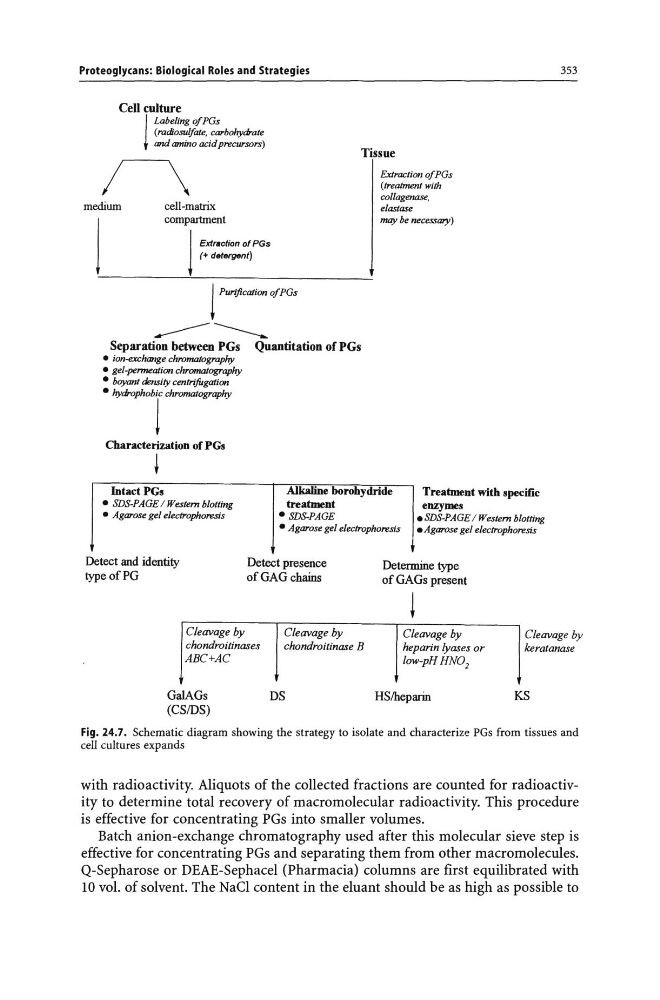
Fig. 24.7. Schematic diagram showing the strategy to isolate and characterize PGs from tissues and
cell cultures expands
with radioactivity. Aliquots of the collected fractions are counted for radioactivity to determine total recovery of macromolecular radioactivity. This procedure
is effective for concentrating PGs into smaller volumes.
Batch anion-exchange chromatography used after this molecular sieve step is
effective for concentrating PGs and separating them from other macromolecules.
Q-Sepharose or DEAE-Sephacel (Pharmacia) columns are first equilibrated with
10 vol. of solvent. The NaCI content in the eluant should be as high as possible to
Cell culture
medium
1
Labeling ofPGs
(radiosulfate, carbohydrate
and amino acid precursors)
cell-matrix
compartment
j
Extraction of PGs
(+ detergent)
1 Purification ofPGs
-------- ---------Separation between PGs Quantitation of PGs
• ion-exchange chromatography
• gel-permeation chramatography
• boyant density centrifogation
--rCharacterization of PGs
+
Tissue
Extraction ofPGs
(treatment with
collagenase,
elastase
may be necessary)
IntactPGs
• SDS-PAGE / Westem blotting
Alkaline borohydride
treatment
Treatment with specific
enzymes
• Agarose gel electrophoresis
Detect and identity
typeofPG
• SDS-PAGE
• Agarose gel electrophoresis
• SDS-PAGE / Weslem blotting
.Agarose gel electrophoresis
Detect presence
of GAG chains
Determine type
of GAGs present
!
353
Cleavage by
chondroitinases
ABC+AC
Cleavage by
chondroitinase B
Cleavage by
heparin lyases or
low-pHHN0 2
Cleavage by
keratanase
GalAGs
(CSIDS)
DS
HS/heparin
KS
Fig. 24.7. Schematic diagram showing the strategy to isolate and characterize PGs from tissues and
cell cultures expands
with radioactivity. Aliquots of the collected fractions are counted for radioactivity to determine total recovery of macromolecular radioactivity. This procedure
is effective for concentrating PGs into smaller volumes.
Batch anion-exchange chromatography used after this molecular sieve step is
effective for concentrating PGs and separating them from other macromolecules.
Q-Sepharose or DEAE-Sephacel (Pharmacia) columns are first equilibrated with
10 vol. of solvent. The NaCI content in the eluant should be as high as possible to