

342
N.K.KARAMANOS
explained by the absence of a template to determine the order of monomer units
in the polymer and it could, therefore, be assumed that this structural diversity
of carbohydrates is allowed during biosynthesis. As a result, the majority of glycoproteins consists of glycosylated variants, which are formed by the presence or
absence of monosaccharides in the glycan chain of the same protein glycosylation
site. RNAse B, for example, has one N-linked glycosylation site, but consists of a
mixture of glycoforms due to the presence of numerous mannose residues and,
therefore, it is characterized as RNAse Man 5-9. Human IgG is a mixture of a
large number of glycoforms due to the presence or not of various monosaccharides. The importance of glycosylation can be deduced from the fact that the
absence of Gal of the largest carbohydrate chain of human IgG is related with
rheumatoid arthritis.
Glycoproteins and proteoglycans (PGs) constitute a family of glycoconjugates
with great importance since they participate and regulate several cellular events
1.
l'
o
(
, \ I
~i.! l~
'\-: ,\-, : : , : :
I
,
....
:
\ '
I, "
bacteria
hormone/
growth factor
Glycoproteins /
Proteoglycans
Determine:
reproduction
embryonic development
and differentiation
tissue organisation
migration of malignant
tumorous cells (metastasis)
immunological reactions:
• serve as antigens
triggering harmful
immune reactions
• lymphocyte
activation,
differentiation,
migration to the site
of infection and
recognition of
antigens
infection not only by
bacteria but also
by viruses and paraSites
(e.g. HIV infection)
growth control, cell
signalling
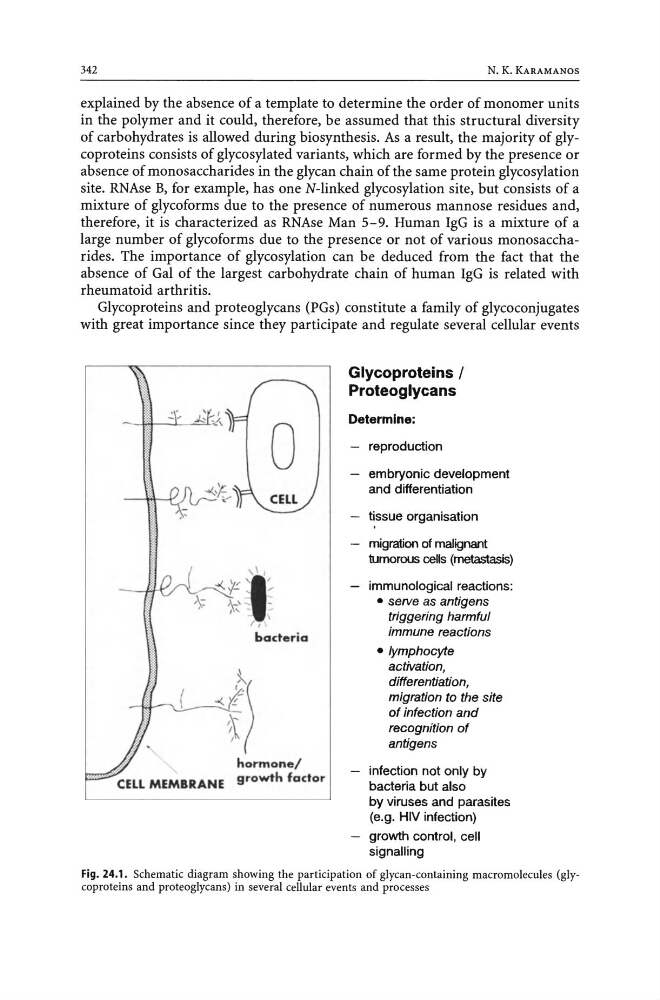
Fig. 24.1. Schematic diagram showing the participation of glycan-containing macromolecules (glycoproteins and proteoglycans) in several cellular events and processes
N.K.KARAMANOS
explained by the absence of a template to determine the order of monomer units
in the polymer and it could, therefore, be assumed that this structural diversity
of carbohydrates is allowed during biosynthesis. As a result, the majority of glycoproteins consists of glycosylated variants, which are formed by the presence or
absence of monosaccharides in the glycan chain of the same protein glycosylation
site. RNAse B, for example, has one N-linked glycosylation site, but consists of a
mixture of glycoforms due to the presence of numerous mannose residues and,
therefore, it is characterized as RNAse Man 5-9. Human IgG is a mixture of a
large number of glycoforms due to the presence or not of various monosaccharides. The importance of glycosylation can be deduced from the fact that the
absence of Gal of the largest carbohydrate chain of human IgG is related with
rheumatoid arthritis.
Glycoproteins and proteoglycans (PGs) constitute a family of glycoconjugates
with great importance since they participate and regulate several cellular events
1.
l'
o
(
, \ I
~i.! l~
'\-: ,\-, : : , : :
I
,
....
:
\ '
I, "
bacteria
hormone/
growth factor
Glycoproteins /
Proteoglycans
Determine:
reproduction
embryonic development
and differentiation
tissue organisation
migration of malignant
tumorous cells (metastasis)
immunological reactions:
• serve as antigens
triggering harmful
immune reactions
• lymphocyte
activation,
differentiation,
migration to the site
of infection and
recognition of
antigens
infection not only by
bacteria but also
by viruses and paraSites
(e.g. HIV infection)
growth control, cell
signalling
Fig. 24.1. Schematic diagram showing the participation of glycan-containing macromolecules (glycoproteins and proteoglycans) in several cellular events and processes