

268
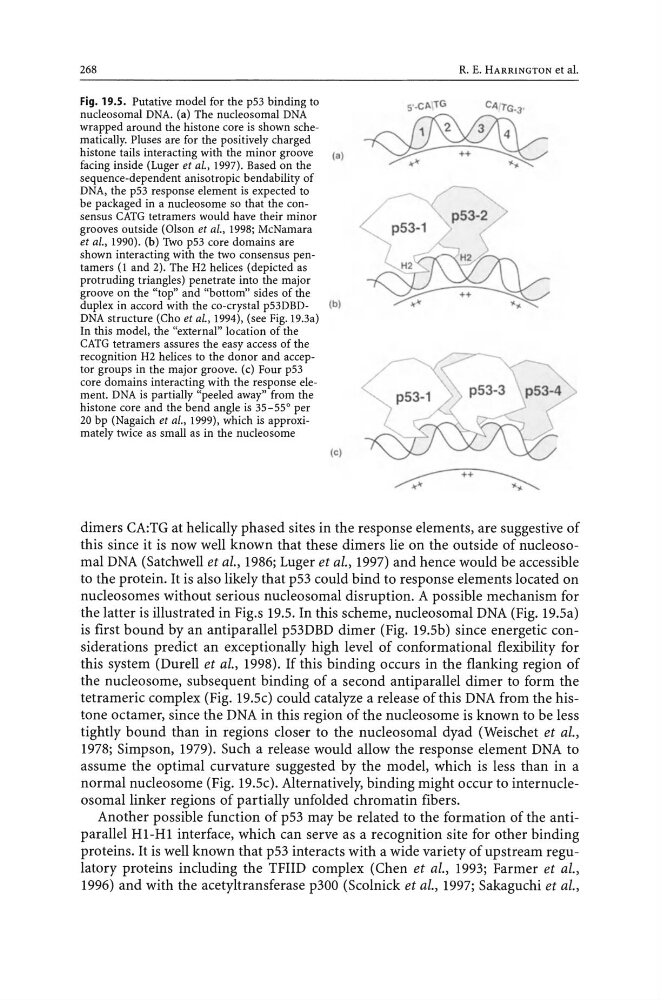
Fig. 19.5. Putative model for the p53 binding to
nucleosomal DNA. (a) The nucleosomal DNA
wrapped around the histone core is shown schematically. Pluses are for the positively charged
histone tails interacting with the minor groove
(a)
facing inside (Luger et aI., 1997). Based on the
sequence-dependent anisotropic bendability of
DNA, the p53 response element is expected to
be packaged in a nucleosome so that the consensus CATG tetramers would have their minor
grooves outside (Olson et aI., 1998; McNamara
et aI., 1990). (b) Two p53 core domains are
shown interacting with the two consensus pentamers (1 and 2). The H2 helices (depicted as
protruding triangles) penetrate into the major
groove on the "top" and "bottom" sides of the
duplex in accord with the co-crystal p53DBD(b)
DNA structure (Cho et aI., 1994), (see Fig. 19.3a)
In this model, the "external" location of the
CATG tetramers assures the easy access of the
recognition H2 helices to the donor and acceptor groups in the major groove. (e) Four p53
core domains interacting with the response element. DNA is partially "peeled away" from the
histone core and the bend angle is 35-55° per
20 bp (Nagaich et aI., 1999), which is approximately twice as small as in the nucleosome
(e)
R. E. HARRINGTON et al.
dimers CA:TG at helically phased sites in the response elements, are suggestive of
this since it is now well known that these dimers lie on the outside of nucleosomal DNA (Satchwell et ai., 1986; Luger et ai., 1997) and hence would be accessible
to the protein. It is also likely that p53 could bind to response elements located on
nucleosomes without serious nucleosomal disruption. A possible mechanism for
the latter is illustrated in Fig.s 19.5. In this scheme, nucleosomal DNA (Fig. 19.5a)
is first bound by an antiparallel p53DBD dimer (Fig. 19.5b) since energetic considerations predict an exceptionally high level of conformational flexibility for
this system (Durell et ai., 1998). If this binding occurs in the flanking region of
the nucleosome, subsequent binding of a second antiparallel dimer to form the
tetrameric complex (Fig. 19.5c) could catalyze a release of this DNA from the histone octamer, since the DNA in this region of the nucleosome is known to be less
tightly bound than in regions closer to the nucleosomal dyad (Weischet et ai.,
1978; Simpson, 1979). Such a release would allow the response element DNA to
assume the optimal curvature suggested by the model, which is less than in a
normal nucleosome (Fig. 19.5c). Alternatively, binding might occur to internucleosomallinker regions of partially unfolded chromatin fibers.
Another possible function of p53 may be related to the formation of the antiparallel HI-HI interface, which can serve as a recognition site for other binding
proteins. It is well known that p53 interacts with a wide variety of upstream regulatory proteins including the TFIID complex (Chen et ai., 1993; Farmer et ai.,
1996) and with the acetyltransferase p300 (Scolnick et ai., 1997; Sakaguchi et ai.,
Fig. 19.5. Putative model for the p53 binding to
nucleosomal DNA. (a) The nucleosomal DNA
wrapped around the histone core is shown schematically. Pluses are for the positively charged
histone tails interacting with the minor groove
(a)
facing inside (Luger et aI., 1997). Based on the
sequence-dependent anisotropic bendability of
DNA, the p53 response element is expected to
be packaged in a nucleosome so that the consensus CATG tetramers would have their minor
grooves outside (Olson et aI., 1998; McNamara
et aI., 1990). (b) Two p53 core domains are
shown interacting with the two consensus pentamers (1 and 2). The H2 helices (depicted as
protruding triangles) penetrate into the major
groove on the "top" and "bottom" sides of the
duplex in accord with the co-crystal p53DBD(b)
DNA structure (Cho et aI., 1994), (see Fig. 19.3a)
In this model, the "external" location of the
CATG tetramers assures the easy access of the
recognition H2 helices to the donor and acceptor groups in the major groove. (e) Four p53
core domains interacting with the response element. DNA is partially "peeled away" from the
histone core and the bend angle is 35-55° per
20 bp (Nagaich et aI., 1999), which is approximately twice as small as in the nucleosome
(e)
R. E. HARRINGTON et al.
dimers CA:TG at helically phased sites in the response elements, are suggestive of
this since it is now well known that these dimers lie on the outside of nucleosomal DNA (Satchwell et ai., 1986; Luger et ai., 1997) and hence would be accessible
to the protein. It is also likely that p53 could bind to response elements located on
nucleosomes without serious nucleosomal disruption. A possible mechanism for
the latter is illustrated in Fig.s 19.5. In this scheme, nucleosomal DNA (Fig. 19.5a)
is first bound by an antiparallel p53DBD dimer (Fig. 19.5b) since energetic considerations predict an exceptionally high level of conformational flexibility for
this system (Durell et ai., 1998). If this binding occurs in the flanking region of
the nucleosome, subsequent binding of a second antiparallel dimer to form the
tetrameric complex (Fig. 19.5c) could catalyze a release of this DNA from the histone octamer, since the DNA in this region of the nucleosome is known to be less
tightly bound than in regions closer to the nucleosomal dyad (Weischet et ai.,
1978; Simpson, 1979). Such a release would allow the response element DNA to
assume the optimal curvature suggested by the model, which is less than in a
normal nucleosome (Fig. 19.5c). Alternatively, binding might occur to internucleosomallinker regions of partially unfolded chromatin fibers.
Another possible function of p53 may be related to the formation of the antiparallel HI-HI interface, which can serve as a recognition site for other binding
proteins. It is well known that p53 interacts with a wide variety of upstream regulatory proteins including the TFIID complex (Chen et ai., 1993; Farmer et ai.,
1996) and with the acetyltransferase p300 (Scolnick et ai., 1997; Sakaguchi et ai.,