

The Perception of Hydrophobic Clusters in the Native and Partially Unfolded States
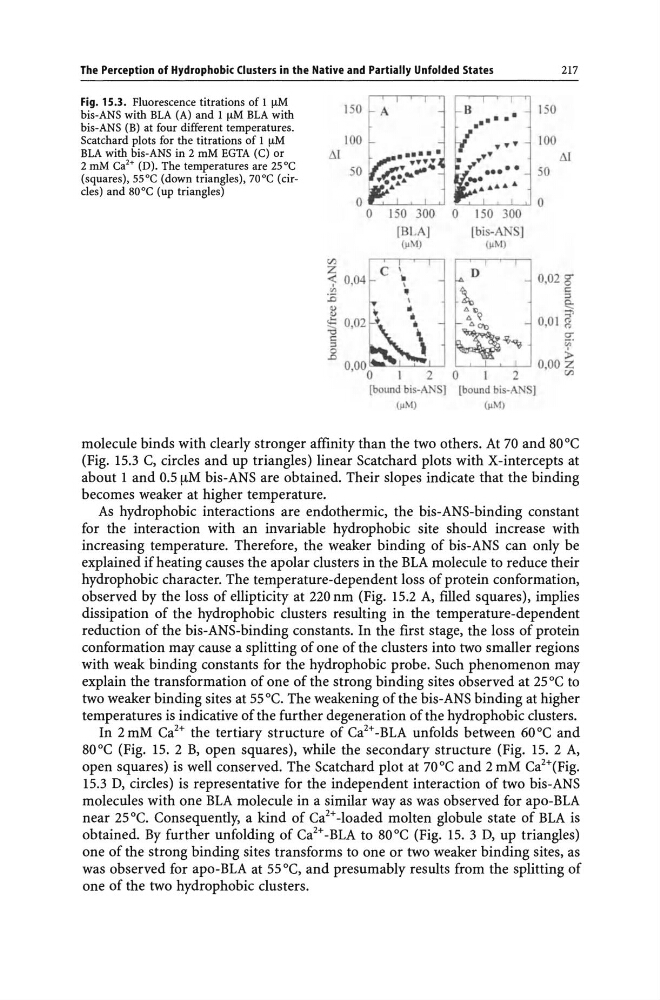
Fig. 15.3. Fluorescence titrations of 1 !lM
bis-ANS with BLA (A) and 1 !lM BLA with
bis-ANS (B) at four different temperatures.
Scatchard plots for the titrations of 1 !lM
BLA with bis-ANS in 2 mM EGTA (C) or
2 mM Ca 2 + (D). The temperatures are 25°C
(squares), 55°C (down triangles), 70°C (circles) and 80°C (up triangles)
150 A
t.1
U)
1 0,04 C \~
.~
.
on
i""
\
.,
\.
III
~ 0,02 +N'"
g
~ \
on 0 00 "" I .. .....,,'-L-.......::.J.......J
' 0
1
2
[bound bis-ANSj
(11M)
B
....
0"
J'
150 300
[bis-A S ]
(~M)
[bound bis-AN 1
(~M)
217
150
100
50
0
0,02 g
<:
::l
e:
:;>
0,01 g
athO
:>
0,00 ~
molecule binds with clearly stronger affinity than the two others. At 70 and 80°C
(Fig. 15.3 C, circles and up triangles) linear Scatchard plots with X-intercepts at
about 1 and O.5!J.M bis-ANS are obtained. Their slopes indicate that the binding
becomes weaker at higher temperature.
As hydrophobic interactions are endothermic, the bis-ANS-binding constant
for the interaction with an invariable hydrophobic site should increase with
increasing temperature. Therefore, the weaker binding of bis-ANS can only be
explained if heating causes the apolar clusters in the BLA molecule to reduce their
hydrophobic character. The temperature-dependent loss of protein conformation,
observed by the loss of ellipticity at 220 nm (Fig. 15.2 A, fllied squares), implies
dissipation of the hydrophobic clusters resulting in the temperature-dependent
reduction of the bis-ANS-binding constants. In the first stage, the loss of protein
conformation may cause a splitting of one of the clusters into two smaller regions
with weak binding constants for the hydrophobic probe. Such phenomenon may
explain the transformation of one of the strong binding sites observed at 25°C to
two weaker binding sites at 55 °C. The weakening of the bis-ANS binding at higher
temperatures is indicative of the further degeneration of the hydrophobic clusters.
In 2 mM Ca 2 + the tertiary structure of Ca 2 + -BLA unfolds between 60°C and
80°C (Fig. 15. 2 B, open squares), while the secondary structure (Fig. 15. 2 A,
open squares) is well conserved. The Scatchard plot at 70°C and 2 mM Ca 2 +(Fig.
15.3 D, circles) is representative for the independent interaction of two bis-ANS
molecules with one BLA molecule in a similar way as was observed for apo-BLA
near 25°C. Consequently, a kind of Ca 2 +-loaded molten globule state of BLA is
obtained. By further unfolding of Ca 2 +-BLA to 80°C (Fig. 15.3 D, up triangles)
one of the strong binding sites transforms to one or two weaker binding sites, as
was observed for apo-BLA at 55°C, and presumably results from the splitting of
one of the two hydrophobic clusters.
Fig. 15.3. Fluorescence titrations of 1 !lM
bis-ANS with BLA (A) and 1 !lM BLA with
bis-ANS (B) at four different temperatures.
Scatchard plots for the titrations of 1 !lM
BLA with bis-ANS in 2 mM EGTA (C) or
2 mM Ca 2 + (D). The temperatures are 25°C
(squares), 55°C (down triangles), 70°C (circles) and 80°C (up triangles)
150 A
t.1
U)
1 0,04 C \~
.~
.
on
i""
\
.,
\.
III
~ 0,02 +N'"
g
~ \
on 0 00 "" I .. .....,,'-L-.......::.J.......J
' 0
1
2
[bound bis-ANSj
(11M)
B
....
0"
J'
150 300
[bis-A S ]
(~M)
[bound bis-AN 1
(~M)
217
150
100
50
0
0,02 g
<:
::l
e:
:;>
0,01 g
athO
:>
0,00 ~
molecule binds with clearly stronger affinity than the two others. At 70 and 80°C
(Fig. 15.3 C, circles and up triangles) linear Scatchard plots with X-intercepts at
about 1 and O.5!J.M bis-ANS are obtained. Their slopes indicate that the binding
becomes weaker at higher temperature.
As hydrophobic interactions are endothermic, the bis-ANS-binding constant
for the interaction with an invariable hydrophobic site should increase with
increasing temperature. Therefore, the weaker binding of bis-ANS can only be
explained if heating causes the apolar clusters in the BLA molecule to reduce their
hydrophobic character. The temperature-dependent loss of protein conformation,
observed by the loss of ellipticity at 220 nm (Fig. 15.2 A, fllied squares), implies
dissipation of the hydrophobic clusters resulting in the temperature-dependent
reduction of the bis-ANS-binding constants. In the first stage, the loss of protein
conformation may cause a splitting of one of the clusters into two smaller regions
with weak binding constants for the hydrophobic probe. Such phenomenon may
explain the transformation of one of the strong binding sites observed at 25°C to
two weaker binding sites at 55 °C. The weakening of the bis-ANS binding at higher
temperatures is indicative of the further degeneration of the hydrophobic clusters.
In 2 mM Ca 2 + the tertiary structure of Ca 2 + -BLA unfolds between 60°C and
80°C (Fig. 15. 2 B, open squares), while the secondary structure (Fig. 15. 2 A,
open squares) is well conserved. The Scatchard plot at 70°C and 2 mM Ca 2 +(Fig.
15.3 D, circles) is representative for the independent interaction of two bis-ANS
molecules with one BLA molecule in a similar way as was observed for apo-BLA
near 25°C. Consequently, a kind of Ca 2 +-loaded molten globule state of BLA is
obtained. By further unfolding of Ca 2 +-BLA to 80°C (Fig. 15.3 D, up triangles)
one of the strong binding sites transforms to one or two weaker binding sites, as
was observed for apo-BLA at 55°C, and presumably results from the splitting of
one of the two hydrophobic clusters.