

Strategies and Methods for Proteome Analysis
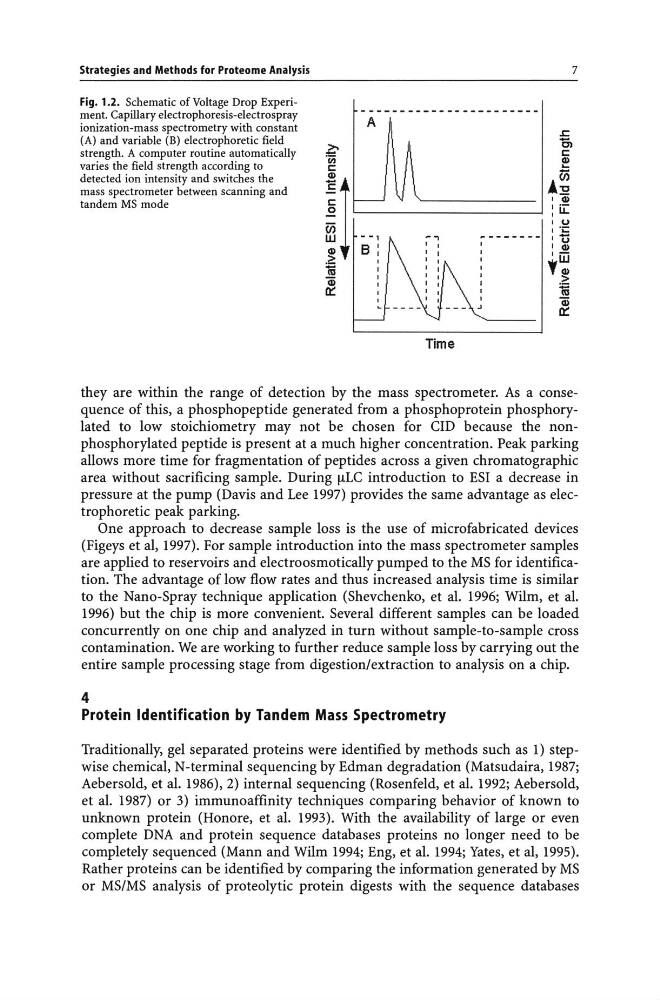
Fig. 1.2. Schematic of Voltage Drop Experiment. Capillaryelectrophoresis-electrospray
ionization-mass spectrometry with constant
(A) and variable (B) electrophoretic field
strength. A computer routine automatically
varies the field strength according to
detected ion intensity and switches the
mass spectrometer between scanning and
tandem MS mode
7
A
J::
en
~
c
~
II)
Ie> 1 '----------~-_-_-_-_- ___ -I. r!
*~
~
'''''
!
2
LL.
ii'i
~
Time
they are within the range of detection by the mass spectrometer. As a consequence of this, a phosphopeptide generated from a phosphoprotein phosphorylated to low stoichiometry may not be chosen for CID because the nonphosphorylated peptide is present at a much higher concentration. Peak parking
allows more time for fragmentation of peptides across a given chromatographic
area without sacrificing sample. During IlLC introduction to ESI a decrease in
pressure at the pump (Davis and Lee 1997) provides the same advantage as electrophoretic peak parking.
One approach to decrease sample loss is the use of microfabricated devices
(Figeys et aI, 1997). For sample introduction into the mass spectrometer samples
are applied to reservoirs and electroosmotically pumped to the MS for identification. The advantage of low flow rates and thus increased analysis time is similar
to the Nano-Spray technique application (Shevchenko, et al. 1996; Wilm, et al.
1996) but the chip is more convenient. Several different samples can be loaded
concurrently on one chip and analyzed in turn without sample-to-sample cross
contamination. We are working to further reduce sample loss by carrying out the
entire sample processing stage from digestion/extraction to analysis on a chip.
4
Protein Identification by Tandem Mass Spectrometry
Traditionally, gel separated proteins were identified by methods such as 1) stepwise chemical, N-terminal sequencing by Edman degradation (Matsudaira, 1987;
Aebersold, et al. 1986), 2) internal sequencing (Rosenfeld, et al. 1992; Aebersold,
et al. 1987) or 3) immunoaffinity techniques comparing behavior of known to
unknown protein (Honore, et al. 1993). With the availability of large or even
complete DNA and protein sequence databases proteins no longer need to be
completely sequenced (Mann and Wilm 1994; Eng, et al. 1994; Yates, et aI, 1995).
Rather proteins can be identified by comparing the information generated by MS
or MS/MS analysis of proteolytic protein digests with the sequence databases
Fig. 1.2. Schematic of Voltage Drop Experiment. Capillaryelectrophoresis-electrospray
ionization-mass spectrometry with constant
(A) and variable (B) electrophoretic field
strength. A computer routine automatically
varies the field strength according to
detected ion intensity and switches the
mass spectrometer between scanning and
tandem MS mode
7
A
J::
en
~
c
~
II)
Ie> 1 '----------~-_-_-_-_- ___ -I. r!
*~
~
'''''
!
2
LL.
ii'i
~
Time
they are within the range of detection by the mass spectrometer. As a consequence of this, a phosphopeptide generated from a phosphoprotein phosphorylated to low stoichiometry may not be chosen for CID because the nonphosphorylated peptide is present at a much higher concentration. Peak parking
allows more time for fragmentation of peptides across a given chromatographic
area without sacrificing sample. During IlLC introduction to ESI a decrease in
pressure at the pump (Davis and Lee 1997) provides the same advantage as electrophoretic peak parking.
One approach to decrease sample loss is the use of microfabricated devices
(Figeys et aI, 1997). For sample introduction into the mass spectrometer samples
are applied to reservoirs and electroosmotically pumped to the MS for identification. The advantage of low flow rates and thus increased analysis time is similar
to the Nano-Spray technique application (Shevchenko, et al. 1996; Wilm, et al.
1996) but the chip is more convenient. Several different samples can be loaded
concurrently on one chip and analyzed in turn without sample-to-sample cross
contamination. We are working to further reduce sample loss by carrying out the
entire sample processing stage from digestion/extraction to analysis on a chip.
4
Protein Identification by Tandem Mass Spectrometry
Traditionally, gel separated proteins were identified by methods such as 1) stepwise chemical, N-terminal sequencing by Edman degradation (Matsudaira, 1987;
Aebersold, et al. 1986), 2) internal sequencing (Rosenfeld, et al. 1992; Aebersold,
et al. 1987) or 3) immunoaffinity techniques comparing behavior of known to
unknown protein (Honore, et al. 1993). With the availability of large or even
complete DNA and protein sequence databases proteins no longer need to be
completely sequenced (Mann and Wilm 1994; Eng, et al. 1994; Yates, et aI, 1995).
Rather proteins can be identified by comparing the information generated by MS
or MS/MS analysis of proteolytic protein digests with the sequence databases