

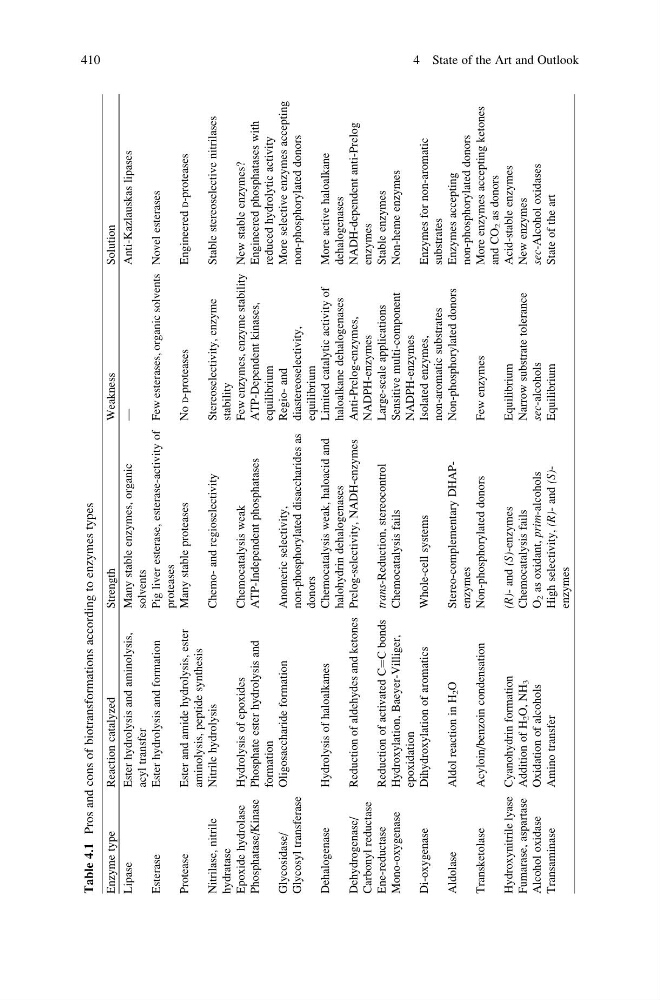
Table 4.1 Pros and cons of biotransformations according to enzymes types
Enzyme type
Reaction catalyzed
Strength
Weakness
Solution
Lipase
Ester hydrolysis and aminolysis,
acyl transfer
Many stable enzymes, organic
solvents
—
Anti-Kazlauskas lipases
Esterase
Ester hydrolysis and formation
Pig liver esterase, esterase-activity of
proteases
Few esterases, organic solvents Novel esterases
Protease
Ester and amide hydrolysis, ester
aminolysis, peptide synthesis
Many stable proteases
No D-proteases
Engineered D-proteases
Nitrilase, nitrile
hydratase
Nitrile hydrolysis
Chemo- and regioselectivity
Stereoselectivity, enzyme
stability
Stable stereoselective nitrilases
Epoxide hydrolase Hydrolysis of epoxides
Chemocatalysis weak
Few enzymes, enzyme stability New stable enzymes?
Phosphatase/Kinase Phosphate ester hydrolysis and
formation
ATP-Independent phosphatases
ATP-Dependent kinases,
equilibrium
Engineered phosphatases with
reduced hydrolytic activity
Glycosidase/
Glycosyl transferase
Oligosaccharide formation
Anomeric selectivity,
non-phosphorylated disaccharides as
donors
Regio- and
diastereoselectivity,
equilibrium
More selective enzymes accepting
non-phosphorylated donors
Dehalogenase
Hydrolysis of haloalkanes
Chemocatalysis weak, haloacid and
halohydrin dehalogenases
Limited catalytic activity of
haloalkane dehalogenases
More active haloalkane
dehalogenases
Dehydrogenase/
Carbonyl reductase
Reduction of aldehydes and ketones Prelog-selectivity, NADH-enzymes
Anti-Prelog-enzymes,
NADPH-enzymes
NADH-dependent anti-Prelog
enzymes
Ene-reductase
Reduction of activated C¼C bonds
trans-Reduction, stereocontrol
Large-scale applications
Stable enzymes
Mono-oxygenase
Hydroxylation, Baeyer-Villiger,
epoxidation
Chemocatalysis fails
Sensitive multi-component
NADPH-enzymes
Non-heme enzymes
Di-oxygenase
Dihydroxylation of aromatics
Whole-cell systems
Isolated enzymes,
non-aromatic substrates
Enzymes for non-aromatic
substrates
Aldolase
Aldol reaction in H
2 O
Stereo-complementary DHAPenzymes
Non-phosphorylated donors
Enzymes accepting
non-phosphorylated donors
Transketolase
Acyloin/benzoin condensation
Non-phosphorylated donors
Few enzymes
More enzymes accepting ketones
and CO
2 as donors
Hydroxynitrile lyase Cyanohydrin formation
(R)- and
(S)-enzymes
Equilibrium
Acid-stable enzymes
Fumarase, aspartase Addition of H
2 O, NH
3
Chemocatalysis fails
Narrow substrate tolerance
New enzymes
Alcohol oxidase
Oxidation of alcohols
O
2 as oxidant,
prim-alcohols
sec-alcohols
sec-Alcohol oxidases
Transaminase
Amino transfer
High selectivity,
(R)- and
(S)enzymes
Equilibrium
State of the art
410
4 State of the Art and Outlook
Enzyme type
Reaction catalyzed
Strength
Weakness
Solution
Lipase
Ester hydrolysis and aminolysis,
acyl transfer
Many stable enzymes, organic
solvents
—
Anti-Kazlauskas lipases
Esterase
Ester hydrolysis and formation
Pig liver esterase, esterase-activity of
proteases
Few esterases, organic solvents Novel esterases
Protease
Ester and amide hydrolysis, ester
aminolysis, peptide synthesis
Many stable proteases
No D-proteases
Engineered D-proteases
Nitrilase, nitrile
hydratase
Nitrile hydrolysis
Chemo- and regioselectivity
Stereoselectivity, enzyme
stability
Stable stereoselective nitrilases
Epoxide hydrolase Hydrolysis of epoxides
Chemocatalysis weak
Few enzymes, enzyme stability New stable enzymes?
Phosphatase/Kinase Phosphate ester hydrolysis and
formation
ATP-Independent phosphatases
ATP-Dependent kinases,
equilibrium
Engineered phosphatases with
reduced hydrolytic activity
Glycosidase/
Glycosyl transferase
Oligosaccharide formation
Anomeric selectivity,
non-phosphorylated disaccharides as
donors
Regio- and
diastereoselectivity,
equilibrium
More selective enzymes accepting
non-phosphorylated donors
Dehalogenase
Hydrolysis of haloalkanes
Chemocatalysis weak, haloacid and
halohydrin dehalogenases
Limited catalytic activity of
haloalkane dehalogenases
More active haloalkane
dehalogenases
Dehydrogenase/
Carbonyl reductase
Reduction of aldehydes and ketones Prelog-selectivity, NADH-enzymes
Anti-Prelog-enzymes,
NADPH-enzymes
NADH-dependent anti-Prelog
enzymes
Ene-reductase
Reduction of activated C¼C bonds
trans-Reduction, stereocontrol
Large-scale applications
Stable enzymes
Mono-oxygenase
Hydroxylation, Baeyer-Villiger,
epoxidation
Chemocatalysis fails
Sensitive multi-component
NADPH-enzymes
Non-heme enzymes
Di-oxygenase
Dihydroxylation of aromatics
Whole-cell systems
Isolated enzymes,
non-aromatic substrates
Enzymes for non-aromatic
substrates
Aldolase
Aldol reaction in H
2 O
Stereo-complementary DHAPenzymes
Non-phosphorylated donors
Enzymes accepting
non-phosphorylated donors
Transketolase
Acyloin/benzoin condensation
Non-phosphorylated donors
Few enzymes
More enzymes accepting ketones
and CO
2 as donors
Hydroxynitrile lyase Cyanohydrin formation
(R)- and
(S)-enzymes
Equilibrium
Acid-stable enzymes
Fumarase, aspartase Addition of H
2 O, NH
3
Chemocatalysis fails
Narrow substrate tolerance
New enzymes
Alcohol oxidase
Oxidation of alcohols
O
2 as oxidant,
prim-alcohols
sec-alcohols
sec-Alcohol oxidases
Transaminase
Amino transfer
High selectivity,
(R)- and
(S)enzymes
Equilibrium
State of the art
410
4 State of the Art and Outlook