

Numerous inorganic and organic materials have been used as carriers: activated
charcoal [458], alumina [459], silica [460, 461], diatomaceous earth (Celite)
[180, 462], cellulose [463], controlled-pore glass, and synthetic resins [464]. In
contrast to the majority of enzymes, which preferably adsorb to materials having a
polar surface, lipases are better adsorbed onto lipophilic carriers due to their
peculiar physicochemical character (Sect. 2.1.3.2) [74, 465–468]. Adsorption is
the method of choice when enzymes are used in lipophilic organic solvents, where
desorption cannot occur due to their insolubility in these media.
Ionic Binding
Due to their polar surfaces, ion exchange resins readily adsorb proteins. Thus, they
have been widely employed for enzyme immobilization. Both cation exchange
resins such as carboxymethyl cellulose or Amberlite IRA [469], and anion
exchange resins, e.g., N,N-diethyl-aminoethylcellulose (DEAE cellulose) [470] or
sephadex [471],
9 are used industrially. Although the binding forces are stronger
than the forces involved in simple physical adsorption, ionic binding is particularly
susceptible to the presence of other ions. As a consequence, proper maintenance of
ion concentrations and pH is important for continued immobilization by ionic
binding and for prevention of desorption of the enzyme. When the biocatalytic
Surfactant (polar head, lipophilic tail)
Membrane
Reactor
(MEEC-Technique)
Hollow
Fibre
Reversed
Micelle
Gel or Polymer
Entrapment
in Matrix
by Membranes
Co-Cross-Linking
Cross-Linking
Covalent
Adsorptive/Ionic
Cross-Linking
to Carrier
Coupling
Enz
= enzyme
Enz
= carrier
Enz
Enz
Enz
Enz
Enz
Enz
Enz
Enz
Enz
Enz
Enz
Enz
Enz
Enz
C
C
C
C
C
Enz
Enz
Enz
Enz
Enz
Enz
Enz
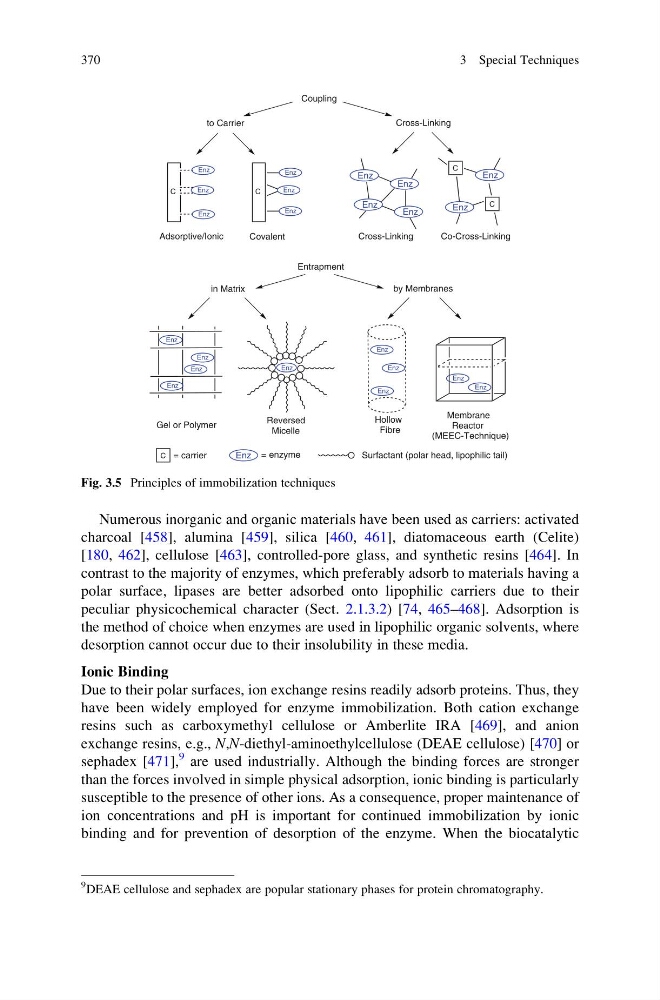
Fig. 3.5 Principles of immobilization techniques
9 DEAE cellulose and sephadex are popular stationary phases for protein chromatography.
370
3 Special Techniques
charcoal [458], alumina [459], silica [460, 461], diatomaceous earth (Celite)
[180, 462], cellulose [463], controlled-pore glass, and synthetic resins [464]. In
contrast to the majority of enzymes, which preferably adsorb to materials having a
polar surface, lipases are better adsorbed onto lipophilic carriers due to their
peculiar physicochemical character (Sect. 2.1.3.2) [74, 465–468]. Adsorption is
the method of choice when enzymes are used in lipophilic organic solvents, where
desorption cannot occur due to their insolubility in these media.
Ionic Binding
Due to their polar surfaces, ion exchange resins readily adsorb proteins. Thus, they
have been widely employed for enzyme immobilization. Both cation exchange
resins such as carboxymethyl cellulose or Amberlite IRA [469], and anion
exchange resins, e.g., N,N-diethyl-aminoethylcellulose (DEAE cellulose) [470] or
sephadex [471],
9 are used industrially. Although the binding forces are stronger
than the forces involved in simple physical adsorption, ionic binding is particularly
susceptible to the presence of other ions. As a consequence, proper maintenance of
ion concentrations and pH is important for continued immobilization by ionic
binding and for prevention of desorption of the enzyme. When the biocatalytic
Surfactant (polar head, lipophilic tail)
Membrane
Reactor
(MEEC-Technique)
Hollow
Fibre
Reversed
Micelle
Gel or Polymer
Entrapment
in Matrix
by Membranes
Co-Cross-Linking
Cross-Linking
Covalent
Adsorptive/Ionic
Cross-Linking
to Carrier
Coupling
Enz
= enzyme
Enz
= carrier
Enz
Enz
Enz
Enz
Enz
Enz
Enz
Enz
Enz
Enz
Enz
Enz
Enz
Enz
C
C
C
C
C
Enz
Enz
Enz
Enz
Enz
Enz
Enz
Fig. 3.5 Principles of immobilization techniques
9 DEAE cellulose and sephadex are popular stationary phases for protein chromatography.
370
3 Special Techniques