

52
TAKEHIKO KOTl
from Tm. Tm between RNA and RNA is higher by 10-15 °C than
that of Tm between DNA and DNA in the same base composition, and Tm in DNA-RNA hybrids is supposed to be a halfway
between Tm in DNA-DNA hybrids and Tm in RNA-RNA hybrids.
The parameters influencing the rate of hybrid formation were
already well established in liquid phase (Wetmur et al. 1968).
However, only a little information on the hybridization reaction
between solid phase and liquid phase, which will be much more
important for in situ hybridization, can be obtained. Collectively,
the rate of hybrid formation is dependent upon temperature of
hybridization and a concentration of probe, while the rate ofhybrid formation is not so changed at the salt concentration of 0041.0 M and at pH of 5.0-9.2. We usually perform in situ hybridization at (Tm-25) °C for longer probes and (Tm-I5) °C for oligoDNA probes with 30-45 bases.
PRINCIPLE OF NON-RADIOACTIVE IN SITU HYBRIDIZATION
01 1 go-DNA
~~
+
~
lJ lJDlillCDID
~
.. .
Ab
HHP
Hybr1d
IIJRNA
<==> Hapten (T-T d111Jer or D1gox1gen1n)
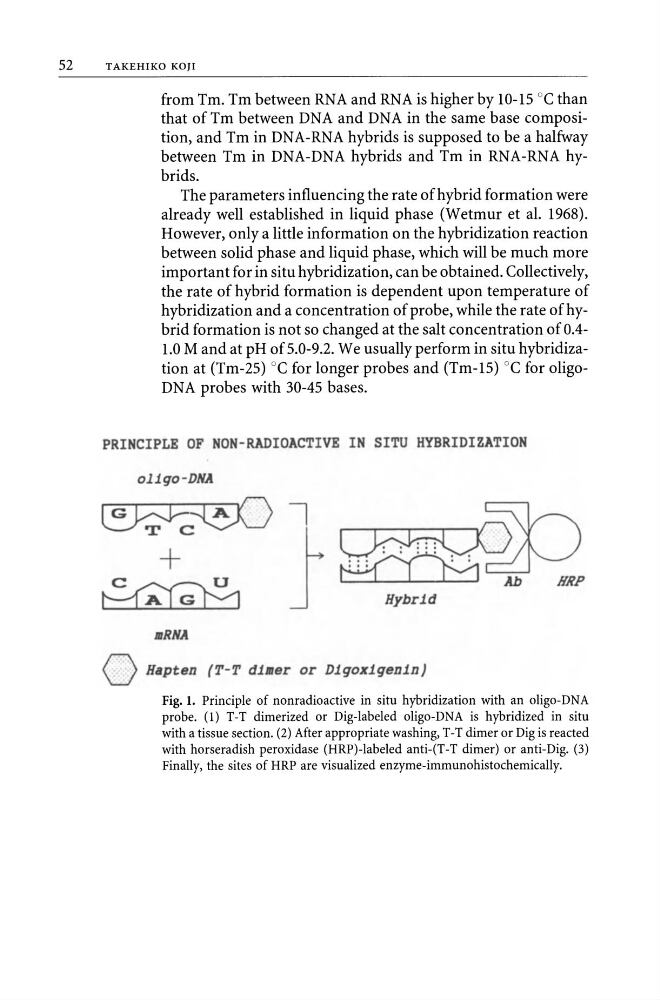
Fig. 1. Principle of nonradioactive in situ hybridization with an oligo-DNA
probe. (1) T-T dimerized or Dig-labeled oligo-DNA is hybridized in situ
with a tissue section. (2) After appropriate washing, T -T dimer or Dig is reacted
with horseradish peroxidase (HRP)-labeled anti-(T-T dimer) or anti-Dig. (3)
Finally, the sites of HRP are visualized enzyme-immunohistochemically.
TAKEHIKO KOTl
from Tm. Tm between RNA and RNA is higher by 10-15 °C than
that of Tm between DNA and DNA in the same base composition, and Tm in DNA-RNA hybrids is supposed to be a halfway
between Tm in DNA-DNA hybrids and Tm in RNA-RNA hybrids.
The parameters influencing the rate of hybrid formation were
already well established in liquid phase (Wetmur et al. 1968).
However, only a little information on the hybridization reaction
between solid phase and liquid phase, which will be much more
important for in situ hybridization, can be obtained. Collectively,
the rate of hybrid formation is dependent upon temperature of
hybridization and a concentration of probe, while the rate ofhybrid formation is not so changed at the salt concentration of 0041.0 M and at pH of 5.0-9.2. We usually perform in situ hybridization at (Tm-25) °C for longer probes and (Tm-I5) °C for oligoDNA probes with 30-45 bases.
PRINCIPLE OF NON-RADIOACTIVE IN SITU HYBRIDIZATION
01 1 go-DNA
~~
+
~
lJ lJDlillCDID
~
.. .
Ab
HHP
Hybr1d
IIJRNA
<==> Hapten (T-T d111Jer or D1gox1gen1n)
Fig. 1. Principle of nonradioactive in situ hybridization with an oligo-DNA
probe. (1) T-T dimerized or Dig-labeled oligo-DNA is hybridized in situ
with a tissue section. (2) After appropriate washing, T -T dimer or Dig is reacted
with horseradish peroxidase (HRP)-labeled anti-(T-T dimer) or anti-Dig. (3)
Finally, the sites of HRP are visualized enzyme-immunohistochemically.