

250
KO KOMUTA, TAKASHI KANEMATSU AND TAKEHIKO KOJI
Localization of ETF
Since abnormal expression of epidermal growth factor receptor
(EGFR) is frequently associated with cancer development, the
analysis of EGFR gene expression at the transcriptional level
as well as the transcript level is helpful in understanding the abnormal nature of cancer growth. We attempted to localize EGFR
transcriptional factors, EGFR specific transcription factor (ETF),
in the frozen sections of A431 human epidermoid tumor transplated into nude mice by southwestern histochemistry. As
probes for southwestern histochemistry, (+) and (-) sequences
of the DNA seqment (91 base pairs (bp)) including ETF regulatory element were synthesized, allowed to be annealed and then
tailed by terminal deoxynucleotidyl transferase with digoxigenin
(Dig)-II-dUTP. The sites of Dig were visualized enzyme-immunohistochemically with horseradish peroxidase-labeled antiDig. The 91 bp probe effectively detected a single ETF band
with a molecular mass of 120 kD on a southwestern blot of
the crude nuclear fraction extracted from A431 tumor cells.
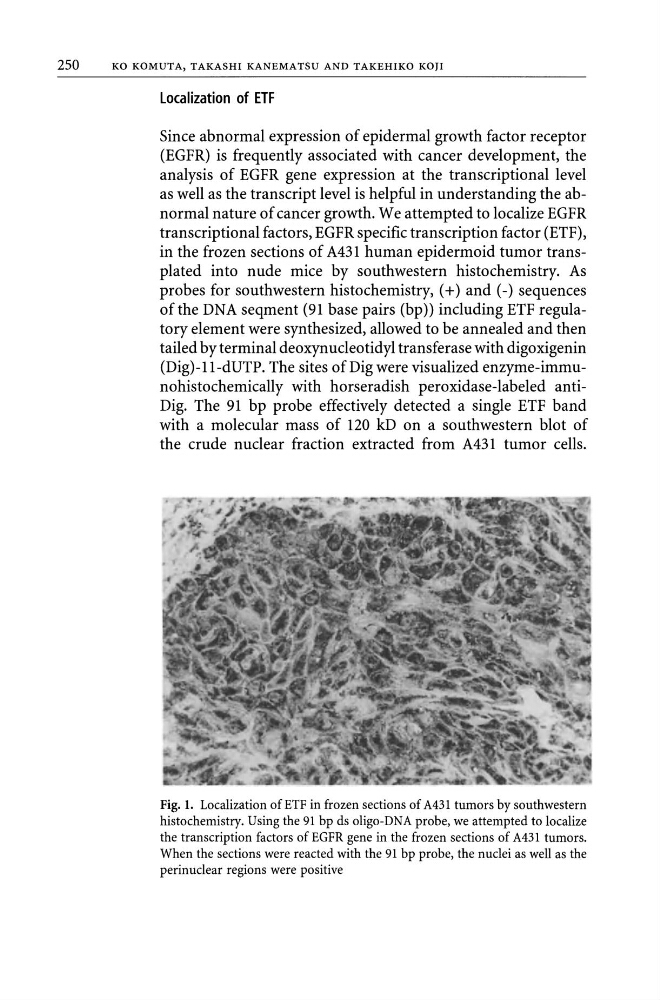
Fig. 1. Localization ofETF in frozen sections of A431 tumors by southwestern
histochemistry. Using the 91 bp ds oligo-DNA probe, we attempted to localize
the transcription factors of EGFR gene in the frozen sections of A431 tumors.
When the sections were reacted with the 91 bp probe, the nuclei as well as the
perinuclear regions were positive
KO KOMUTA, TAKASHI KANEMATSU AND TAKEHIKO KOJI
Localization of ETF
Since abnormal expression of epidermal growth factor receptor
(EGFR) is frequently associated with cancer development, the
analysis of EGFR gene expression at the transcriptional level
as well as the transcript level is helpful in understanding the abnormal nature of cancer growth. We attempted to localize EGFR
transcriptional factors, EGFR specific transcription factor (ETF),
in the frozen sections of A431 human epidermoid tumor transplated into nude mice by southwestern histochemistry. As
probes for southwestern histochemistry, (+) and (-) sequences
of the DNA seqment (91 base pairs (bp)) including ETF regulatory element were synthesized, allowed to be annealed and then
tailed by terminal deoxynucleotidyl transferase with digoxigenin
(Dig)-II-dUTP. The sites of Dig were visualized enzyme-immunohistochemically with horseradish peroxidase-labeled antiDig. The 91 bp probe effectively detected a single ETF band
with a molecular mass of 120 kD on a southwestern blot of
the crude nuclear fraction extracted from A431 tumor cells.
Fig. 1. Localization ofETF in frozen sections of A431 tumors by southwestern
histochemistry. Using the 91 bp ds oligo-DNA probe, we attempted to localize
the transcription factors of EGFR gene in the frozen sections of A431 tumors.
When the sections were reacted with the 91 bp probe, the nuclei as well as the
perinuclear regions were positive