

150
YOSHIO KANEMITSU AND TAKEHIKO KOJI
eDNA
lOng
lng
l00ng
10pg
lpg
•
•
oligo probe
S5 eDNA probe
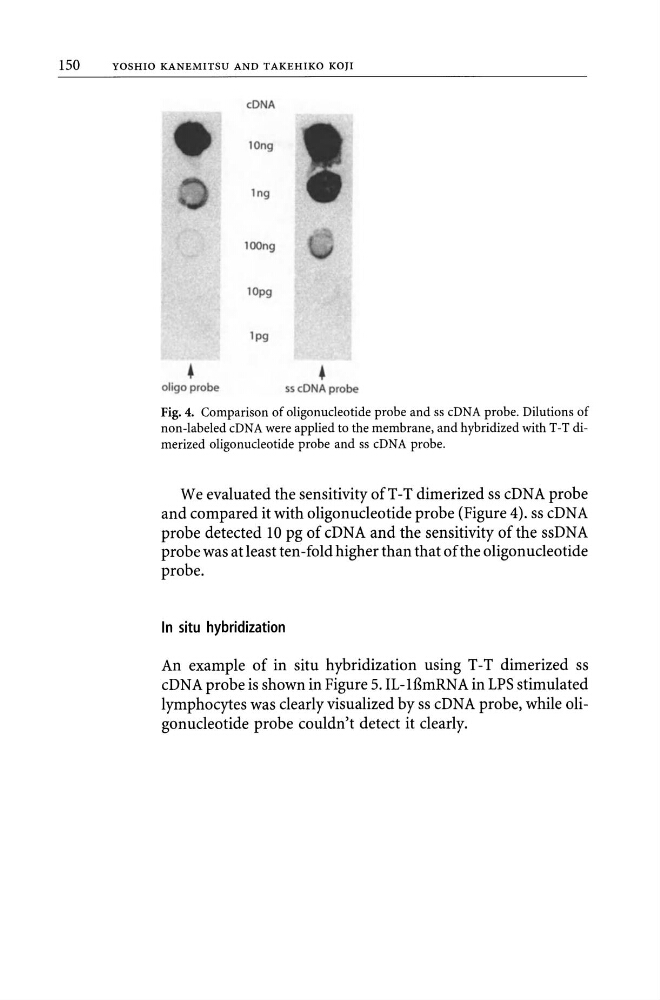
Fig.4. Comparison of oligonucleotide probe and ss eDNA probe. Dilutions of
non-labeled eDNA were applied to the membrane, and hybridized with T -T dimerized oligonucleotide probe and ss eDNA probe.
We evaluated the sensitivity ofT-T dimerized ss cDNA probe
and compared it with oligonucleotide probe (Figure 4). ss cDNA
probe detected 10 pg of cDNA and the sensitivity of the ssDNA
probe was at least ten-fold higher than that of the oligonucleotide
probe.
In situ hybridization
An example of in situ hybridization using T -T dimerized ss
cDNA probe is shown in Figure 5. IL-IBmRNA in LPS stimulated
lymphocytes was clearly visualized by ss cDNA probe, while oligonucleotide probe couldn't detect it clearly.
YOSHIO KANEMITSU AND TAKEHIKO KOJI
eDNA
lOng
lng
l00ng
10pg
lpg
•
•
oligo probe
S5 eDNA probe
Fig.4. Comparison of oligonucleotide probe and ss eDNA probe. Dilutions of
non-labeled eDNA were applied to the membrane, and hybridized with T -T dimerized oligonucleotide probe and ss eDNA probe.
We evaluated the sensitivity ofT-T dimerized ss cDNA probe
and compared it with oligonucleotide probe (Figure 4). ss cDNA
probe detected 10 pg of cDNA and the sensitivity of the ssDNA
probe was at least ten-fold higher than that of the oligonucleotide
probe.
In situ hybridization
An example of in situ hybridization using T -T dimerized ss
cDNA probe is shown in Figure 5. IL-IBmRNA in LPS stimulated
lymphocytes was clearly visualized by ss cDNA probe, while oligonucleotide probe couldn't detect it clearly.