

10 In Situ Hybridization for RNA: Nonradioactive Probe: ss eDNA Probe
141
(a)
(b)
(c)
upstream
primer
.......
". ". "\~ '1
mRNA·· ••••••••.
single
primer
,
t
downstresm
primer
(d)
UV irradiation
tl
f T=T dimer formation
f\
(e)
anti T=T Ab,
_'. -6-(
"\.
mRNA\ •• .. ........... .
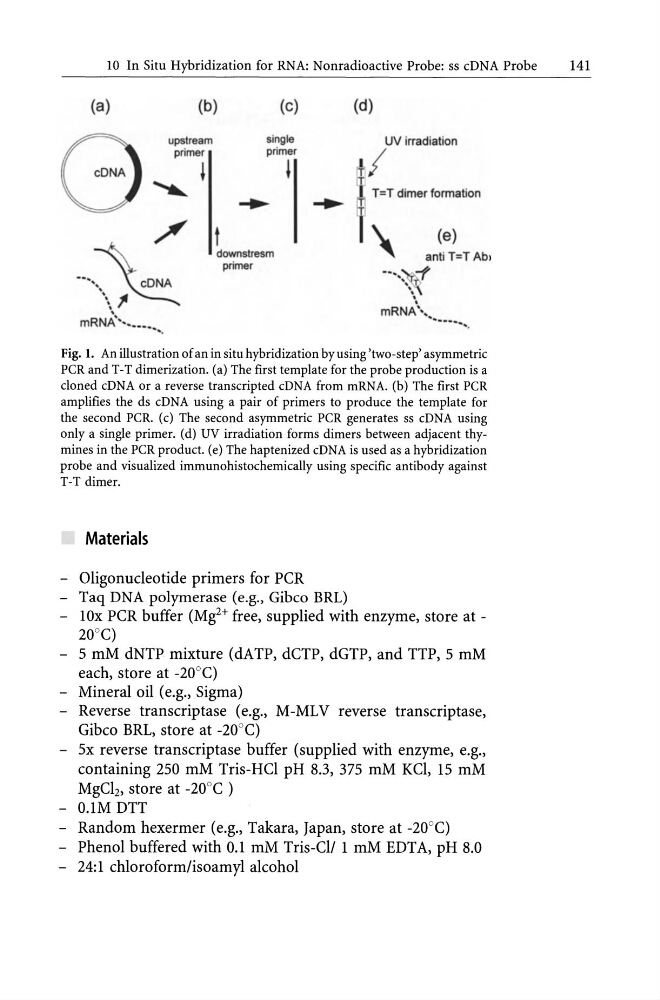
Fig. 1. An illustration of an in situ hybridization by using 'two-step' asymmetric
peR and T -T dimerization. Ca) The first template for the probe production is a
cloned eDNA or a reverse transcripted eDNA from mRNA. Cb) The first peR
amplifies the ds eDNA using a pair of primers to produce the template for
the second peR. Cc) The second asymmetric peR generates ss eDNA using
only a single primer. Cd) UV irradiation forms dimers between adjacent thymines in the peR product. Ce) The haptenized cDNA is used as a hybridization
probe and visualized immunohistochemically using specific antibody against
T-T dimer.
Materials
- Oligonucleotide primers for PCR
- Taq DNA polymerase (e.g., Gibeo BRL)
- lOx PCR buffer (Mg2+ free, supplied with enzyme, store at -
20°C)
- 5 mM dNTP mixture (dATP, dCTP, dGTP, and TTP, 5 mM
each, store at -20°C)
- Mineral oil (e.g., Sigma)
Reverse transcriptase (e.g., M -ML V reverse transcriptase,
Gibco BRL, store at -20°C)
- 5x reverse transcriptase buffer (supplied with enzyme, e.g.,
containing 250 mM Tris-HCI pH 8.3, 375 mM KCI, 15 mM
MgCh, store at -20°C)
- O.IM DTT
- Random hexermer (e.g., Takara, Japan, store at -20°C)
- Phenol buffered with 0.1 mM Tris-ClI 1 mM EDTA, pH 8.0
- 24:1 chloroform/isoamyl alcohol
141
(a)
(b)
(c)
upstream
primer
.......
". ". "\~ '1
mRNA·· ••••••••.
single
primer
,
t
downstresm
primer
(d)
UV irradiation
tl
f T=T dimer formation
f\
(e)
anti T=T Ab,
_'. -6-(
"\.
mRNA\ •• .. ........... .
Fig. 1. An illustration of an in situ hybridization by using 'two-step' asymmetric
peR and T -T dimerization. Ca) The first template for the probe production is a
cloned eDNA or a reverse transcripted eDNA from mRNA. Cb) The first peR
amplifies the ds eDNA using a pair of primers to produce the template for
the second peR. Cc) The second asymmetric peR generates ss eDNA using
only a single primer. Cd) UV irradiation forms dimers between adjacent thymines in the peR product. Ce) The haptenized cDNA is used as a hybridization
probe and visualized immunohistochemically using specific antibody against
T-T dimer.
Materials
- Oligonucleotide primers for PCR
- Taq DNA polymerase (e.g., Gibeo BRL)
- lOx PCR buffer (Mg2+ free, supplied with enzyme, store at -
20°C)
- 5 mM dNTP mixture (dATP, dCTP, dGTP, and TTP, 5 mM
each, store at -20°C)
- Mineral oil (e.g., Sigma)
Reverse transcriptase (e.g., M -ML V reverse transcriptase,
Gibco BRL, store at -20°C)
- 5x reverse transcriptase buffer (supplied with enzyme, e.g.,
containing 250 mM Tris-HCI pH 8.3, 375 mM KCI, 15 mM
MgCh, store at -20°C)
- O.IM DTT
- Random hexermer (e.g., Takara, Japan, store at -20°C)
- Phenol buffered with 0.1 mM Tris-ClI 1 mM EDTA, pH 8.0
- 24:1 chloroform/isoamyl alcohol