

174
]. KIEFER
Irradiation
time----..... -
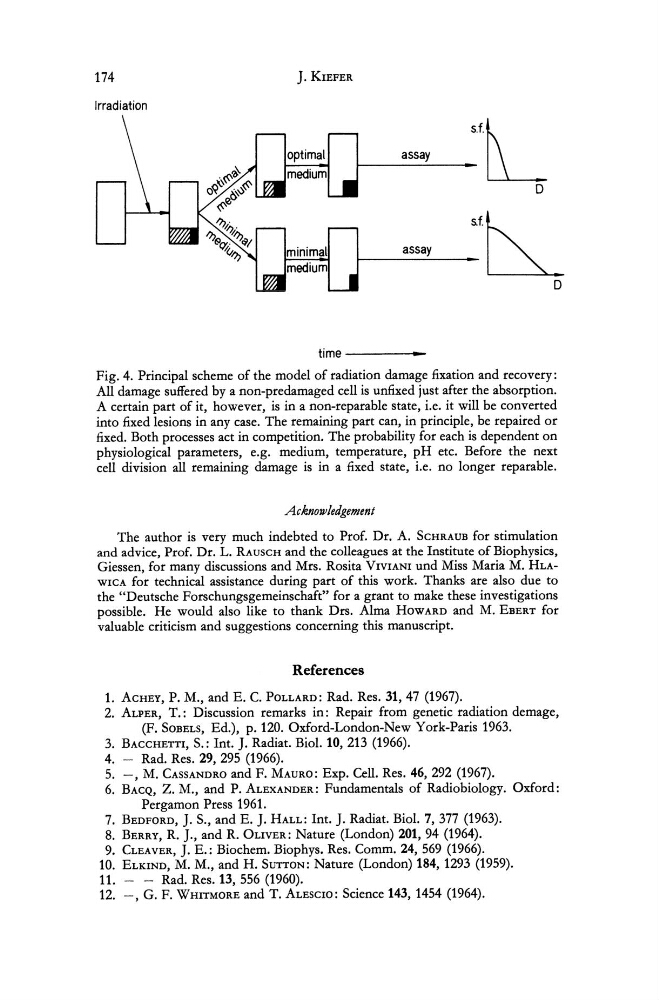
Fig. 4. Principal scheme of the model of radiation damage fixation and recovery:
All damage suffered by a non-predamaged cell is unfixed just after the absorption.
A certain part of it, however, is in a non-reparable state, i.e. it will be converted
into fixed lesions in any case. The remaining part can, in principle, be repaired or
fixed. Both processes act in competition. The probability for each is dependent on
physiological parameters, e.g. medium, temperature, pH etc. Before the next
cell division all remaining damage is in a fixed state, i.e. no longer reparable.
Acknowledgement
The author is very much indebted to Prof. Dr. A. SCHRAUB for stimulation
and advice, Prof. Dr. L. RAUSCH and the colleagues at the Institute of Biophysics,
Giessen, for many discussions and Mrs. Rosita VIVIANI und Miss Maria M. HLAWICA for technical assistance during part of this work. Thanks are also due to
the "Deutsche Forschungsgemeinschaft" for a grant to make these investigations
possible. He would also like to thank Drs. Alma HOWARD and M. EBERT for
valuable criticism and suggestions concerning this manuscript.
References
1. ACHEY, P. M., and E. C. POLLARD: Rad. Res. 31,47 (1967).
2. ALPER, T.: Discussion remarks in: Repair from genetic radiation demage,
(F. SOBELS, Ed.), p. 120. Oxford-London-New York-Paris 1963.
3. BACCHETTI, S.: Int. ]. Radiat. BioI. 10, 213 (1966).
4. - Rad. Res. 29,295 (1966).
5. -, M. CASSANDRO and F. MAURO: Exp. Cell. Res. 46, 292 (1967).
6. BACQ, Z. M., and P. ALEXANDER: Fundamentals of Radiobiology. Oxford:
Pergamon Press 1961.
7. BEDFORD,]. S., and E. ]. HALL: Int. ]. Radiat. BioI. 7, 377 (1963).
8. BERRY, R. ]., and R. OLIVER: Nature (London) 201, 94 (1964).
9. CLEAVER,]. E.: Biochem. Biophys. Res. Comm. 24, 569 (1966).
10. ELKIND, M. M., and H. SUTTON: Nature (London) 184, 1293 (1959).
11. - - Rad. Res. 13, 556 (1960).
12. -, G. F. WHITMORE and T. ALESCIO: Science 143, 1454 (1964).
]. KIEFER
Irradiation
time----..... -
Fig. 4. Principal scheme of the model of radiation damage fixation and recovery:
All damage suffered by a non-predamaged cell is unfixed just after the absorption.
A certain part of it, however, is in a non-reparable state, i.e. it will be converted
into fixed lesions in any case. The remaining part can, in principle, be repaired or
fixed. Both processes act in competition. The probability for each is dependent on
physiological parameters, e.g. medium, temperature, pH etc. Before the next
cell division all remaining damage is in a fixed state, i.e. no longer reparable.
Acknowledgement
The author is very much indebted to Prof. Dr. A. SCHRAUB for stimulation
and advice, Prof. Dr. L. RAUSCH and the colleagues at the Institute of Biophysics,
Giessen, for many discussions and Mrs. Rosita VIVIANI und Miss Maria M. HLAWICA for technical assistance during part of this work. Thanks are also due to
the "Deutsche Forschungsgemeinschaft" for a grant to make these investigations
possible. He would also like to thank Drs. Alma HOWARD and M. EBERT for
valuable criticism and suggestions concerning this manuscript.
References
1. ACHEY, P. M., and E. C. POLLARD: Rad. Res. 31,47 (1967).
2. ALPER, T.: Discussion remarks in: Repair from genetic radiation demage,
(F. SOBELS, Ed.), p. 120. Oxford-London-New York-Paris 1963.
3. BACCHETTI, S.: Int. ]. Radiat. BioI. 10, 213 (1966).
4. - Rad. Res. 29,295 (1966).
5. -, M. CASSANDRO and F. MAURO: Exp. Cell. Res. 46, 292 (1967).
6. BACQ, Z. M., and P. ALEXANDER: Fundamentals of Radiobiology. Oxford:
Pergamon Press 1961.
7. BEDFORD,]. S., and E. ]. HALL: Int. ]. Radiat. BioI. 7, 377 (1963).
8. BERRY, R. ]., and R. OLIVER: Nature (London) 201, 94 (1964).
9. CLEAVER,]. E.: Biochem. Biophys. Res. Comm. 24, 569 (1966).
10. ELKIND, M. M., and H. SUTTON: Nature (London) 184, 1293 (1959).
11. - - Rad. Res. 13, 556 (1960).
12. -, G. F. WHITMORE and T. ALESCIO: Science 143, 1454 (1964).