

Respiration and Growth in Germinating Seeds
143
membrane damage in critical sites, such as the embryonic axis, might lead to
subsequent inhibition of seedling growth, or even to death of the seedling.
Surprisingly, inhibition of respiration by the 5 °C treatment was more
pronounced at 2- than at 6-hrs. This suggested that some kind of repair
mechanism might be present. Upon measuring the respiration of cotyledons
and embryonic axes separately, we found that respiration of the chilled
cotyledons approached control levels after 4 hrs. That of the embryonic
axes remained inhibited even after 6 hrs. This was interpreted as evidence
indicating that the embryonic axis was the principal site of chilling injury.
The data also show that correlations between respiration and growth do not
necessarily improve as the time between the two kinds of measurements is
•
b)
I
a)
I
•
250r
' 1
200
co
,
_; 150[
~ 100r
•
•
50k
·
•
~ ..
•
•
••
•
• • .-.o -~---'-----_"--__ J
20
40
60
80
20
40
60
80
Root length (mm)
Root length (mm)
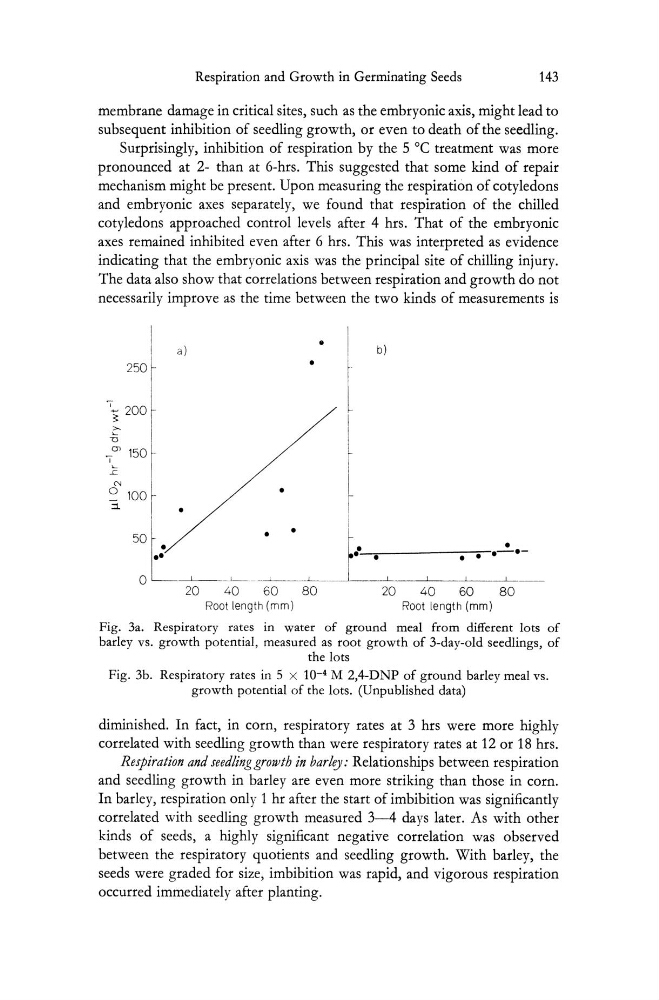
Fig. 3a. Respiratory rates in water of ground meal from different lots of
barley vs. growth potential, measured as root growth of 3-day-old seedlings, of
the lots
Fig. 3b. Respiratory rates in 5 X 10- 4 M 2,4-DNP of ground barley meal vs.
growth potential of the lots. (Unpublished data)
diminished. In fact, in corn, respiratory rates at 3 hrs were more highly
correlated with seedling growth than were respiratory rates at 12 or 18 hrs.
Respiration and seedling growth in barley: Relationships between respiration
and seedling growth in barley are even more striking than those in corn.
In barley, respiration only 1 hr after the start of imbibition was significantly
correlated with seedling growth measured 3-4 days later. As with other
kinds of seeds, a highly significant negative correlation was observed
between the respiratory quotients and seedling growth. With barley, the
seeds were graded for size, imbibition was rapid, and vigorous respiration
occurred immediately after planting.
143
membrane damage in critical sites, such as the embryonic axis, might lead to
subsequent inhibition of seedling growth, or even to death of the seedling.
Surprisingly, inhibition of respiration by the 5 °C treatment was more
pronounced at 2- than at 6-hrs. This suggested that some kind of repair
mechanism might be present. Upon measuring the respiration of cotyledons
and embryonic axes separately, we found that respiration of the chilled
cotyledons approached control levels after 4 hrs. That of the embryonic
axes remained inhibited even after 6 hrs. This was interpreted as evidence
indicating that the embryonic axis was the principal site of chilling injury.
The data also show that correlations between respiration and growth do not
necessarily improve as the time between the two kinds of measurements is
•
b)
I
a)
I
•
250r
' 1
200
co
,
_; 150[
~ 100r
•
•
50k
·
•
~ ..
•
•
••
•
• • .-.o -~---'-----_"--__ J
20
40
60
80
20
40
60
80
Root length (mm)
Root length (mm)
Fig. 3a. Respiratory rates in water of ground meal from different lots of
barley vs. growth potential, measured as root growth of 3-day-old seedlings, of
the lots
Fig. 3b. Respiratory rates in 5 X 10- 4 M 2,4-DNP of ground barley meal vs.
growth potential of the lots. (Unpublished data)
diminished. In fact, in corn, respiratory rates at 3 hrs were more highly
correlated with seedling growth than were respiratory rates at 12 or 18 hrs.
Respiration and seedling growth in barley: Relationships between respiration
and seedling growth in barley are even more striking than those in corn.
In barley, respiration only 1 hr after the start of imbibition was significantly
correlated with seedling growth measured 3-4 days later. As with other
kinds of seeds, a highly significant negative correlation was observed
between the respiratory quotients and seedling growth. With barley, the
seeds were graded for size, imbibition was rapid, and vigorous respiration
occurred immediately after planting.