

Respiration and Growth in Germinating Seeds
139
in respiration cannot be due either to differences in imbibitional water
uptake or to differences in growth rates. These results also show that differences in respiration occur within only 2 hrs after wetting, and that injury
due to short-term heat treatments affects respiration in a manner similar to
that due to gradual deterioration during long-term storage.
The respiration and growth of individual corn seeds: In the above tests,
different populations of seeds were compared. The respiration and growth
of individual seeds can also be compared. The respiration of an individual
seed can be measured during imbibition and compared with the growth
of that particular seed at a later stage of development. In these experiments,
the respiratory rates of 16 single individual corn seeds were measured for 6
60
"D
~ 50
U)
-.:0
L
--;::'40
o
;} 20
Q)
0::
20
22
24 26
28
Time aiter planting (hrs)
a
30
,:..'
,
,
co 0
u
u
Q)
Q)
U)
40
Q)
E
t=
32
27
26
25
::t
20 40 60 80 100
Respiration (Ill 02/hr/seed)
b
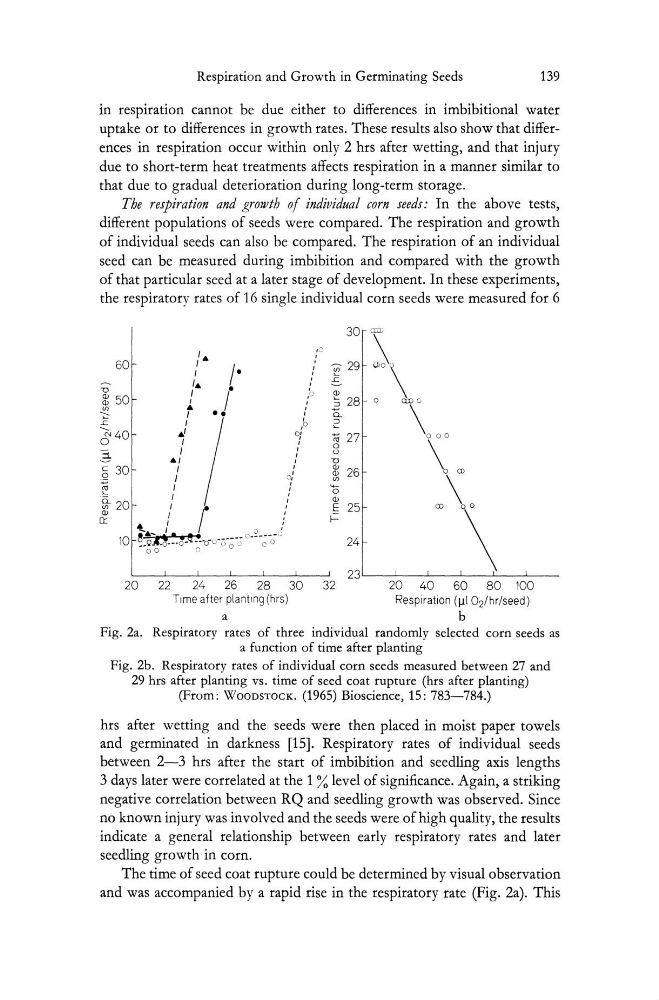
Fig. 2a. Respiratory rates of three individual randomly selected corn seeds as
a function of time after planting
Fig. 2b. Respiratory rates of individual corn seeds measured between 27 and
29 hrs after planting vs. time of seed coat rupture (hrs after planting)
(From: WOODSTOCK. (1965) Bioscience, 15: 783-784.)
hrs after wetting and the seeds were then placed in moist paper towels
and germinated in darkness [15]. Respiratory rates of individual seeds
between 2-3 hrs after the start of imbibition and seedling axis lengths
3 days later were correlated at the 1 % level of significance. Again, a striking
negative correlation between RQ and seedling growth was observed. Since
no known injury was involved and the seeds were of high quality, the results
indicate a general relationship between early respiratory rates and later
seedling growth in corn.
The time of seed coat rupture could be determined by visual observation
and was accompanied by a rapid rise in the respiratory rate (Fig. 2a). This
139
in respiration cannot be due either to differences in imbibitional water
uptake or to differences in growth rates. These results also show that differences in respiration occur within only 2 hrs after wetting, and that injury
due to short-term heat treatments affects respiration in a manner similar to
that due to gradual deterioration during long-term storage.
The respiration and growth of individual corn seeds: In the above tests,
different populations of seeds were compared. The respiration and growth
of individual seeds can also be compared. The respiration of an individual
seed can be measured during imbibition and compared with the growth
of that particular seed at a later stage of development. In these experiments,
the respiratory rates of 16 single individual corn seeds were measured for 6
60
"D
~ 50
U)
-.:0
L
--;::'40
o
;} 20
Q)
0::
20
22
24 26
28
Time aiter planting (hrs)
a
30
,:..'
,
,
co 0
u
u
Q)
Q)
U)
40
Q)
E
t=
32
27
26
25
::t
20 40 60 80 100
Respiration (Ill 02/hr/seed)
b
Fig. 2a. Respiratory rates of three individual randomly selected corn seeds as
a function of time after planting
Fig. 2b. Respiratory rates of individual corn seeds measured between 27 and
29 hrs after planting vs. time of seed coat rupture (hrs after planting)
(From: WOODSTOCK. (1965) Bioscience, 15: 783-784.)
hrs after wetting and the seeds were then placed in moist paper towels
and germinated in darkness [15]. Respiratory rates of individual seeds
between 2-3 hrs after the start of imbibition and seedling axis lengths
3 days later were correlated at the 1 % level of significance. Again, a striking
negative correlation between RQ and seedling growth was observed. Since
no known injury was involved and the seeds were of high quality, the results
indicate a general relationship between early respiratory rates and later
seedling growth in corn.
The time of seed coat rupture could be determined by visual observation
and was accompanied by a rapid rise in the respiratory rate (Fig. 2a). This