

1. Detecting Extinction in Sighting Data
5
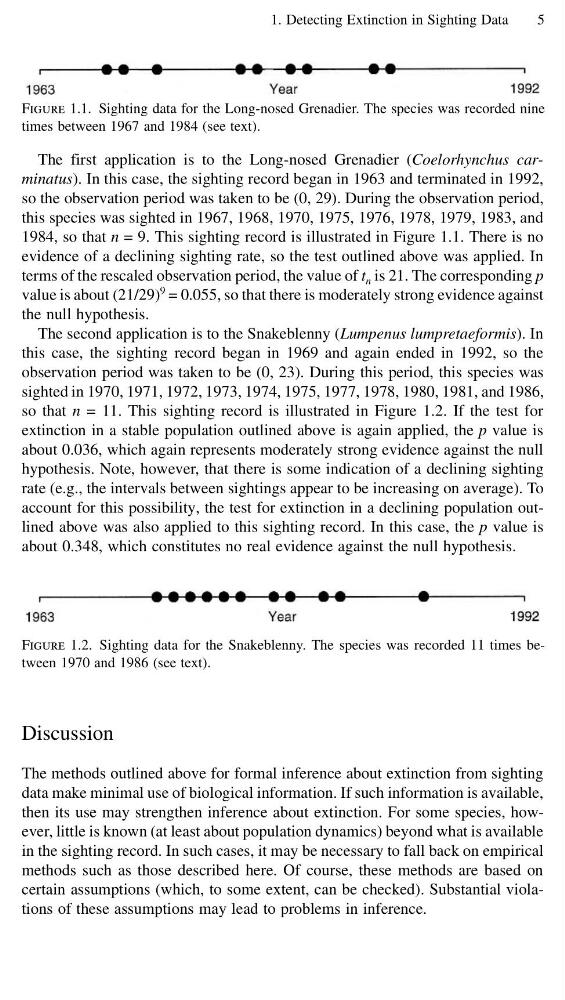
Figure 1.1. Sighting data for the Long-nosed Grenadier. The species was recorded nine
times between 1967 and 1984 (see text).
The first application is to the Long-nosed Grenadier (Coelorhynchus carminatus). In this case, the sighting record began in 1963 and terminated in 1992,
so the observation period was taken to be (0, 29). During the observation period,
this species was sighted in 1967, 1968, 1970, 1975, 1976, 1978, 1979, 1983, and
1984, so that n = 9. This sighting record is illustrated in Figure 1.1. There is no
evidence of a declining sighting rate, so the test outlined above was applied. In
terms of the rescaled observation period, the value of t n is 21. The corresponding p
value is about (21/29)
9 = 0.055, so that there is moderately strong evidence against
the null hypothesis.
The second application is to the Snakeblenny (Lumpenus lumpretaeformis). In
this case, the sighting record began in 1969 and again ended in 1992, so the
observation period was taken to be (0, 23). During this period, this species was
sighted in 1970, 1971, 1972, 1973, 1974, 1975, 1977, 1978, 1980, 1981, and 1986,
so that n = 11. This sighting record is illustrated in Figure 1.2. If the test for
extinction in a stable population outlined above is again applied, the p value is
about 0.036, which again represents moderately strong evidence against the null
hypothesis. Note, however, that there is some indication of a declining sighting
rate (e.g., the intervals between sightings appear to be increasing on average). To
account for this possibility, the test for extinction in a declining population outlined above was also applied to this sighting record. In this case, the p value is
about 0.348, which constitutes no real evidence against the null hypothesis.
Figure 1.2. Sighting data for the Snakeblenny. The species was recorded 11 times between 1970 and 1986 (see text).
Discussion
The methods outlined above for formal inference about extinction from sighting
data make minimal use of biological information. If such information is available,
then its use may strengthen inference about extinction. For some species, however, little is known (at least about population dynamics) beyond what is available
in the sighting record. In such cases, it may be necessary to fall back on empirical
methods such as those described here. Of course, these methods are based on
certain assumptions (which, to some extent, can be checked). Substantial violations of these assumptions may lead to problems in inference.
5
Figure 1.1. Sighting data for the Long-nosed Grenadier. The species was recorded nine
times between 1967 and 1984 (see text).
The first application is to the Long-nosed Grenadier (Coelorhynchus carminatus). In this case, the sighting record began in 1963 and terminated in 1992,
so the observation period was taken to be (0, 29). During the observation period,
this species was sighted in 1967, 1968, 1970, 1975, 1976, 1978, 1979, 1983, and
1984, so that n = 9. This sighting record is illustrated in Figure 1.1. There is no
evidence of a declining sighting rate, so the test outlined above was applied. In
terms of the rescaled observation period, the value of t n is 21. The corresponding p
value is about (21/29)
9 = 0.055, so that there is moderately strong evidence against
the null hypothesis.
The second application is to the Snakeblenny (Lumpenus lumpretaeformis). In
this case, the sighting record began in 1969 and again ended in 1992, so the
observation period was taken to be (0, 23). During this period, this species was
sighted in 1970, 1971, 1972, 1973, 1974, 1975, 1977, 1978, 1980, 1981, and 1986,
so that n = 11. This sighting record is illustrated in Figure 1.2. If the test for
extinction in a stable population outlined above is again applied, the p value is
about 0.036, which again represents moderately strong evidence against the null
hypothesis. Note, however, that there is some indication of a declining sighting
rate (e.g., the intervals between sightings appear to be increasing on average). To
account for this possibility, the test for extinction in a declining population outlined above was also applied to this sighting record. In this case, the p value is
about 0.348, which constitutes no real evidence against the null hypothesis.
Figure 1.2. Sighting data for the Snakeblenny. The species was recorded 11 times between 1970 and 1986 (see text).
Discussion
The methods outlined above for formal inference about extinction from sighting
data make minimal use of biological information. If such information is available,
then its use may strengthen inference about extinction. For some species, however, little is known (at least about population dynamics) beyond what is available
in the sighting record. In such cases, it may be necessary to fall back on empirical
methods such as those described here. Of course, these methods are based on
certain assumptions (which, to some extent, can be checked). Substantial violations of these assumptions may lead to problems in inference.