

230
S.P. Baden and C. Bostrom
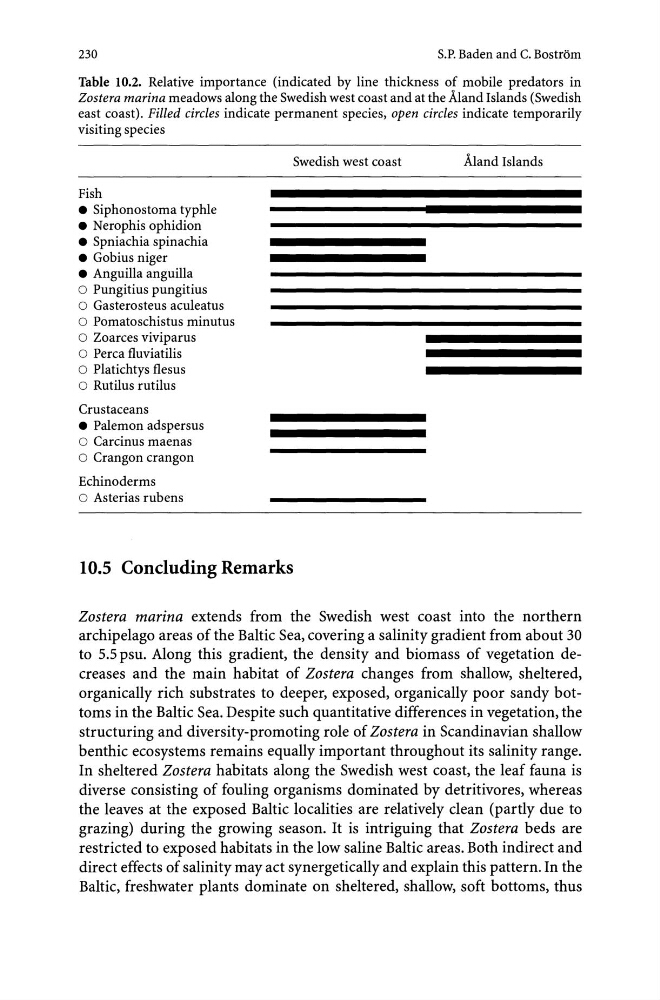
Table 10.2. Relative importance (indicated by line thickness of mobile predators in
Zostera marina meadows along the Swedish west coast and at the Aland Islands (Swedish
east coast). Filled circles indicate permanent species, open circles indicate temporarily
visiting species
Swedish west coast
Aland Islands
Fish
• Siphonostoma typhle
• Nerophis ophidion
• Spniachia spinachia
• Gobius niger
• Anguilla anguilla
o Pungitius pungitius
o Gasterosteus aculeatus
o Pomatoschistus minutus
o Zoarces viviparus
o Perca fluviatilis
o Platichtys flesus
o Rutilus rutilus
Crustaceans
• Palemon adspersus
o Carcinus maenas
o Crangon crangon
Echinoderms
o Asterias rub ens
10.5 Concluding Remarks
Zostera marina extends from the Swedish west coast into the northern
archipelago areas of the Baltic Sea, covering a salinity gradient from about 30
to 5.5 psu. Along this gradient, the density and biomass of vegetation decreases and the main habitat of Zostera changes from shallow, sheltered,
organically rich substrates to deeper, exposed, organically poor sandy bottoms in the Baltic Sea. Despite such quantitative differences in vegetation, the
structuring and diversity-promoting role of Zostera in Scandinavian shallow
benthic ecosystems remains equally important throughout its salinity range.
In sheltered Zostera habitats along the Swedish west coast, the leaf fauna is
diverse consisting of fouling organisms dominated by detritivores, whereas
the leaves at the exposed Baltic localities are relatively clean (partly due to
grazing) during the growing season. It is intriguing that Zostera beds are
restricted to exposed habitats in the low saline Baltic areas. Both indirect and
direct effects of salinity may act synergetically and explain this pattern. In the
Baltic, freshwater plants dominate on sheltered, shallow, soft bottoms, thus
S.P. Baden and C. Bostrom
Table 10.2. Relative importance (indicated by line thickness of mobile predators in
Zostera marina meadows along the Swedish west coast and at the Aland Islands (Swedish
east coast). Filled circles indicate permanent species, open circles indicate temporarily
visiting species
Swedish west coast
Aland Islands
Fish
• Siphonostoma typhle
• Nerophis ophidion
• Spniachia spinachia
• Gobius niger
• Anguilla anguilla
o Pungitius pungitius
o Gasterosteus aculeatus
o Pomatoschistus minutus
o Zoarces viviparus
o Perca fluviatilis
o Platichtys flesus
o Rutilus rutilus
Crustaceans
• Palemon adspersus
o Carcinus maenas
o Crangon crangon
Echinoderms
o Asterias rub ens
10.5 Concluding Remarks
Zostera marina extends from the Swedish west coast into the northern
archipelago areas of the Baltic Sea, covering a salinity gradient from about 30
to 5.5 psu. Along this gradient, the density and biomass of vegetation decreases and the main habitat of Zostera changes from shallow, sheltered,
organically rich substrates to deeper, exposed, organically poor sandy bottoms in the Baltic Sea. Despite such quantitative differences in vegetation, the
structuring and diversity-promoting role of Zostera in Scandinavian shallow
benthic ecosystems remains equally important throughout its salinity range.
In sheltered Zostera habitats along the Swedish west coast, the leaf fauna is
diverse consisting of fouling organisms dominated by detritivores, whereas
the leaves at the exposed Baltic localities are relatively clean (partly due to
grazing) during the growing season. It is intriguing that Zostera beds are
restricted to exposed habitats in the low saline Baltic areas. Both indirect and
direct effects of salinity may act synergetically and explain this pattern. In the
Baltic, freshwater plants dominate on sheltered, shallow, soft bottoms, thus