

200
C. den Hartog and R.C. Phillips
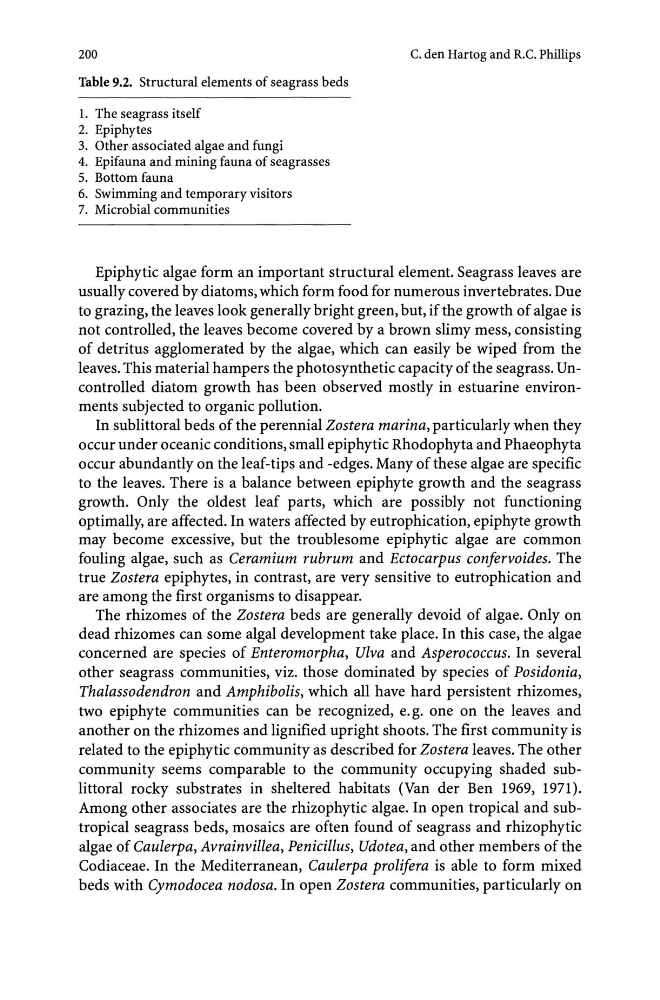
Table 9.2. Structural elements of seagrass beds
1. The seagrass itself
2. Epiphytes
3. Other associated algae and fungi
4. Epifauna and mining fauna of seagrasses
5. Bottom fauna
6. Swimming and temporary visitors
7. Microbial communities
Epiphytic algae form an important structural element. Seagrass leaves are
usually covered by diatoms, which form food for numerous invertebrates. Due
to grazing, the leaves look generally bright green, but, if the growth of algae is
not controlled, the leaves become covered by a brown slimy mess, consisting
of detritus agglomerated by the algae, which can easily be wiped from the
leaves. This material hampers the photosynthetic capacity of the seagrass. Uncontrolled diatom growth has been observed mostly in estuarine environments subjected to organic pollution.
In sublittoral beds of the perennial Zostera marina, particularly when they
occur under oceanic conditions, small epiphytic Rhodophyta and Phaeophyta
occur abundantly on the leaf-tips and -edges. Many of these algae are specific
to the leaves. There is a balance between epiphyte growth and the seagrass
growth. Only the oldest leaf parts, which are possibly not functioning
optimally, are affected. In waters affected by eutrophication, epiphyte growth
may become excessive, but the troublesome epiphytic algae are common
fouling algae, such as Ceramium rubrum and Ectocarpus confervoides. The
true Zostera epiphytes, in contrast, are very sensitive to eutrophication and
are among the first organisms to disappear.
The rhizomes of the Zostera beds are generally devoid of algae. Only on
dead rhizomes can some algal development take place. In this case, the algae
concerned are species of Enteromorpha, Ulva and Asperococcus. In several
other seagrass communities, viz. those dominated by species of Posidonia,
Thalassodendron and Amphibolis, which all have hard persistent rhizomes,
two epiphyte communities can be recognized, e. g. one on the leaves and
another on the rhizomes and lignified upright shoots. The first community is
related to the epiphytic community as described for Zostera leaves. The other
community seems comparable to the community occupying shaded sublittoral rocky substrates in sheltered habitats (Van der Ben 1969, 1971).
Among other associates are the rhizophytic algae. In open tropical and subtropical seagrass beds, mosaics are often found of seagrass and rhizophytic
algae of Caulerpa, Avrainvillea, Penicillus, Udotea, and other members of the
Codiaceae. In the Mediterranean, Caulerpa prolifera is able to form mixed
beds with Cymodocea nodosa. In open Zostera communities, particularly on
C. den Hartog and R.C. Phillips
Table 9.2. Structural elements of seagrass beds
1. The seagrass itself
2. Epiphytes
3. Other associated algae and fungi
4. Epifauna and mining fauna of seagrasses
5. Bottom fauna
6. Swimming and temporary visitors
7. Microbial communities
Epiphytic algae form an important structural element. Seagrass leaves are
usually covered by diatoms, which form food for numerous invertebrates. Due
to grazing, the leaves look generally bright green, but, if the growth of algae is
not controlled, the leaves become covered by a brown slimy mess, consisting
of detritus agglomerated by the algae, which can easily be wiped from the
leaves. This material hampers the photosynthetic capacity of the seagrass. Uncontrolled diatom growth has been observed mostly in estuarine environments subjected to organic pollution.
In sublittoral beds of the perennial Zostera marina, particularly when they
occur under oceanic conditions, small epiphytic Rhodophyta and Phaeophyta
occur abundantly on the leaf-tips and -edges. Many of these algae are specific
to the leaves. There is a balance between epiphyte growth and the seagrass
growth. Only the oldest leaf parts, which are possibly not functioning
optimally, are affected. In waters affected by eutrophication, epiphyte growth
may become excessive, but the troublesome epiphytic algae are common
fouling algae, such as Ceramium rubrum and Ectocarpus confervoides. The
true Zostera epiphytes, in contrast, are very sensitive to eutrophication and
are among the first organisms to disappear.
The rhizomes of the Zostera beds are generally devoid of algae. Only on
dead rhizomes can some algal development take place. In this case, the algae
concerned are species of Enteromorpha, Ulva and Asperococcus. In several
other seagrass communities, viz. those dominated by species of Posidonia,
Thalassodendron and Amphibolis, which all have hard persistent rhizomes,
two epiphyte communities can be recognized, e. g. one on the leaves and
another on the rhizomes and lignified upright shoots. The first community is
related to the epiphytic community as described for Zostera leaves. The other
community seems comparable to the community occupying shaded sublittoral rocky substrates in sheltered habitats (Van der Ben 1969, 1971).
Among other associates are the rhizophytic algae. In open tropical and subtropical seagrass beds, mosaics are often found of seagrass and rhizophytic
algae of Caulerpa, Avrainvillea, Penicillus, Udotea, and other members of the
Codiaceae. In the Mediterranean, Caulerpa prolifera is able to form mixed
beds with Cymodocea nodosa. In open Zostera communities, particularly on