

184
R.G. Hughes
Sediment accretion and fllrther sa !tmarsh development
+
Shelduck
Wading birds
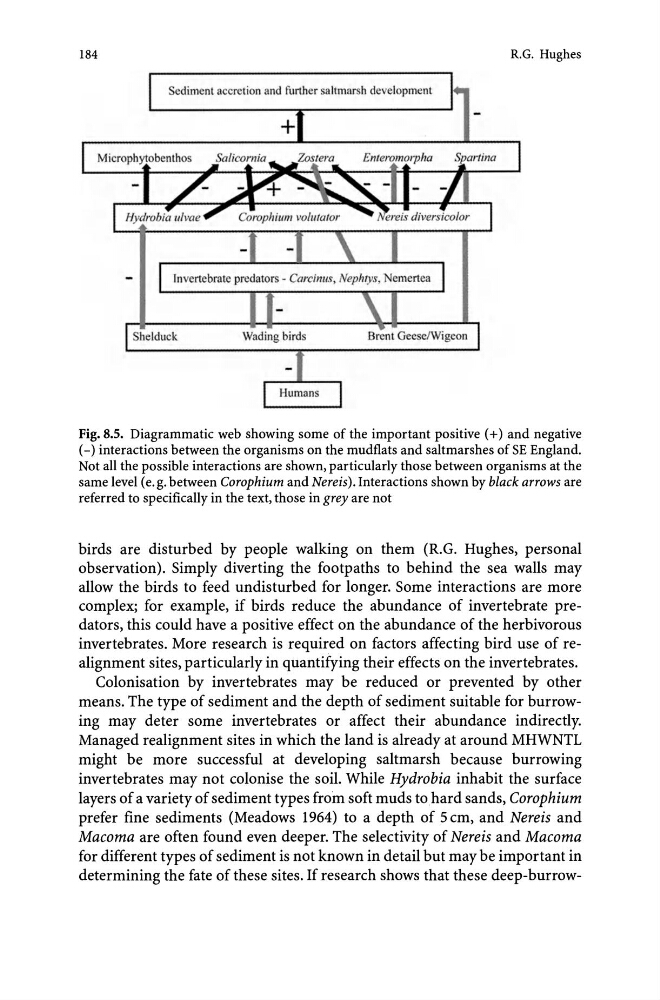
Fig. 8.5. Diagrammatic web showing some of the important positive (+) and negative
(-) interactions between the organisms on the mudflats and saltmarshes of SE England.
Not all the possible interactions are shown, particularly those between organisms at the
same level (e.g. between Corophium and Nereis). Interactions shown by black arrows are
referred to specifically in the text, those in grey are not
birds are disturbed by people walking on them (R.G. Hughes, personal
observation). Simply diverting the footpaths to behind the sea walls may
allow the birds to feed undisturbed for longer. Some interactions are more
complex; for example, if birds reduce the abundance of invertebrate predators, this could have a positive effect on the abundance of the herbivorous
invertebrates. More research is required on factors affecting bird use of realignment sites, particularly in quantifying their effects on the invertebrates.
Colonisation by invertebrates may be reduced or prevented by other
means. The type of sediment and the depth of sediment suitable for burrowing may deter some invertebrates or affect their abundance indirectly.
Managed realignment sites in which the land is already at around MHWNTL
might be more successful at developing saltmarsh because burrowing
invertebrates may not colonise the soil. While Hydrobia inhabit the surface
layers of a variety of sediment types from soft muds to hard sands, Corophium
prefer fine sediments (Meadows 1964) to a depth of 5 cm, and Nereis and
Macoma are often found even deeper. The selectivity of Nereis and Macoma
for different types of sediment is not known in detail but may be important in
determining the fate of these sites. If research shows that these deep-burrow-
R.G. Hughes
Sediment accretion and fllrther sa !tmarsh development
+
Shelduck
Wading birds
Fig. 8.5. Diagrammatic web showing some of the important positive (+) and negative
(-) interactions between the organisms on the mudflats and saltmarshes of SE England.
Not all the possible interactions are shown, particularly those between organisms at the
same level (e.g. between Corophium and Nereis). Interactions shown by black arrows are
referred to specifically in the text, those in grey are not
birds are disturbed by people walking on them (R.G. Hughes, personal
observation). Simply diverting the footpaths to behind the sea walls may
allow the birds to feed undisturbed for longer. Some interactions are more
complex; for example, if birds reduce the abundance of invertebrate predators, this could have a positive effect on the abundance of the herbivorous
invertebrates. More research is required on factors affecting bird use of realignment sites, particularly in quantifying their effects on the invertebrates.
Colonisation by invertebrates may be reduced or prevented by other
means. The type of sediment and the depth of sediment suitable for burrowing may deter some invertebrates or affect their abundance indirectly.
Managed realignment sites in which the land is already at around MHWNTL
might be more successful at developing saltmarsh because burrowing
invertebrates may not colonise the soil. While Hydrobia inhabit the surface
layers of a variety of sediment types from soft muds to hard sands, Corophium
prefer fine sediments (Meadows 1964) to a depth of 5 cm, and Nereis and
Macoma are often found even deeper. The selectivity of Nereis and Macoma
for different types of sediment is not known in detail but may be important in
determining the fate of these sites. If research shows that these deep-burrow-