

420
N. Gorelikova, N. Patyk-Kara, 1. Chizova, J.Plakht, A. Sivtsov
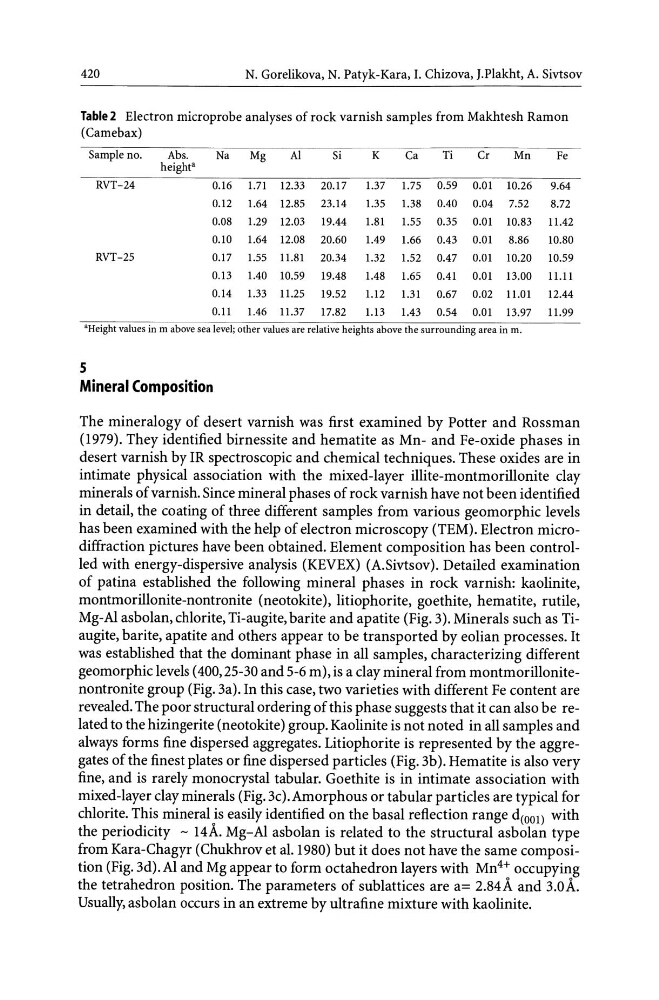
Table 2 Electron microprobe analyses of rock varnish samples from Makhtesh Ramon
(Camebax)
Sample no.
Abs.
Na
height'
Mg
Al
Si
K
Ca
Ti
Cr
Mn
Fe
RVT-24
0.16 1.7l 12.33 20.17
1.37 1.75 0.59 0.01 10.26
9.64
0.12 1.64 12.85 23.14
1.35
1.38 0.40 0.04 7.52
8.72
0.08 1.29 12.03 19.44
1.81
1.55 0.35 0.01 lO.83
11.42
0.10 1.64 12.08 20.60
1.49
1.66 0.43 0.01
8.86
lO.80
RVT-25
0.17 1.55 11.81 20.34
1.32
1.52 0.47 0.01 lO.20
lO.59
0.13 1.40 10.59 19.48
1.48 1.65 0.41
0.01 13.00
lLlI
0.14 1.33 11.25
19.52
1.12
1.31 0.67 0.02 11.01
12.44
0.11
1.46 11.37 17.82
1.13
1.43 0.54 0.01 13.97 11.99
'Height values in m above sea level; other values are relative heights above the surrounding area in ffi.
5
Mineral Composition
The mineralogy of desert varnish was first examined by Potter and Rossman
(1979). They identified birnessite and hematite as Mn- and Fe-oxide phases in
desert varnish by IR spectroscopic and chemical techniques. These oxides are in
intimate physical association with the mixed-layer illite-montmorillonite clay
minerals of varnish. Since mineral phases of rock varnish have not been identified
in detail, the coating of three different samples from various geomorphic levels
has been examined with the help of electron microscopy (TEM). Electron microdiffraction pictures have been obtained. Element composition has been controlled with energy-dispersive analysis (KEVEX) (A.Sivtsov). Detailed examination
of patina established the following mineral phases in rock varnish: kaolinite,
montmorillonite-nontronite (neotokite), litiophorite, goethite, hematite, rutile,
Mg-AI asbolan, chlorite, Ti-augite, barite and apatite (Fig. 3). Minerals such as Tiaugite, barite, apatite and others appear to be transported by eolian processes. It
was established that the dominant phase in all samples, characterizing different
geomorphic levels (400,25-30 and 5-6 m), is a clay mineral from montmorillonitenontronite group (Fig. 3a). In this case, two varieties with different Fe content are
revealed. The poor structural ordering of this phase suggests that it can also be related to the hizingerite (neotokite) group. Kaolinite is not noted in all samples and
always forms fine dispersed aggregates. Litiophorite is represented by the aggregates of the finest plates or fine dispersed particles (Fig. 3b). Hematite is also very
fine, and is rarely mono crystal tabular. Goethite is in intimate association with
mixed-layer clay minerals (Fig. 3c).Amorphous or tabular particles are typical for
chlorite. This mineralois easily identified on the basal reflection range drool) with
the periodicity - 14A. Mg-AI asbolan is related to the structural asbolan type
from Kara-Chagyr (Chukhrov et al.1980) but it does not have the same composition (Fig. 3d).AI and Mg appear to form octahedron layers with Mn4+ occupying
the tetrahedron position. The parameters of sublattices are a= 2.84A and 3.oA.
Usually, asbolan occurs in an extreme by ultrafine mixture with kaolinite.
N. Gorelikova, N. Patyk-Kara, 1. Chizova, J.Plakht, A. Sivtsov
Table 2 Electron microprobe analyses of rock varnish samples from Makhtesh Ramon
(Camebax)
Sample no.
Abs.
Na
height'
Mg
Al
Si
K
Ca
Ti
Cr
Mn
Fe
RVT-24
0.16 1.7l 12.33 20.17
1.37 1.75 0.59 0.01 10.26
9.64
0.12 1.64 12.85 23.14
1.35
1.38 0.40 0.04 7.52
8.72
0.08 1.29 12.03 19.44
1.81
1.55 0.35 0.01 lO.83
11.42
0.10 1.64 12.08 20.60
1.49
1.66 0.43 0.01
8.86
lO.80
RVT-25
0.17 1.55 11.81 20.34
1.32
1.52 0.47 0.01 lO.20
lO.59
0.13 1.40 10.59 19.48
1.48 1.65 0.41
0.01 13.00
lLlI
0.14 1.33 11.25
19.52
1.12
1.31 0.67 0.02 11.01
12.44
0.11
1.46 11.37 17.82
1.13
1.43 0.54 0.01 13.97 11.99
'Height values in m above sea level; other values are relative heights above the surrounding area in ffi.
5
Mineral Composition
The mineralogy of desert varnish was first examined by Potter and Rossman
(1979). They identified birnessite and hematite as Mn- and Fe-oxide phases in
desert varnish by IR spectroscopic and chemical techniques. These oxides are in
intimate physical association with the mixed-layer illite-montmorillonite clay
minerals of varnish. Since mineral phases of rock varnish have not been identified
in detail, the coating of three different samples from various geomorphic levels
has been examined with the help of electron microscopy (TEM). Electron microdiffraction pictures have been obtained. Element composition has been controlled with energy-dispersive analysis (KEVEX) (A.Sivtsov). Detailed examination
of patina established the following mineral phases in rock varnish: kaolinite,
montmorillonite-nontronite (neotokite), litiophorite, goethite, hematite, rutile,
Mg-AI asbolan, chlorite, Ti-augite, barite and apatite (Fig. 3). Minerals such as Tiaugite, barite, apatite and others appear to be transported by eolian processes. It
was established that the dominant phase in all samples, characterizing different
geomorphic levels (400,25-30 and 5-6 m), is a clay mineral from montmorillonitenontronite group (Fig. 3a). In this case, two varieties with different Fe content are
revealed. The poor structural ordering of this phase suggests that it can also be related to the hizingerite (neotokite) group. Kaolinite is not noted in all samples and
always forms fine dispersed aggregates. Litiophorite is represented by the aggregates of the finest plates or fine dispersed particles (Fig. 3b). Hematite is also very
fine, and is rarely mono crystal tabular. Goethite is in intimate association with
mixed-layer clay minerals (Fig. 3c).Amorphous or tabular particles are typical for
chlorite. This mineralois easily identified on the basal reflection range drool) with
the periodicity - 14A. Mg-AI asbolan is related to the structural asbolan type
from Kara-Chagyr (Chukhrov et al.1980) but it does not have the same composition (Fig. 3d).AI and Mg appear to form octahedron layers with Mn4+ occupying
the tetrahedron position. The parameters of sublattices are a= 2.84A and 3.oA.
Usually, asbolan occurs in an extreme by ultrafine mixture with kaolinite.