

Milankovitch Cycles and Sequences: Two Different Stratigraphic Tools
Signal
o
Rate
of
0
sedimentation
Signal
Signal
/
t
I
,
I \
I \
I
\
I
\
I
I
Record I not, preserved
I
J
I
\
I
,
I
,
,
\
\
I
\
I
\
Record I not ,preserved
I
I
I
I
.,.
' "
Cumulative thickness of sediment
257
I
I
J
B
,
,
,
,
,
I
I
' "
•
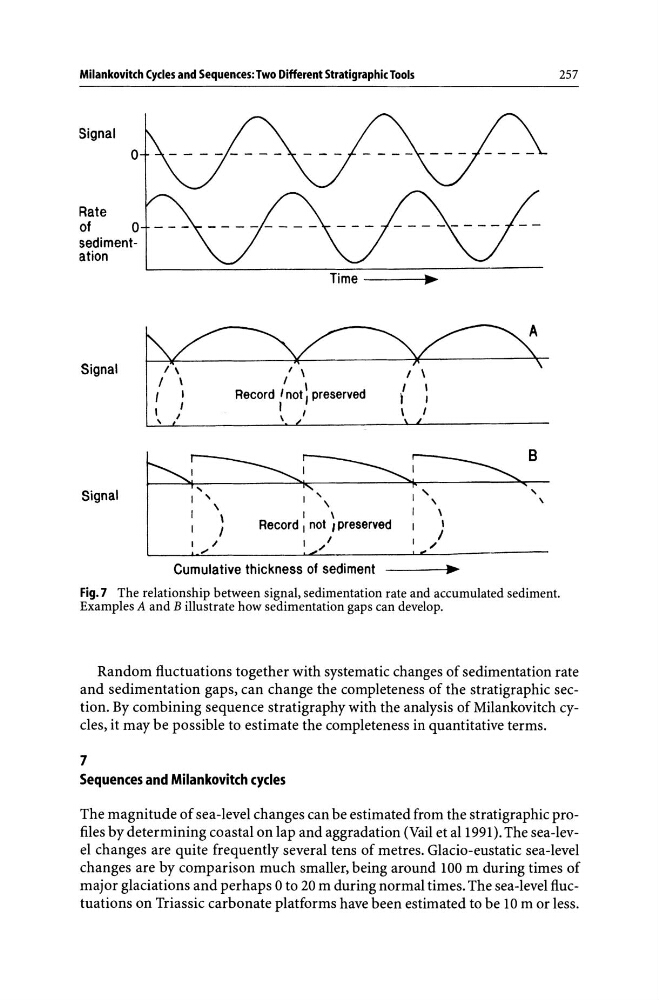
Fig.7 The relationship between signal, sedimentation rate and accumulated sediment.
Examples A and B illustrate how sedimentation gaps can develop.
Random fluctuations together with systematic changes of sedimentation rate
and sedimentation gaps, can change the completeness of the stratigraphic section. By combining sequence stratigraphy with the analysis of Milankovitch cycles, it may be possible to estimate the completeness in quantitative terms.
7
Sequences and Milankovitch cycles
The magnitude of sea-level changes can be estimated from the stratigraphic profiles by determining coastal on lap and aggradation (Vail et aI1991). The sea-level changes are quite frequently several tens of metres. Glacio-eustatic sea-level
changes are by comparison much smaller, being around 100 m during times of
major glaciations and perhaps 0 to 20 m during normal times. The sea-level fluctuations on Triassic carbonate platforms have been estimated to be 10 m or less.
Signal
o
Rate
of
0
sedimentation
Signal
Signal
/
t
I
,
I \
I \
I
\
I
\
I
I
Record I not, preserved
I
J
I
\
I
,
I
,
,
\
\
I
\
I
\
Record I not ,preserved
I
I
I
I
.,.
' "
Cumulative thickness of sediment
257
I
I
J
B
,
,
,
,
,
I
I
' "
•
Fig.7 The relationship between signal, sedimentation rate and accumulated sediment.
Examples A and B illustrate how sedimentation gaps can develop.
Random fluctuations together with systematic changes of sedimentation rate
and sedimentation gaps, can change the completeness of the stratigraphic section. By combining sequence stratigraphy with the analysis of Milankovitch cycles, it may be possible to estimate the completeness in quantitative terms.
7
Sequences and Milankovitch cycles
The magnitude of sea-level changes can be estimated from the stratigraphic profiles by determining coastal on lap and aggradation (Vail et aI1991). The sea-level changes are quite frequently several tens of metres. Glacio-eustatic sea-level
changes are by comparison much smaller, being around 100 m during times of
major glaciations and perhaps 0 to 20 m during normal times. The sea-level fluctuations on Triassic carbonate platforms have been estimated to be 10 m or less.