

2.5 Lake Sediments
FOREST PEAl
DYSTROPHie
11
INPUT OF DETRITAL CL ASTICS
DEC RE AS ING
HIGH
.. b
FLUVIAL SANDS
AND GRAVEL
81
PRODE LT A
FORE SETS
,',cr ~ ::
GL ACIAl TILL
EUTROPH ie
GYTTJA • ANNUA l VARVES
...... OLDER BEDROCK
11
MAR l OR C ALC MUD ( SEEKREIDE)
OLIGOTROPHie
PROGLACIAL " VARVES · f COMMONlY NON - ANNUA l TURBIDITES )
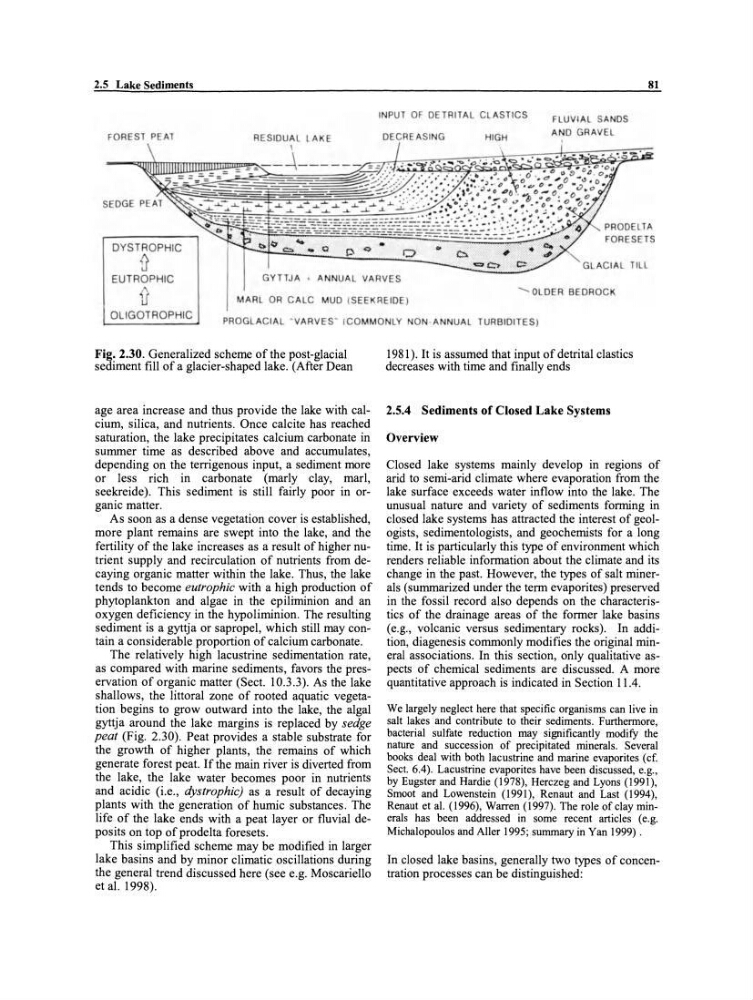
Fig. 2.30. Generalized scheme of the post-glacial
sediment fill of a glacier-shaped lake. (After Dean
age area increase and thus provide the lake with calcium, silica, and nutrients. Once calcite has reached
saturation, the lake precipitates calcium carbonate in
summer time as described above and accumulates,
depending on the terrigenous input, a sediment more
or less rich in carbonate (marly c1ay, mari,
seekreide). This sediment is still fairly poor in organic matter.
As soon as a dense vegetation cover is established,
more plant remains are swept into the lake, and the
fertility of the lake increases as a result of higher nutrient supply and recirculation of nutrients from decaying organic matter within the lake. Thus, the lake
tends to become eutrophie with a high production of
phytoplankton and algae in the epiliminion and an
oxygen deficiency in the hypoliminion. The resulting
sediment is a gyttja or sapropel, which still may contain a considerable proportion of calcium carbonate.
The relatively high lacustrine sedimentation rate,
as compared with marine sediments, favors the preservation of organic matter (Sect. 10.3.3). As the lake
shallows, the littoral zone of rooted aquatic vegetation begins to grow outward into the lake, the algal
gyttja around the lake margins is replaced by sedge
peat (Fig. 2.30). Peat provides a stable substrate for
the growth of higher plants, the remains of which
generate forest peat. If the main river is diverted from
the lake, the lake water becomes poor in nutrients
and acidic (i.e., dystrophie) as a result of decaying
plants with the generation of humic substances. The
life of the lake ends with a peat layer or fluvial deposits on top of pro delta foresets.
This simplified scheme may be modified in larger
lake basins and by minor c1imatic oscillations during
the general trend discussed here (see e.g. Moscariello
et al. 1998).
1981). It is assumed that input of detrital c1astics
decreases with time and finally ends
2.5.4 Sediments of Closed Lake Systems
Overview
Closed lake systems mainly develop in regions of
arid to semi-arid c1imate where evaporation from the
lake surface exceeds water inflow into the lake. The
unusual nature and variety of sediments forming in
c10sed lake systems has attracted the interest of geologists, sedimentologists, and geochemists for a long
time. It is particularly this type of environment which
renders reliable information about the c1imate and its
change in the past. However, the types of salt minerals (summarized under the term evaporites) preserved
in the fossil record also depends on the characteristics of the drainage areas of the former lake basins
(e.g., volcanic versus sedimentary rocks). In addition, diagenesis commonly modifies the original mineral associations. In this section, only qualitative aspects of chemical sediments are discussed. A more
quantitative approach is indicated in Section 11.4.
We largely neglect here that specific organisms can live in
salt lakes and contribute to their sediments. Furthermore,
bacterial sulfate reduction may significantly modify the
nature and succession of precipitated minerals. Several
books deal with both lacustrine and marine evaporites (cf.
Sect. 6.4). Lacustrine evaporites have been discussed, e.g.,
by Eugster and Hardie (1978), Herczeg and Lyons (1991),
Smoot and Lowenstein (1991), Renaut and Last (1994),
Renaut et al. (1996), Warren (1997). The role of c1ay minerals has been addressed in some recent articles (e.g.
Michalopoulos and Aller 1995; summary in Yan 1999) .
In closed lake basins, generally two types of concentration processes can be distinguished:
FOREST PEAl
DYSTROPHie
11
INPUT OF DETRITAL CL ASTICS
DEC RE AS ING
HIGH
.. b
FLUVIAL SANDS
AND GRAVEL
81
PRODE LT A
FORE SETS
,',cr ~ ::
GL ACIAl TILL
EUTROPH ie
GYTTJA • ANNUA l VARVES
...... OLDER BEDROCK
11
MAR l OR C ALC MUD ( SEEKREIDE)
OLIGOTROPHie
PROGLACIAL " VARVES · f COMMONlY NON - ANNUA l TURBIDITES )
Fig. 2.30. Generalized scheme of the post-glacial
sediment fill of a glacier-shaped lake. (After Dean
age area increase and thus provide the lake with calcium, silica, and nutrients. Once calcite has reached
saturation, the lake precipitates calcium carbonate in
summer time as described above and accumulates,
depending on the terrigenous input, a sediment more
or less rich in carbonate (marly c1ay, mari,
seekreide). This sediment is still fairly poor in organic matter.
As soon as a dense vegetation cover is established,
more plant remains are swept into the lake, and the
fertility of the lake increases as a result of higher nutrient supply and recirculation of nutrients from decaying organic matter within the lake. Thus, the lake
tends to become eutrophie with a high production of
phytoplankton and algae in the epiliminion and an
oxygen deficiency in the hypoliminion. The resulting
sediment is a gyttja or sapropel, which still may contain a considerable proportion of calcium carbonate.
The relatively high lacustrine sedimentation rate,
as compared with marine sediments, favors the preservation of organic matter (Sect. 10.3.3). As the lake
shallows, the littoral zone of rooted aquatic vegetation begins to grow outward into the lake, the algal
gyttja around the lake margins is replaced by sedge
peat (Fig. 2.30). Peat provides a stable substrate for
the growth of higher plants, the remains of which
generate forest peat. If the main river is diverted from
the lake, the lake water becomes poor in nutrients
and acidic (i.e., dystrophie) as a result of decaying
plants with the generation of humic substances. The
life of the lake ends with a peat layer or fluvial deposits on top of pro delta foresets.
This simplified scheme may be modified in larger
lake basins and by minor c1imatic oscillations during
the general trend discussed here (see e.g. Moscariello
et al. 1998).
1981). It is assumed that input of detrital c1astics
decreases with time and finally ends
2.5.4 Sediments of Closed Lake Systems
Overview
Closed lake systems mainly develop in regions of
arid to semi-arid c1imate where evaporation from the
lake surface exceeds water inflow into the lake. The
unusual nature and variety of sediments forming in
c10sed lake systems has attracted the interest of geologists, sedimentologists, and geochemists for a long
time. It is particularly this type of environment which
renders reliable information about the c1imate and its
change in the past. However, the types of salt minerals (summarized under the term evaporites) preserved
in the fossil record also depends on the characteristics of the drainage areas of the former lake basins
(e.g., volcanic versus sedimentary rocks). In addition, diagenesis commonly modifies the original mineral associations. In this section, only qualitative aspects of chemical sediments are discussed. A more
quantitative approach is indicated in Section 11.4.
We largely neglect here that specific organisms can live in
salt lakes and contribute to their sediments. Furthermore,
bacterial sulfate reduction may significantly modify the
nature and succession of precipitated minerals. Several
books deal with both lacustrine and marine evaporites (cf.
Sect. 6.4). Lacustrine evaporites have been discussed, e.g.,
by Eugster and Hardie (1978), Herczeg and Lyons (1991),
Smoot and Lowenstein (1991), Renaut and Last (1994),
Renaut et al. (1996), Warren (1997). The role of c1ay minerals has been addressed in some recent articles (e.g.
Michalopoulos and Aller 1995; summary in Yan 1999) .
In closed lake basins, generally two types of concentration processes can be distinguished: