

688
LlMESTONE-MARL DIAGENESIS
PRIMARY
SEDIMENT
PRIMARY SIGNAL
~
STRONG
LESS DISTINCT
---.- -
~
I
SOME
' -
HARDGROUND
PRIMARY
~ CEMENTATION
. .
CEMENT _ _ _
+
:~~.~ : <: : : ::: - - - -
CONCRETIONARY
~~:I; :~;~~~;'~ ___ "-E_~E.NTAT10N
AND CHEMICAl
~
COMPACTION
INTENSIVE
_-- -
BIOTURBATION _ - - - - -
NODULAR LIMESTONE
--;;:~:'~~-::~" '.
- - . - ".: ":'.
EVENT BED
• ~.:~,~;.",.-"~ EVENT BED ::, . ~ .• '
CEMENTATION
~~~ ~;~~~r:t2~\~:
.. ::: '. ~ ;'~: . -
- CEMENTED
DIFFERENTIAl
UNDERBED
DISSOLUTION
-----__ AND CEMENTATION
---CARBONATE M I G R A T I O N .
PRESSURE DISSOLUTION
. .
SEAMS
•
~
_---------CaC03
-----'-"-_--J:l.c:.: -::.:-:.. -__
GRAIN SIZE AND / OR CaC03
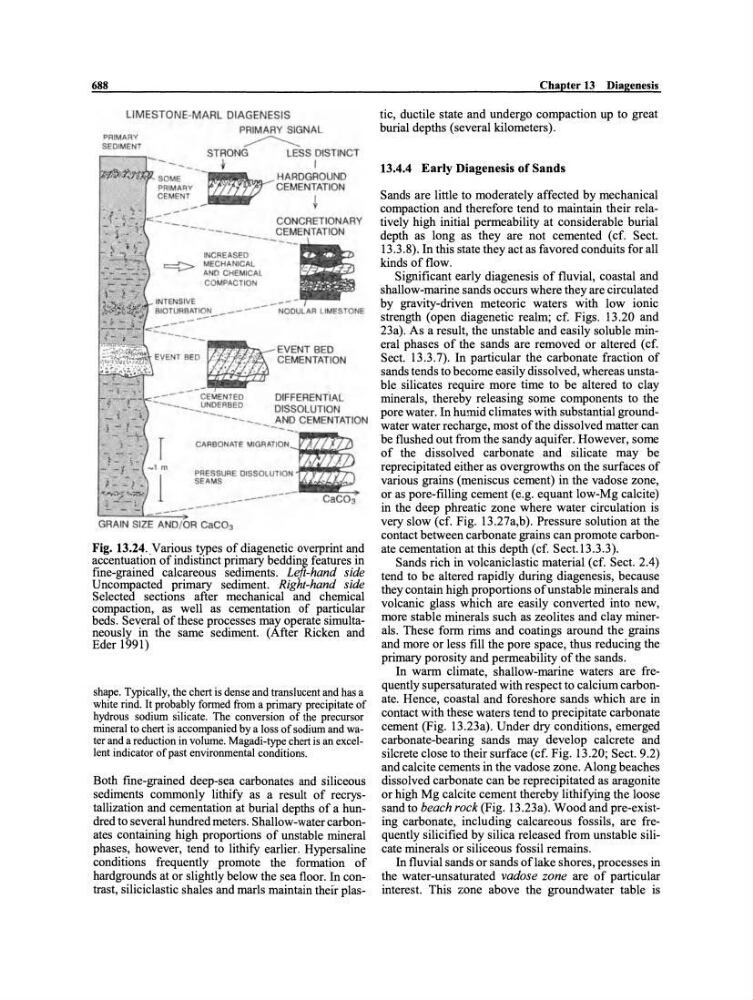
Fig. 13.24 .. Various types of diagenetic overprint and
accentuation of indistinct primary bedding features in
fme-grained calcareous sediments. LeJt-hand side
Uncompacted primary sediment. Right-hand side
Selected sections after mechanical and chemical
compaction, as well as cementation of particular
beds. Several ofthese processes may operate simuItaneously in the same sediment. (After Ricken and
Eder 1991)
shape. Typically, the chert is dense and translucent and has a
white rind. It probably formed from a primary precipitate of
hydrous sodium silicate. The conversion of the precursor
mineral to chert is accompanied by a loss of sodium and water and a reduction in volume. Magadi-type chert is an excellent indicator of past environmental conditions.
Both fine-grained deep-sea carbonates and siliceous
sediments commonly Iithify as a result of recrysta11ization and cementation at burial depths of a hundred to several hundred meters. Sha11ow-water carbonates containing high proportions of unstable mineral
phases, however, tend to Iithify earlier. Hypersaline
conditions frequently promote the formation of
hardgrounds at or slightly below the sea floor. In contrast, siliciclastic shales and marls maintain theil' plasChapter 13 Diagenesis
tic, ductile state and undergo compaction up to great
burial depths (several kilometers).
13.4.4 Early Diagenesis of Sands
Sands are little to moderately affected by mechanical
compaction and therefore tend to maintain their relatively high initial permeability at considerable burial
depth as long as they are not cemented (cf. Sect.
13.3.8). In this state they act as favored conduits for a11
kinds of flow.
Significant early diagenesis of fluvial, coastal and
shallow-marine sands occurs where they are circulated
by gravity-driven meteoric waters with low ionic
strength (open diagenetic realm; cf. Figs. 13.20 and
23a). As a result, the unstable and easily soluble mineral phases of the sands are removed or altered (cf .
Sect. 13.3.7). In particular the carbonate fraction of
sands tends to become easily dissolved, whereas unstable silicates require more time to be altered to clay
minerals, thereby releasing some components to the
pore water. In humid climates with substantial groundwater water recharge, most of the dissolved matter can
be flushed out from the sandy aquifer. However, some
of the dissolved carbonate and silicate may be
reprecipitated either as overgrowths on the surfaces of
various grains (meniscus cement) in the vadose zone,
or as pore-filling cement (e.g. equant low-Mg calcite)
in the deep phreatic zone where water circulation is
very slow (cf. Fig. 13.27a,b). Pressure solution at the
contact between carbonate grains can promote carbonate cementation at this depth (cf. Sect.l3.3.3).
Sands rich in volcaniclastic material (cf. Sect. 2.4)
tend to be altered rapidly during diagenesis, because
they contain high proportions ofunstable minerals and
volcanic glass which are easily converted into new,
more stable minerals such as zeolites and clay minerals. These form rims and coatings around the grains
and more or less fill the pore space, thus reducing the
primary porosity and permeability of the sands.
In warm climate, shallow-marine waters are frequently supersaturated with respect to calcium carbonate. Hence, coastal and foreshore sands which are in
contact with these waters tend to precipitate carbonate
cement (Fig. 13.23a). Under dry conditions, emerged
carbonate-bearing sands may develop calcrete and
silcrete close to their surface (cf. Fig. 13.20; Sect. 9.2)
and calcite cements in the vadose zone. Along beaches
dissolved carbonate can be reprecipitated as aragonite
or high Mg calcite cement thereby lithifying the loose
sand to beaeh rock (Fig. 13.23a). Wood and pre-existing carbonate, including calcareous fossils, are frequently silicified by silica released from unstable silicate minerals or siliceous fossil remains.
In fluvial sands or sands oflake shores, processes in
the water-unsaturated vadose zone are of particular
interest. This zone above the groundwater table is