

13.2 Compaction, Flow Mechanisms
a EPICONTINENTAL SEA
LIMITEO
COMPACTION FLOW
b CONTINENT.A;l RIFT BASIN
C BURIED DEEP-SEA FAN
COMPACTION FLOW ONlY
MINERA LOGICAL LY
MATURE SANDS TONE
STRONG AND DEEP
METEORIC CIRCULATION
d
e
PROXI·
MAL
TURBI·
OITE
COMPACTION FlOW
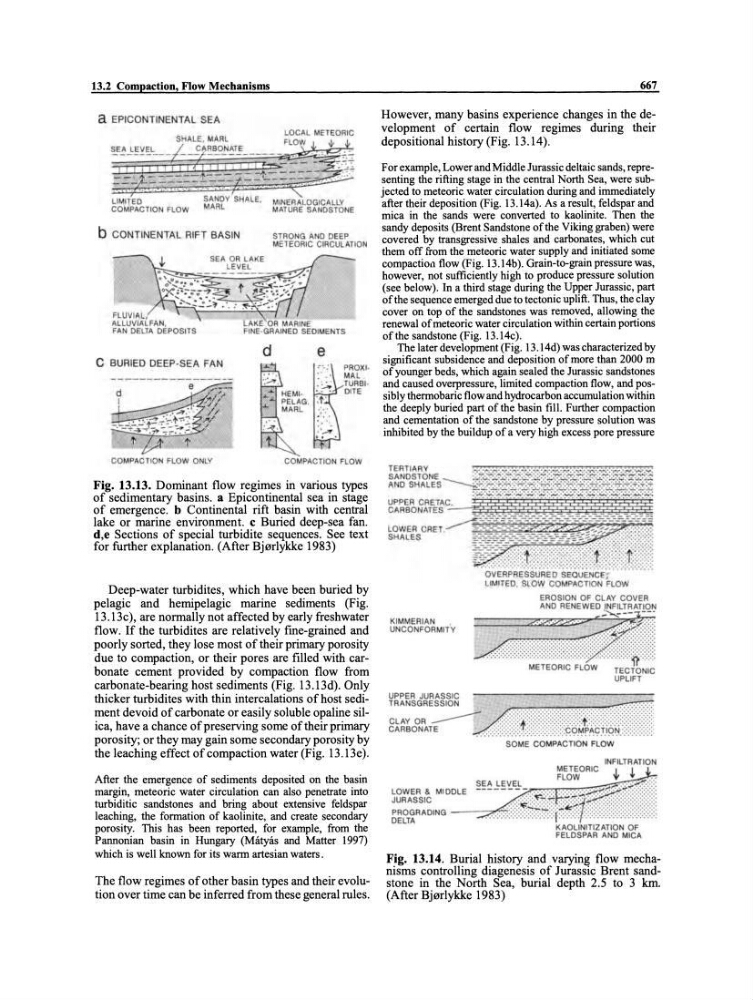
Fig. 13.13. Dominant flow regimes in various types
of sedimentary basins. a Epicontinental sea in stage
of emergence. b Continental rift basin with central
lake or marine environment. c Buried deep-sea fan.
d,e Sections of special turbidite sequences. See text
for further explanation. (After Bj0rlykke 1983)
Deep-water turbidites, which have been buried by
pelagic and hemipelagic marine sediments (Fig.
13 .13c), are normally not affected by early freshwater
flow. If the turbidites are relatively fine-grained and
poorly sorted, they lose most of their primary porosity
due to compaction, or their pores are filled with carbonate cement provided by compaction flow from
carbonate-bearing host sediments (Fig. 13. 13d). Only
thicker turbidites with thin intercalations of host sediment devoid of carbonate or easily soluble opaline silica, have a chance of preserving some of their primary
porosity; or they may gain some secondary porosity by
the leaching effect of compaction water (Fig. 13.13e).
After the emergence of sediments deposited on the basin
margin, meteoric water circulation can also penetrate into
turbiditic sandstones and bring about extensive feldspar
leaching, the formation of kaolinite, and create secondary
porosity. This has been reported, for example, from the
Pannonian basin in Hungary (Matyas and Matter 1997)
which is weIl known for its warm artesian waters.
The flow regimes of other basin types and their evolution over time can be inferred from these general rules.
667
However, many basins experience changes in the development of certain flow regimes during their
depositional history (Fig. 13.14).
F or example, Lower and Middle Jurassic deltaic sands, representing the rifting stage in the central North Sea, were subjected to meteoric water circulation during and immediately
after their deposition (Fig. 13. 14a). As a result, feldspar and
mica in the sands were converted to kaolinite. Then the
sandy deposits (Brent Sandstone ofthe Viking graben) were
covered by transgressive shales and carbonates, which cut
them offfrom the meteoric water supply and initiated some
compaction flow (Fig. 13. 14b). Grain-to-grain pressure was,
however, not sufficiently high to produce pressure solution
(see below). In a third stage during the Upper Jurassic, part
of the sequence emerged due to tectonic uplift. Thus, the clay
cover on top of the sandstones was removed, aIlowing the
renewal of meteoric water circulation within certain portions
ofthe sandstone (Fig. 13.14c).
The later development (Fig. 13. 14d) was characterized by
significant subsidence and deposition of more than 2000 m
ofyounger beds, which again sealed the Jurassic sandstones
and caused overpressure, limited compaction flow, and possibly thermobaric flow and hydrocarbon accumulation within
the deeply buried part of the basin fill. Further compaction
and cementation of the sandstone by pressure solution was
inhibited by the buildup of a very high excess pore pressure
TERTIARY
. . ,. . ... ........ , - ... .
t"-t".''I'''\':*1:'.-.:''.'r''1'.''';'''.',~.' ..... '.''''r''.'I''T''.' ....... '."T'''I' ........ ' .'~.'''''',,,,,,,,,,,,,,
~~~DsSJ~t~~ ----%t+Ztr+5.itt4E.Wii?3±@1
g~~~~~fTEETtC .
i· ;\;i .;: ;' ;' ;' ;' ;' :' ;' ;";' ;' ;;;: ;·;' .";";';' ;' :' :':i: i: :' :' ;' ;';' ;' ;';
i~t:sc""~._i
UPPER JURASSIC
TRA NSGRESSION
OVERPRESSURED SEQUENCE':
lIMI:rED. SLOW COMPACTION FLOW
EROSION OF CL AY COVER
AND RENEWED INF ILTRATION
",:.;.;.:.;.;.;.:.;.:.:.:.;.:.:.:.:.:.;.:.;.:.:.;.:.:.;:::;:::::::::;::::::
gÄ~~JWA~-:,:::/Hr::r?:::U::::::~M~~#8M}::H?
LOWER & MI DOLE
JURASSIC
PROGRADING
DELTA
SOME COMPACTION FLOW
INFILTRATION
~CJ~ORIC -t ~ , ,
§!~~:~it1Btiili;i.~]I··.
KAOLINITIZATION OF
FELOSPAR AND MICA
Fig. 13.14. Burial history and varying flow mechanisms controlling diagenesis of Jurassic Brent sandstone in the North Sea, burial depth 2.5 to 3 km.
(After Bj0rlykke 1983)