

12.8 Pull-Apart Basins
a
SEDIMENT
SUPPLY
b
ALLUVIAL FANS
AND DEBRIS FLOWS
MASTER FAULTS
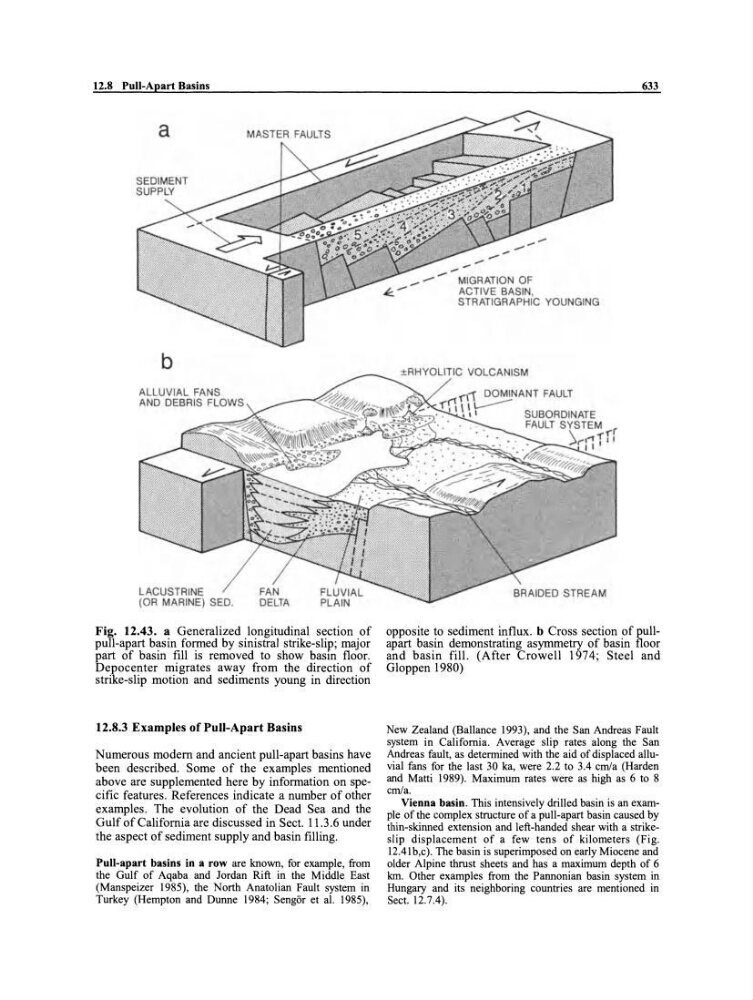
Fig. 12.43. a Generalized longitudinal section of
pull-apart basin formed by sinistral strike-slip; major
part of basin fill is removed to show basin floor.
Depocenter migrates away from the direction of
strike-slip motion and sediments young in direction
12.8.3 Examples of Pull-Apart Basins
Numerous modem and ancient pull-apart basins have
been described. Some of the examples mentioned
above are supplemented here by information on specific features. References indicate a number of other
examples. The evolution of the Dead Sea and the
Gulf of Califomia are discussed in Sect. 11.3.6 under
the aspect of sediment supply and basin filling.
Pull-apart basins in a row are known, for example, from
the Gulf of Aqaba and Jordan Rift in the Middle East
(Manspeizer 1985), the North Anatolian Fault system in
Turkey (Hempton and Dunne 1984; Sengör et al. 1985),
MIGRATION OF
ACTIVE BASIN,
STRATIGRAPHIC YOUNGING
1' 11" DOMINANT FAULT
('I \ \ L.-----""
, "
SUBORDINATE
FAULT S STEM (
,-[. I .
633
opposite to sediment influx. b Cross section of pullapart basin demonstrating asymmetry of basin floor
and basin fill. (After Crowell 1974; Steel and
Gloppen 1980)
New Zealand (Ballance 1993), and the San Andreas Fault
system in Califomia. Average slip rates along the San
Andreas fault, as determined with the aid of disp1aced alluvial fans for the last 30 ka, were 2.2 to 3.4 cmla (Harden
and Matti 1989). Maximum rates were as high as 6 to 8
cmla.
Vienna basin. This intensively drilled basin is an exampIe of the complex structure of a pull-apart basin caused by
thin-skinned extension and left-handed shear with a strikeslip displacement of a few tens of kilometers (Fig.
12.41b,c). The basin is superimposed on early Miocene and
older Alpine thrust sheets and has a maximum depth of 6
km. Other examp1es from the Pannonian basin system in
Hungary and its neighboring countries are mentioned in
Sect. 12.7.4).