

12.7 Intramontane Basins
623
WEDGE-TOP INTRAMONTANE BASINS,
S. BOLIVIA
C
SUB-ANDEAN FOLDAND-THRUST BELT,
S. BOLIVIA
W
d
_
VOLCANIC
CORDILLERA ORIENTAL
INTER-ANDEAN z.
E
SUB-ANDEAN RANGES
PAECAMBAIAN
TO ORDOVICIAN
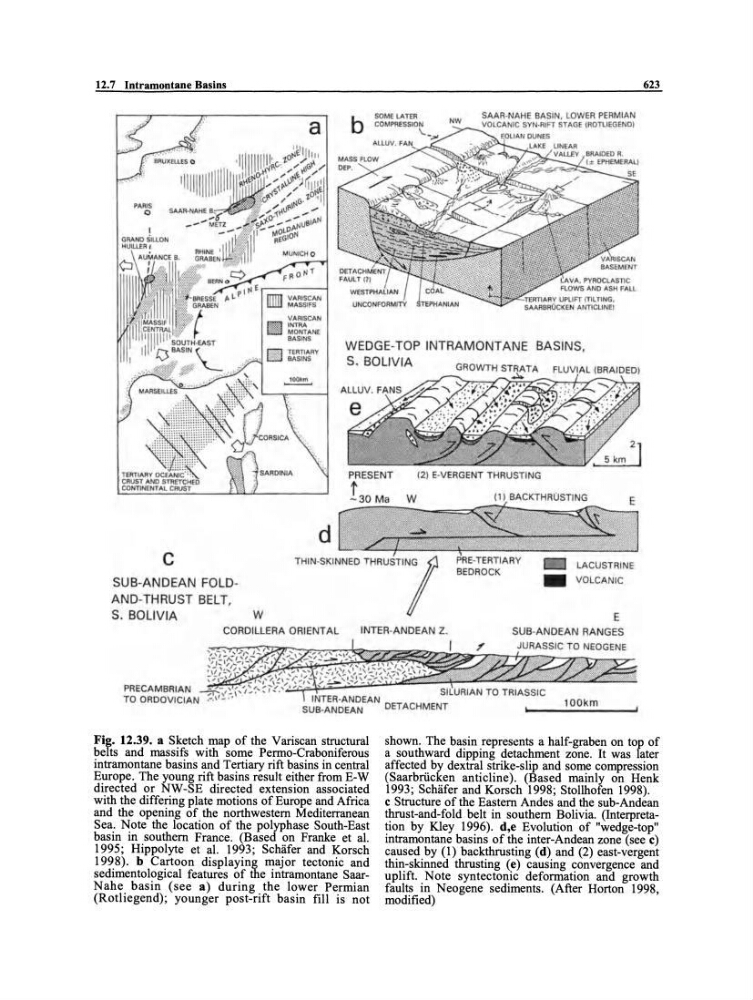
Fig. 12.39. a Sketch map of the Variscan structural
belts and massifs with some Permo-Craboniferous
intramontane basins and Tertiary rift basins in central
Europe. The young rift basins result either from E-W
directed or NW-SE directed extension associated
with the differing plate motions of Europe and Africa
and the opening of the northwestem Mediterranean
Sea. Note the location of the polyphase South-East
basin in southem France. (Based on Franke et al.
1995; Hippolyte et al. 1993; Schäfer and Korsch
1998). b Cartoon displaying major tectonic and
sedimentological features of the intramontane SaarNahe basin (see a) during the lower Permian
(Rotliegend); younger post-rift basin fill is not
shown. The basin represents a half-graben on top of
a southward dipping detachment zone. It was later
affected by dextral strike-slip and some compression
(Saarbrücken anticline). (Based mainly on Henk
1993; Schäfer and Korsch 1998; Stollhofen 1998).
c Structure of the Eastem Andes and the sub-Andean
thrust-and-fold belt in southem Bolivia. (Interpretation by Kley 1996). d,e Evolution of "wedge-top"
intramontane basins of the inter-Andean zone (see c)
caused by (1) backthrusting (d) and (2) east-vergent
thin-skinned thrusting (e) causing convergence and
uplift. Note syntectonic deformation and growth
faults in Neogene sediments. (After Horton 1998,
modified)