

12.5 Foreare Basins
b
5
CROSS SECTION, S. TIBET
(PRESENT-DAY SITUATION)
THRUST SHEETS OF
TETHYS HIMALAYA
597
XIGAZE FOREAAC BASIN
TIBETAN PLATEAU
(PRESENT·DAY EROSION SURFACEI
SHELF
Y ARLUNG
N
CARBONATE RIVER
.
!
1-3
HIGH HIMALA Y AN
CRYST ALLINE CHAIN
DISTAL TURBIDITES _-:--:-.,..-,....~ I
RADIOLARITES
~ MIOCENE FOLDING. BACKTHRUSTING (
PILLOW BASALT -
'
AND CONTINUED UPLIFT
QIUWU MOLASSE
(LATE-STAGE
FOREARC SED . ?1
, i
a XIGAZE FOREARC BASIN
(CRET ACEOUS, TIBET)
MID-CRETACEOUS SHELF
GANGDESE BEL T
CARBONATES (± ERODED) (MAGMATIC ARC)
SUBMARINE
CHANNEL SYSTEMS
""
..........
SEA LEVEL
-$--\.-ANGT ANG BLOCK
TAKENA SERIES (SHALES.
SANDST. , SOME LIMESTONES)
TREND TO UPLIFT
FUTURE INDUSYARLUNG SUTURE
TRAPPED
OCEANIC CRUST
PRE-FOREARC
HEMI-PELAGIC SED.
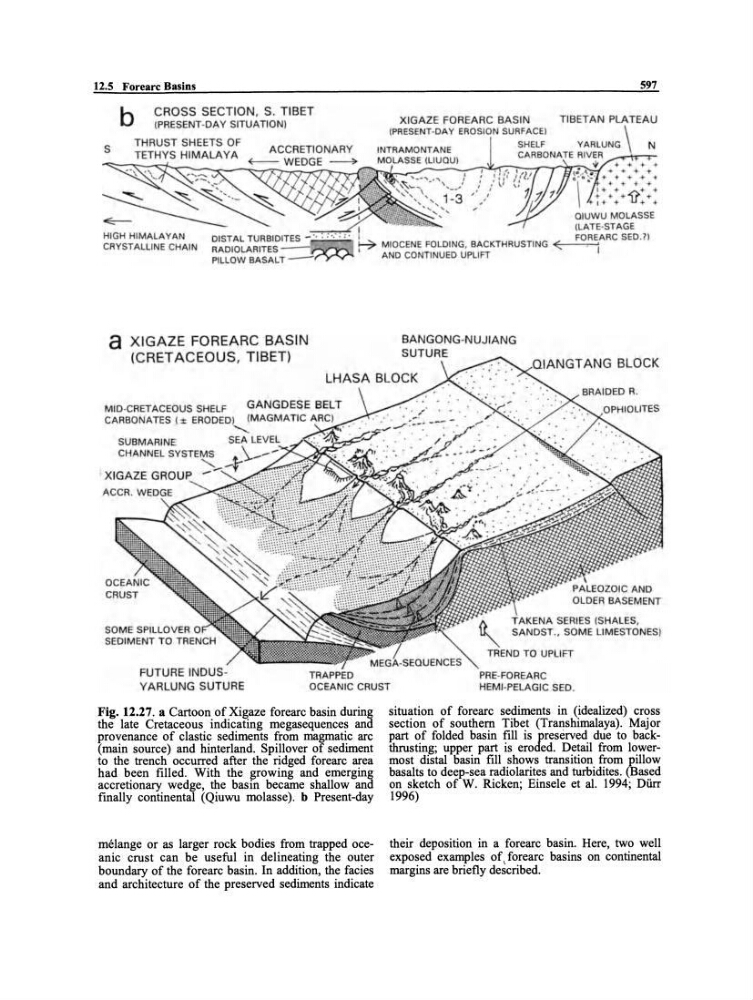
Fig. 12.27. a Cartoon of Xigaze forearc basin during
the late Cretaceous indicating megasequences and
provenance of clastic sediments from magmatic arc
(main source) and hinterland. Spillover of sediment
to the trench occurred after the ridged forearc area
had been filled. With the growing and emerging
accretionary wedge, the basin became shallow and
finally continental (Qiuwu molasse). b Present-day
melange or as larger rock bodies from trapped oceanic crust can be useful in delineating the outer
boundary of the forearc basin. In addition, the facies
and architecture of the preserved sediments indicate
situation of forearc sediments in (idealized) cross
section of southem Tibet (Trans himalaya). Major
part of folded basin fill is preserved due to backthrusting; upper part is eroded. Detail from lowermost distal basin fill shows transition from pillow
basalts to deep-sea radiolarites and turbidites. (Based
on sketch of W. Ricken; Einseie et al. 1994; Dürr
1996)
their deposition in a forearc basin. Here, two weH
exposed examples of, forearc basins on continental
margins are briefly described.