

582
Chapter 12 Basin Evolution and Sediments
a SEDIMENT SOURCES OF DEEP-SEA TRENCH
OVER-SUPPlIED,
FILLED TRENCH,
SPILL-OVER TO FLAT
OCEAN FLOOR
·LATERAL
FROM SUBDUCTIIiG. OC~~NIC
PLATE WITH THICK
CLASTIC SEDIMENTS
AXIAL
SEA MOUNT WITH SPECIAL
SEDIMENTS ON TOP AND FLANKS
LATERAL FROM VOLC. ARC AND
ACCRETIONARY WEDGE
- ---.- --. --. --.-.
PELAGIC TO HEMIPELAGIC SEDIMENT
b PROXIMAL
TRENCH FILLS AND ACCRETION
TRENCH FAN
C
d DISTAL
OCEANIC PLATE
SHEETED BASIN
f DISTAL (SEDIMENT -STARVED)
PONDED BASIN
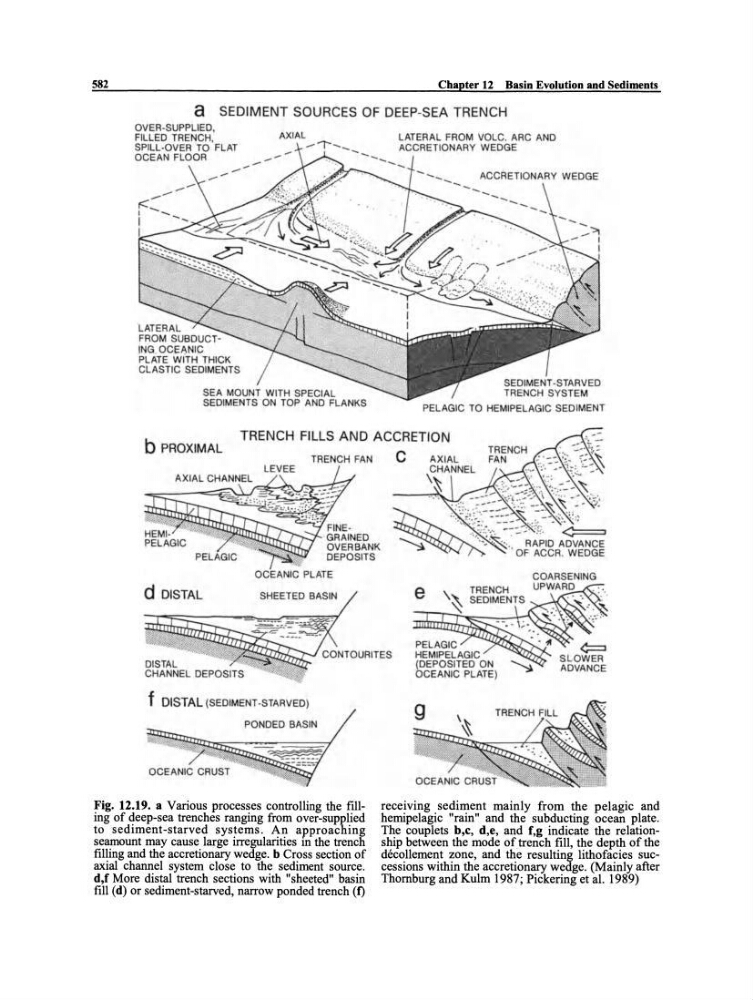
Fig. 12.19. a Various processes controlling the filling of deep-sea trenches ranging from over-supplied
to sediment-starved systems . An approaching
seamount may cause large irregularities in the trench
filling and the accretionary wedge. b Cross section of
axial channel system elose to the sediment source.
d,f More distal trench sections with "sheeted" basin
fill (d) or sediment-starved, narrow ponded trench (f)
e
PELAGIC
HEMIPELAGIC
(DEPOSITED ON
OCEANIC PLATE)
receiving sediment mainly from the pelagic and
hemipelagic "rain" and the subducting ocean plate.
The couplets b,c, d,e, and f,g indicate the relationship between the mode oftrench fill, the depth of the
decollement zone, and the resulting lithofacies successions within the accretionary wedge. (Mainly after
Thomburg and Kulm 1987; Pickering et al. 1989)