

580
Chapter 12 Basin Evolution and Sediments
b INTRA-OCEANIC ARC-TRECH SYSTEM
CONT.
CRUST
VOLCANOGENIC ISlAND ARC
(OR CONTIN. S~IVER) FOREARC
BACKARC BASIN \
BASIN TRENCH
C CONT. MARGIN ARC-TRENCH SYSTEM
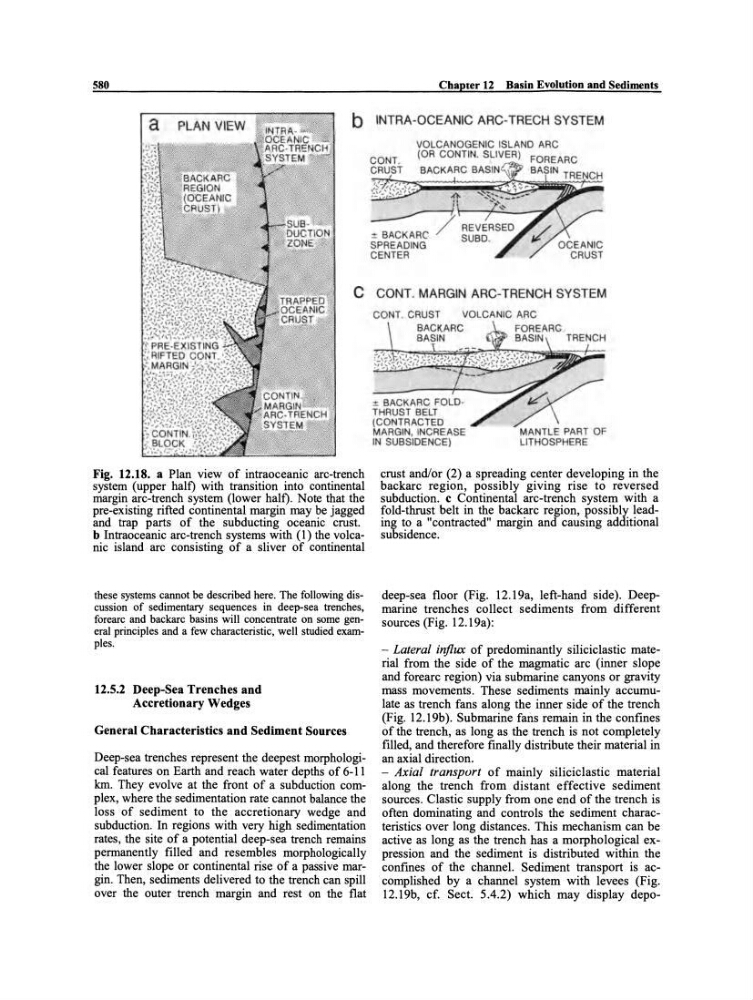
Fig. 12.18. a Plan view of intraoceanic arc-trench
system (upper halt) with transition into continental
margin arc-trench system (lower halt). Note that the
pre-existing rifted continental margin may be jagged
and trap parts of the subducting oceanic crnst.
b Intraoceanic arc-trench systems with (1) the volcanie island arc consisting of a sliver of continental
these systems cannot be described here. The following discussion of sedimentary sequences in deep-sea trenches,
forearc and backarc basins will concentrate on some general principles and a few characteristic, weIl studied exampIes.
12.5.2 Deep-Sea Trenches and
Accretionary Wedges
General Characteristics and Sediment Sources
Deep-sea trenches represent the deepest morphological features on Earth and reach water depths of 6-11
km. They evolve at the front of a subduction complex, where the sedimentation rate cannot balance the
loss of sediment to the accretionary wedge and
subduction. In regions with very high sedimentation
rates, the site of a potential deep-sea trench remains
permanently filled and resembles morphologically
the lower slope or continental rise of a passive margin. Then, sediments delivered to the trench can spill
over the outer trench margin and rest on the flat
CONT. CRUST
VOlCANIC ARC
:!: BACKARC FOlDTHRUST BELT
(CONTRACTEO
MARGIN, INCREASE
IN SUBSIDENCE)
crnst and/or (2) a spreading center developing in the
backarc region, possibly giving rise to reversed
subduction. c Continental arc-trench system with a
fold-thrust belt in the backarc region, possibly leading to a "contracted" margin and causing additional
subsidence.
deep-sea floor (Fig. 12.19a, left-hand side). Deepmarine trenches collect sediments from different
sources (Fig. 12.19a):
- Lateral injlux of predorninandy siliciclastic material from the side of the magmatic arc (inner slope
and forearc region) via submarine canyons or gravity
mass movements. These sediments mainly accumulate as trench fans along the inner side of the trench
(Fig. 12.19b). Submarine fans remain in the confines
of the trench, as long as the trench is not completely
filled, and therefore finally distribute their material in
an axial direction.
- Axial transport of mainly siliciclastic material
along the trench from distant effective sediment
sourees. Clastic supply from one end of the trench is
often dominating and controls the sediment characteristics over long distances. This mechanism can be
active as long as the trench has a morphological expression and the sediment is distributed within the
confines of the channel. Sediment transport is accomplished by a channel system with levees (Fig.
12.l9b, cf. Sect. 5.4.2) which may display depo-